Ehime Tai Meshi
鯛めし
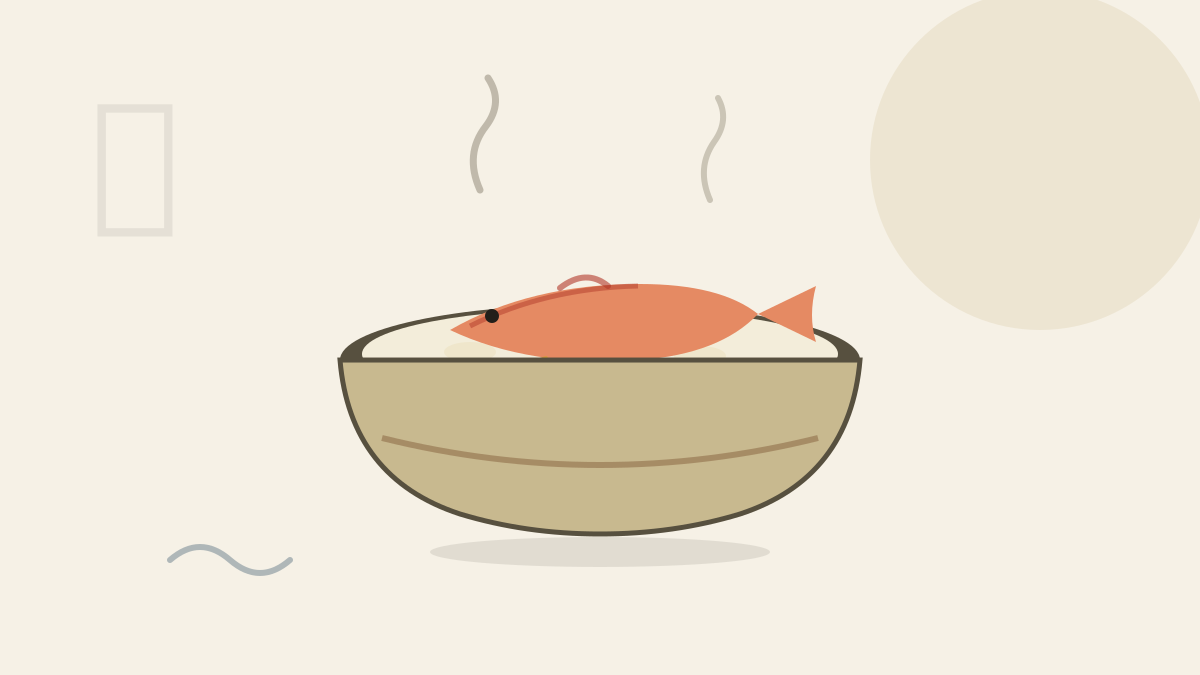
A whole Seto Inland Sea bream steamed on soy-seasoned rice, Matsuyama style — then deboned and folded back through every grain. Ehime's proudest pot of rice.
By Japanese Cookbook Kitchen · May 7, 2026
 丼
丼- Prep
- 20 min
- Cook
- 40 min
- Serves
- 4
- Level
- Intermediate
Sea bream is the celebration fish of Japan, and Ehime has more of it than anyone — the whirlpool tides of the Kurushima Strait, between Imabari and the Inland Sea islands, muscle the local madai into famously firm flesh, and the prefecture leads the country in bream farmed and caught. Cooking one whole on a pot of rice is an Edo-period habit of the Matsuyama coast, a fisherman's economy dressed up as a feast: one fish, one pot, nothing wasted. The rival version down in Uwajima — raw bream in a raw-egg soy sauce over rice — is just as old and just as loved, and we cover the difference honestly below.
The technique is mostly patience. A hard sear first, so the skin tastes of fire; a measured pour of dashi seasoned pale with usukuchi soy; then the fish rides on top while the rice cooks in its drippings. The ceremonial deboning at the table is the best part — a small anatomy lesson that ends with sweet flakes of bream folded through soy-glossed rice. Serve it to guests and accept the applause as if the fish did none of the work.
Grill the bream before it meets the rice. Skipping the sear leaves the broth thin and the skin flabby; five minutes under the broiler buys you a pot that tastes twice as long-simmered.
板前の一言 · A word from the kitchen
Ingredients材料
Serves 4
Fish & rice
- 1whole madai (sea bream), 600–800 g, scaled and gutted — a smaller fish that fits your pot beats a trophy that doesn't; two large fillets work in a pinch
- 450 gJapanese short-grain rice
- 1 tspsalt
Cooking liquid
- 600 mlawase dashi
- 2 tbspusukuchi (light) soy sauce
- 2 tbspsake
- 1 tbspmirin
- 10 cmkombu
- 1 knobginger, cut into fine needles
- 2scallions, sliced, to finish
- mitsuba or slivered shiso, if you have it
Method作り方
Step 1: Salt and grill the bream
Salt the fish inside and out and rest it 15 minutes, then pat dry and grill or broil until the skin blisters and browns on both sides — it should still be underdone within. This step builds the roasted depth the pot cannot make on its own.
Step 2: Wash and settle the rice
Rinse the rice until the water runs nearly clear and drain it well. Spread it in a donabe or heavy pot, pour over the dashi, soy, sake, and mirin, and let it sit 20 minutes so the grains drink before the heat starts.
Step 3: Lay the fish on top
Set the kombu on the rice, the whole grilled bream on the kombu, and scatter the ginger needles over everything. The fish steams; the rice cooks in what drips down. That one-way traffic is the whole design.
Step 4: Cook, then let it stand
Cover, bring to a boil over medium-high, then cook 12 minutes on low. Kill the heat and leave the lid alone for 15 more — the standing time finishes the fish and sets the rice. Opening early is the only way to ruin this dish.
Step 5: Debone and fold back
Lift out the fish and kombu, strip every bone and the head with chopsticks, and return the flaked flesh and crisp bits of skin to the pot. Fold gently, scatter with scallion and mitsuba, and serve from the pot at the table.
道具 · The tools
Equipment
Rice cooker
炊飯器Consistent short-grain rice with zero attention — the one appliance nearly every page here leans on.
Shop on Amazon →Donabe
土鍋The clay hot-pot that makes nabemono taste like nabemono — a gentle, even simmer that carries straight to the table.
Shop on Amazon →Heavy pot / Dutch oven
厚手鍋Deep, heat-retentive, and stable — for deep-frying without temperature crashes and long simmers without scorching.
Shop on Amazon →Portable gas burner
カセットコンロThe tabletop butane burner that turns any nabe into a shared meal — cook and eat from the same pot.
Shop on Amazon →Stovetop fish grill
焼き網A yakiami grate for salted fish, mochi, and reviving nori over an open flame.
Shop on Amazon →Frying spider & tongs
揚げ網Lift fried food clean out of the oil and drain it fast, before the crust turns soft.
Shop on Amazon →
Equipment links are Amazon affiliate links. As an Amazon Associate we earn from qualifying purchases, at no cost to you. Disclosure.
Questions from the kitchen
Isn't tai meshi in Uwajima a completely different dish?
Yes, and southern Ehime will tell you so before you ask. Uwajima tai meshi is raw bream slices in a cold sauce of raw egg, soy, and dashi, poured over hot rice — a fisherman's dish from the Uwakai coast. Both are authentic; this recipe is the Matsuyama-style cooked version.
Can I use fillets instead of a whole fish?
You can, and dinner will still be good — grill them the same way and shorten the standing time slightly. You lose the head and bones, which is where much of the broth's sweetness comes from, so consider adding an extra piece of kombu to compensate.
Do I need a donabe?
No. Any heavy lidded pot — enameled cast iron included — cooks this well, and a rice cooker with a takikomi setting will manage too. The donabe's gift is the crust of soy-toasted rice at the bottom, which is worth fighting over.
次はこちら · Cook next
Keep the burner on
 丼
丼Rice & Donburi · 50 min · Intermediate
Katsudonカツ丼
Crisp tonkatsu simmered with onions in sweet dashi-soy and set with barely-cooked egg over rice — the Taishō-era donburi that made yōshoku fully Japanese.
 丼
丼Rice & Donburi · 25 min · Beginner
Unadonうな丼
Kabayaki eel lacquered in sweet tare over hot rice — an Edo summer ritual with the best marketing legend in Japanese food history. Store-bought eel welcome.
 丼
丼Rice & Donburi · 45 min · Beginner
Salted Salmon Onigiri鮭お握り
Proper rice balls with salted salmon — how to cook and season the rice, shape with wet hands, and keep the nori crisp until the first bite.