Katsudon
カツ丼
Crisp tonkatsu simmered with onions in sweet dashi-soy and set with barely-cooked egg over rice — the Taishō-era donburi that made yōshoku fully Japanese.
By Japanese Cookbook Kitchen · July 6, 2026
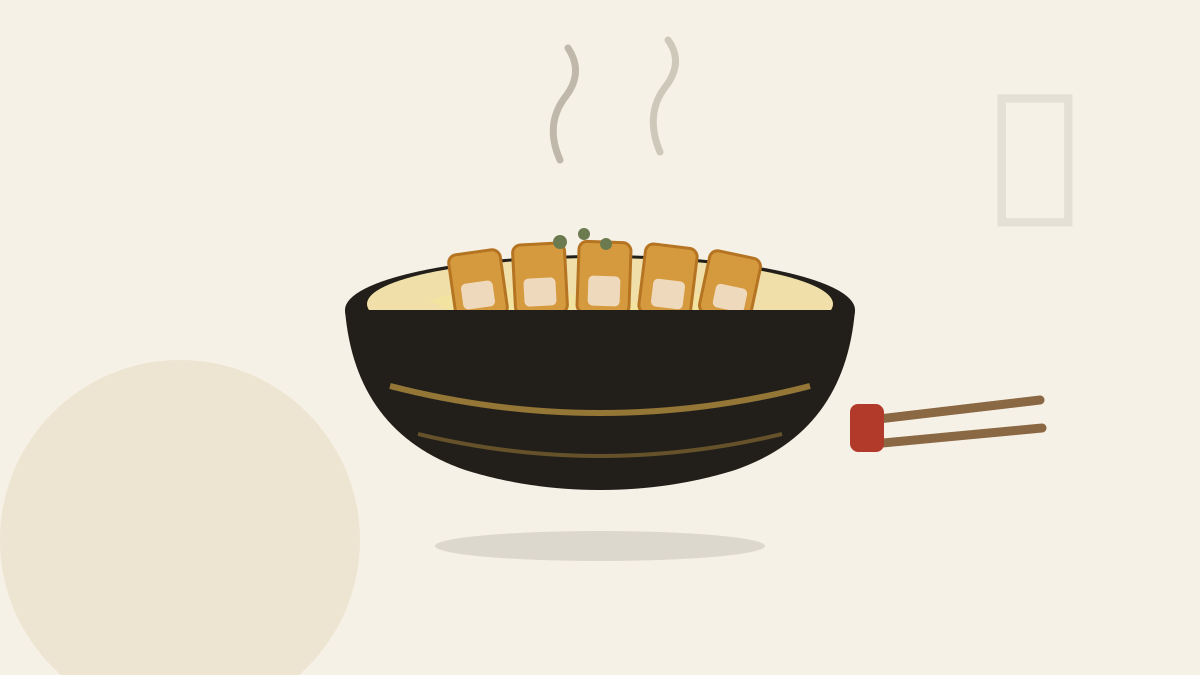 丼
丼- Prep
- 25 min
- Cook
- 25 min
- Serves
- 2
- Level
- Intermediate
Meiji Japan invented tonkatsu — the panko-armored pork cutlet, Western food translated into Japanese — but it took the Taishō era to complete the naturalization. Someone (legend says a Waseda student in 1921, feeding himself on yesterday's cutlet) laid sliced katsu over sweet dashi-simmered onions, set it with egg, and poured the whole thing over rice. With that, the foreign cutlet stopped being a visitor. A dish served in a donburi with dashi and barely-set egg answers to nobody's cuisine but Japan's.
A century on, katsudon is dense with folklore — the pre-exam good-luck meal (katsu puns on "to win"), the interrogation-room cliché of every police drama — but it survives on construction, not sentiment. It's a contrast machine: crisp crust against silky egg, sweet onions against salty dashi, everything against hot plain rice. The cook's whole job is protecting those contrasts, which is why the cutlet meets the sauce for seconds only and the egg goes in streaky and in two pours.
If you've already learned our oyakodon, you know the grammar. This is the same sentence with a louder subject.
The cutlet goes into the sauce for seconds, not minutes — long enough to drink at the edges, short enough to stay crisp at the spine. Katsudon is a contrast dish; guard the contrast.
板前の一言 · A word from the kitchen
Ingredients材料
Serves 2
Tonkatsu
- 2pork loin cutlets — about 150 g each, 1.5 cm thick, edges scored so they don't curl
- salt and pepper
- 3 tbspflour
- 1egg, beaten
- 80 gpanko
- neutral oil for shallow-frying, 2 cm deep
The bowl
- 200 mlawase dashi
- 2.5 tbspsoy sauce
- 2.5 tbspmirin
- 2 tspsugar
- 1onion, halved and thinly sliced
- 3eggs, barely beaten — streaky, whites still visible
- 2 bowlshot cooked Japanese rice
- mitsuba or scallion greens, and shichimi at the table
Method作り方
Step 1: Fry the tonkatsu
Season the cutlets, dredge in flour, egg, then panko, pressing the crumbs on. Shallow-fry at 170°C for 3 to 4 minutes a side until deep gold, then rest on a rack 5 minutes. Slice into 2 cm bars. (Doing this with yesterday's leftover tonkatsu is not a compromise; it's the dish's actual origin story.)
Step 2: Simmer the onions
In a small skillet, combine dashi, soy, mirin, and sugar with the onion and simmer 4 to 5 minutes until the onion is sweet and translucent. Use one pan per bowl if you can — katsudon is built to order.
Step 3: Lay in the katsu
Arrange the sliced cutlet over the onions and let the sauce come back to a simmer for 30 seconds, spooning a little over the slices — edges soften, crust survives.
Step 4: The egg, in two pours
Pour three-quarters of the streaky egg around and over the katsu, cover, and cook 45 seconds. Add the rest, cover, kill the heat, and count 30 — set below, trembling on top.
Step 5: Slide onto rice
Tip the whole raft over hot rice so the sauce bleeds down through the grains. Mitsuba on top, shichimi within reach, and eat while the contrast between crisp and custard still exists.
道具 · The tools
Equipment
Rice cooker
炊飯器Consistent short-grain rice with zero attention — the one appliance nearly every page here leans on.
Shop on Amazon →Nonstick frying pan
フライパンFor chanpurū, gyoza, pancakes, and anything that needs a clean release and even browning.
Shop on Amazon →Portable gas burner
カセットコンロThe tabletop butane burner that turns any nabe into a shared meal — cook and eat from the same pot.
Shop on Amazon →Mandoline (benriner)
スライサーPaper-thin daikon, cucumber, and cabbage in seconds — the Japanese mandoline home cooks actually own.
Shop on Amazon →
Equipment links are Amazon affiliate links. As an Amazon Associate we earn from qualifying purchases, at no cost to you. Disclosure.
Questions from the kitchen
Where does katsudon come from?
Tonkatsu itself is a Meiji invention — Western cutlets, Japanese-ified in Tokyo's yōshoku restaurants. Katsudon, the act of simmering that cutlet in dashi and egg over rice, appears in the early Taishō years; a famous (and contested) claim credits a Waseda University student around 1921. However the paperwork settles, it was born as a brilliant use of day-old katsu.
Why is katsudon eaten before exams — and after arrests?
"Katsu" is a homophone for 勝つ, "to win," so students eat it the night before entrance exams for luck. And in a hundred years of Japanese police dramas, the detective buys the suspect a katsudon in the interrogation room — a cliché so beloved that real police reportedly avoid it to keep confessions clean. Few dishes carry this much folklore.
Can I skip frying and use store-bought katsu?
Absolutely — supermarket or butcher tonkatsu revived in a hot oven, then simmered as written, produces a bowl within honest reach of the real thing. The simmer-and-egg technique is the dish; the frying is merely the price of admission, and it's negotiable.
次はこちら · Cook next
Keep the burner on
 丼
丼Rice & Donburi · 25 min · Beginner
Unadonうな丼
Kabayaki eel lacquered in sweet tare over hot rice — an Edo summer ritual with the best marketing legend in Japanese food history. Store-bought eel welcome.
 丼
丼Rice & Donburi · 45 min · Beginner
Salted Salmon Onigiri鮭お握り
Proper rice balls with salted salmon — how to cook and season the rice, shape with wet hands, and keep the nori crisp until the first bite.
 丼
丼Rice & Donburi · 40 min · Beginner
Moji Yaki Curry焼きカレー
Mojikō's baked curry rice — Japanese curry spooned over rice, topped with an egg and cheese, and baked until bubbling; a port-town café invention from the retro streets of Kitakyūshū.