Unadon
うな丼
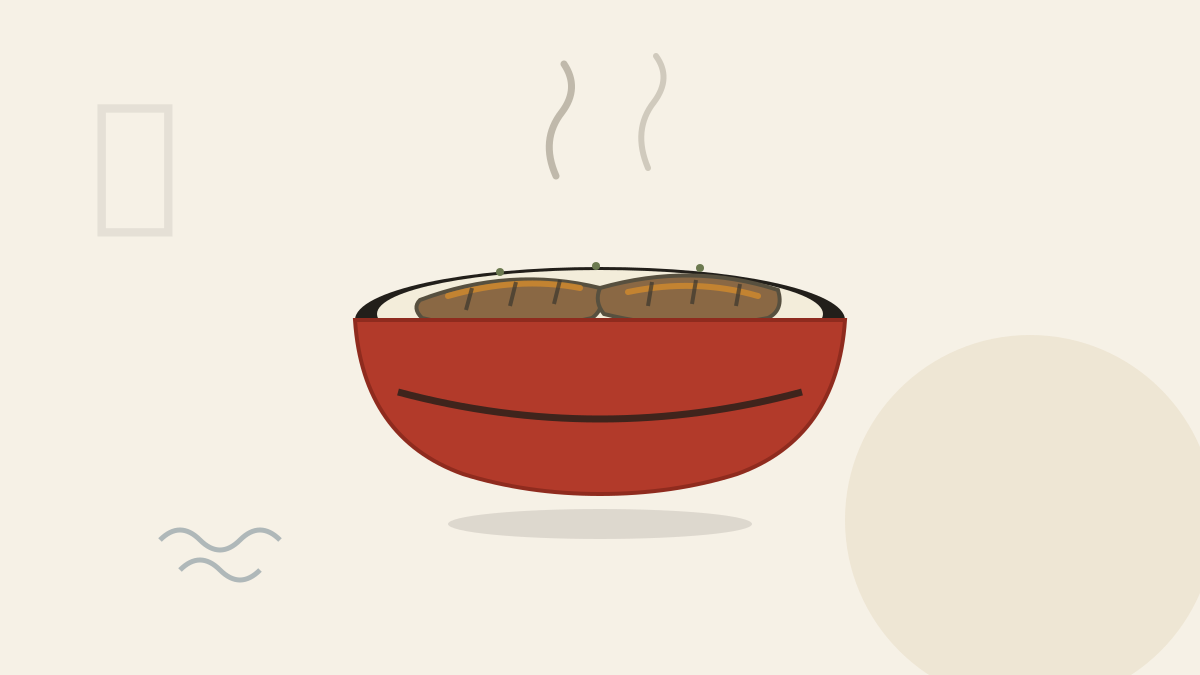
Kabayaki eel lacquered in sweet tare over hot rice — an Edo summer ritual with the best marketing legend in Japanese food history. Store-bought eel welcome.
By Japanese Cookbook Kitchen · July 1, 2026
 丼
丼- Prep
- 10 min
- Cook
- 15 min
- Serves
- 2
- Level
- Beginner
The eel-broiling stalls of Edo worked the same riverbanks as the tempura men, fanning charcoal under split unagi from the Sumida's marshes. Kabayaki — eel dipped in sweet soy tare and grilled to lacquer — was cheap laborers' food before it was anyone's luxury. The bowl came later: the usual story names Ōkubo Imasuke, a Bunka-era theater patron who had his eel carried over hot rice so it would survive the trip to his seat, and by the mid-1800s the unadon was an institution with its own economy of tare pots and secret glazes.
Midsummer still belongs to it. Doyō-no-ushi, the Day of the Ox in late July, sends the whole country out for eel on the strength of the Gennai legend told in the FAQ — proof that a good slogan outlives its century. At home, with honest store-bought kabayaki, a quick tare, and a broiler, you are fifteen minutes from the most restorative bowl in the Edo repertoire. The sanshō is not garnish; it is the point of the spear.
Vacuum-packed kabayaki is not a compromise, it is an ingredient — but it needs the sake steam. Straight from the packet it tastes of the packet; ten minutes of care and it tastes of the river.
板前の一言 · A word from the kitchen
Ingredients材料
Serves 2
Tare
- 3 tbspsoy sauce
- 3 tbspmirin
- 2 tbspsake
- 1 tbspsugar
Bowl
- 2 filletsstore-bought kabayaki eel — about 300 g; Japanese grocers keep it vacuum-packed near the fish
- 2 tbspsake — for steaming the fillets back to life
- 2 large bowlshot cooked Japanese rice
- sanshō pepper, to finish — non-negotiable; its citrus buzz is half the dish
Method作り方
Step 1: Reduce the tare
Simmer the soy, mirin, sake, and sugar in a small pan until it coats a spoon and has lost its raw alcohol edge, 4 to 5 minutes. Eel shops keep tare pots going for generations; yours only needs to survive until dinner.
Step 2: Rinse the fillets
Rinse the packet sauce off the eel under warm water and pat dry. It sounds like sacrilege and is the single biggest upgrade — that sauce is sweet varnish, and you have made something better.
Step 3: Steam with sake
Lay the fillets in a skillet with the sake, cover, and steam over medium-low heat for 3 to 4 minutes until plump and heated through. This mimics the Kanto method, where eel is steamed before its final grilling and turns near-custard.
Step 4: Glaze under the broiler
Brush the fillets generously with tare and slide under a hot broiler for 2 to 3 minutes, until the edges catch and the glaze bubbles. Brush once more as they come out.
Step 5: Build the bowl
Spoon a little tare over the hot rice first, lay the eel on top, and finish with the rest of the tare and a good pinch of sanshō. Serve immediately, ideally to someone having a hard week.
道具 · The tools
Equipment
Rice cooker
炊飯器Consistent short-grain rice with zero attention — the one appliance nearly every page here leans on.
Shop on Amazon →Nonstick frying pan
フライパンFor chanpurū, gyoza, pancakes, and anything that needs a clean release and even browning.
Shop on Amazon →
Equipment links are Amazon affiliate links. As an Amazon Associate we earn from qualifying purchases, at no cost to you. Disclosure.
Questions from the kitchen
What is the doyō-no-ushi eel story?
The legend — and it is told as legend — credits Hiraga Gennai, the Edo polymath, with rescuing a slow eel shop by posting a sign reading "Today is the Day of the Ox." Eel on doyō-no-ushi, midsummer's ox day, became a craze and remains one; no contemporary document backs the story, which has never slowed it down.
Why is Kanto kabayaki split down the back?
Tokyo tradition says Edo's samurai found belly-splitting uncomfortably close to seppuku, so eel is opened along the spine — another story to enjoy with suspicion. What is verifiably Kanto is the steam before the final grill, which makes the flesh silkier than Kansai's crisp grill-only style.
Unadon or unajū?
Same food, different vessel and price. Unadon is the bowl, born cheap; unajū arranges the eel in a lacquered box and charges for the architecture. The rice-to-eel ratio matters more than the container.
次はこちら · Cook next
Keep the burner on
 丼
丼Rice & Donburi · 50 min · Intermediate
Katsudonカツ丼
Crisp tonkatsu simmered with onions in sweet dashi-soy and set with barely-cooked egg over rice — the Taishō-era donburi that made yōshoku fully Japanese.
 丼
丼Rice & Donburi · 45 min · Beginner
Salted Salmon Onigiri鮭お握り
Proper rice balls with salted salmon — how to cook and season the rice, shape with wet hands, and keep the nori crisp until the first bite.
 丼
丼Rice & Donburi · 40 min · Beginner
Moji Yaki Curry焼きカレー
Mojikō's baked curry rice — Japanese curry spooned over rice, topped with an egg and cheese, and baked until bubbling; a port-town café invention from the retro streets of Kitakyūshū.