Wanko Soba
わんこそば
Iwate's hospitality ritual of endless lacquered mouthfuls, scaled sanely for a home table — chilled soba served bowl by tiny bowl with a bright spread of toppings.
By Japanese Cookbook Kitchen · May 9, 2026
 麺
麺- Prep
- 30 min
- Cook
- 15 min
- Serves
- 4
- Level
- Beginner
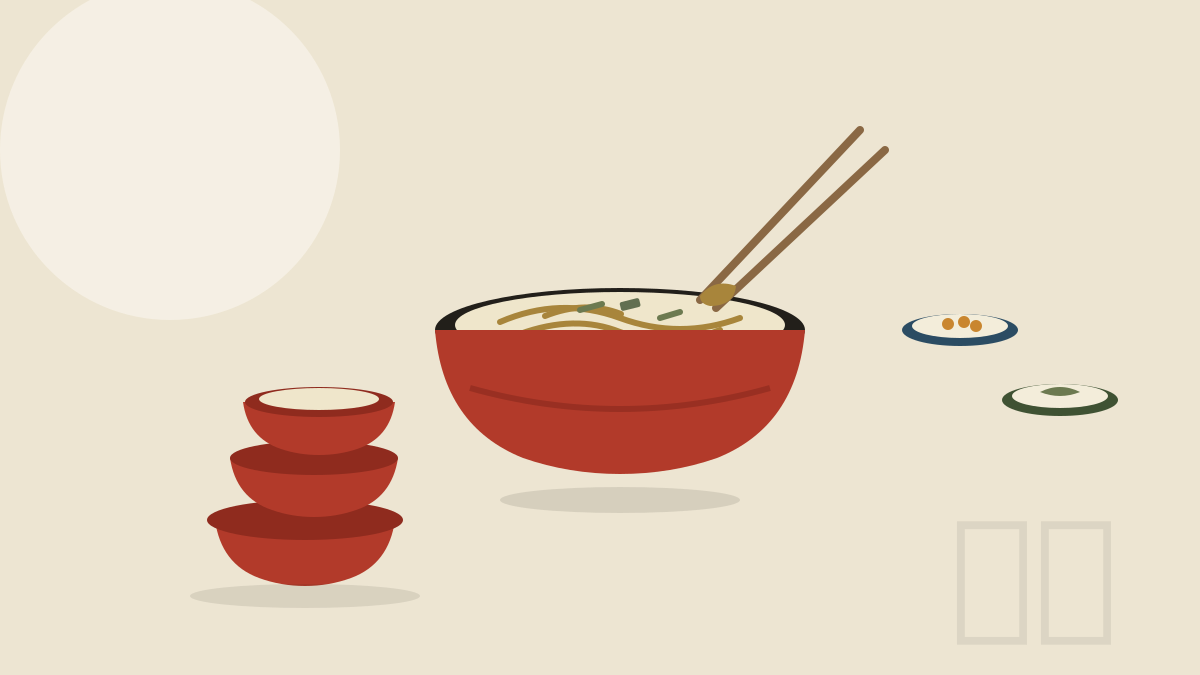
Wanko soba belongs to Iwate's old Nanbu domain, where buckwheat grew on cold uplands that rice never trusted. A wanko is simply a small wooden bowl in the northern dialect, and the ritual — a server standing at your shoulder, tipping mouthful after mouthful into your bowl with a cry of hai, dontto — is Edo-rooted hospitality theater formalized in Hanamaki and Morioka restaurants in the early twentieth century. The famous origin tale stars the lord Nanbu Toshinao and one polite little bowl; take it, as Iwate mostly does, with a smile rather than a footnote.
At home the point is not volume but rhythm. Cold, freshly rinsed soba; strong tsuyu poured a spoonful at a time; a table crowded with toppings so that no two bowls taste alike — tuna and wasabi in one, daikon and sesame the next, ikura when you feel prosperous. Somebody serves, everybody counts, and the stack of empty bowls climbs like a game score. It is the rare dish that turns feeding people into a spectator sport, and it costs you noodles and a sauce.
The ritual works because each mouthful is dressed fresh. Keep the noodles cold and undressed, the tsuyu in a pitcher, and pour at the table — soba sitting in sauce is soba dying in sauce.
板前の一言 · A word from the kitchen
Ingredients材料
Serves 4
Soba and tsuyu
- 400 gdried soba noodles — a good ni-hachi (80 percent buckwheat) style holds up best to repeated saucing
- 400 mlawase dashi
- 100 mlsoy sauce
- 100 mlmirin
Toppings, in small dishes
- 3scallions, finely sliced
- 1 sheetnori, snipped into threads
- 100 ggrated daikon, lightly squeezed
- 100 gsashimi-grade tuna, diced — optional but traditional at the Morioka tables; skip without guilt
- 50 gikura — optional; a few pearls per bowl, not a ladleful
- 2 tbsptoasted sesame seeds
- wasabi and katsuobushi, to taste
Method作り方
Step 1: Make and chill the tsuyu
Bring the awase dashi, soy sauce, and mirin just to a boil, then chill completely. This is a dipping-strength tsuyu — it should taste too salty on its own, because each mouthful of noodles carries only a spoonful.
Step 2: Set the table first
Arrange every topping in its own small dish and give each eater a stack of the smallest bowls you own. Wanko soba is service, not plating — the table is the recipe.
Step 3: Cook and shock the soba
Boil the soba in generous water until just done, then rinse under cold running water, rubbing off the surface starch until the noodles feel slick and cool. Drain hard.
Step 4: Portion into mouthfuls
Twirl the soba into bite-size nests — 20 to 25 grams each, one proper mouthful. Hold them on a tray over ice if the kitchen is warm.
Step 5: Serve in rounds
Someone plays server: a nest in each bowl, a spoonful of tsuyu over it, and the eater adds a topping — different each round. Bowl finished, bowl refilled, until a lid goes on. Empty bowls stack up as the scorecard.
道具 · The tools
Equipment
Portable gas burner
カセットコンロThe tabletop butane burner that turns any nabe into a shared meal — cook and eat from the same pot.
Shop on Amazon →Zaru (draining basket)
ざるFor draining and serving cold noodles, and rinsing rice — a bamboo or mesh basket that lets everything breathe.
Shop on Amazon →Grater (oroshigane)
おろし金Fine, wet grating for ginger, daikon oroshi, and fresh wasabi — a Western microplane is close.
Shop on Amazon →
Equipment links are Amazon affiliate links. As an Amazon Associate we earn from qualifying purchases, at no cost to you. Disclosure.
Questions from the kitchen
Where does the endless-bowl ritual come from?
The Hanamaki legend says the young lord Nanbu Toshinao, passing through around 1600, was served soba in a small lacquered bowl lest a large one seem rude — and kept asking for more. Historians prefer a humbler origin: at rural gatherings, soba was boiled in small batches, so hosts poured small refills to keep everyone eating hot noodles. Both stories are about the same thing — a host's terror of an empty bowl.
How many bowls make a normal serving?
In Morioka the reckoning is about 15 wanko to one ordinary bowl of soba, so 30 to 40 bowls is dinner, not a stunt. The competitive record stands in the hundreds; nothing about this recipe requires you to investigate that personally.
How do I signal I'm finished?
In the restaurants, you slam the lid on your bowl before the server can refill it — an empty, unlidded bowl is consent. At home, adopt the rule. It is the best part of the game.
次はこちら · Cook next
Keep the burner on
 麺
麺Noodles · 70 min · Intermediate
Weeknight Shoyu Ramen醤油ラーメン
A clear, chicken-and-dashi shoyu ramen you can honestly make on a Tuesday — with a proper tare, marinated eggs, and no ten-hour bone boil.
 麺
麺Noodles · 25 min · Beginner
Izumo Soba出雲そば
Shimane's dark whole-grain soba served warigo style — three stacked lacquer rounds, sauce poured over the noodles, an Edo-era ritual from the land of the gods.
 麺
麺Noodles · 65 min · Intermediate
Sanuki Udon, Kake Style讃岐うどん
Kagawa's proudly chewy udon in hot iriko dashi — hand-kneaded, properly rested, and eaten with the speed and reverence Shikoku demands.