Tokushima Ramen
徳島ラーメン
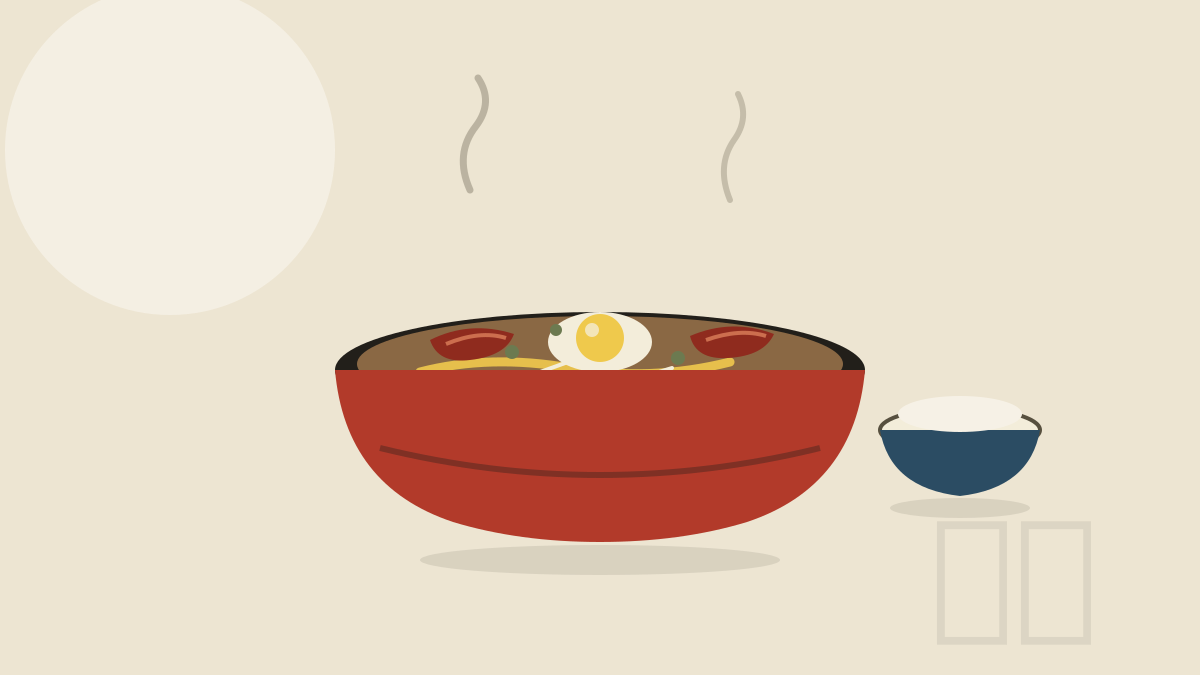
Tokushima's brown-broth ramen — pork bones and dark soy, sweet-simmered pork belly, a raw egg melting on top, and a bowl of rice on the side. A factory town's masterpiece.
By Japanese Cookbook Kitchen · May 21, 2026
四国 ShikokuShōwa era, 1926–1989
 麺
麺- Prep
- 30 min
- Cook
- 240 min
- Serves
- 4
- Level
- Advanced
Tokushima ramen is what happens when a noodle stall grows up next to a meat factory. In the years after the war, the Nisshin ham works gave the city's yatai carts something most of Japan didn't have — pork bones, cheap and endless — and the stalls built a broth on them, browned it with dark local soy, sweetened it until it flattered a bowl of rice, and laid thin sukiyaki-style simmered belly on top instead of chashu. The raw egg came naturally; the bowl was already halfway to sukiyaki. Locals sorted the city's shops into brown, white, and yellow systems and told nobody. Then in 1999 the shop Inotani was invited to the Shin-Yokohama Ramen Museum, and Tokushima's secret became a genre.
Make no mistake about what you are building: this is an okazu ramen, a ramen that behaves like a side dish, seasoned past politeness because plain rice is waiting to catch it. The yolk is the hinge — break it late, watch the broth turn from a shout to a murmur, and finish the rice with whatever is left in the bowl. Tokushima would consider anything less a waste of a perfectly good factory.
This is a rice-eating ramen — salty and sweet on purpose, seasoned to push you toward the bowl of plain rice at its elbow. If the broth tastes right on its own, it is probably too mild.
板前の一言 · A word from the kitchen
Ingredients材料
Serves 4
Broth
- 1.5 kgpork bones (femur or neck), rinsed
- 3 Lwater
- 1onion, halved
- 1 knobginger, smashed
- 6 clovesgarlic
Sweet-simmered pork belly
- 400 gpork belly, sliced 3 mm thin
- 4 tbspsoy sauce
- 3 tbspsugar
- 3 tbspsake
- 100 mlwater
Tare & bowl
- 6 tbspdark soy sauce — koikuchi, plus 1 tsp tamari if you have it — the broth should be the color of strong tea
- 1 tbspsugar
- 4 portionsfresh medium-thin ramen noodles
- 4very fresh eggs, yolks separated if you prefer
- 3scallions, sliced
- 100 gbean sprouts, blanched 30 seconds
- 4 bowlshot cooked rice, for the table
Method作り方
Step 1: Run the pork bones hard
Blanch the bones 5 minutes, rinse, then boil them in fresh water with the onion, ginger, and garlic at a steady rolling simmer for 4 hours, topping up as needed. You want a broth with real body but not full Hakata whiteness — Tokushima's base is sturdy, not creamy.
Step 2: Simmer the belly like sukiyaki
Cook the pork belly slices in the soy, sugar, sake, and water over medium heat until the liquid reduces to a dark glaze, about 15 minutes. This sweet, almost candied pork — not chashu — is the dish's signature, and the simmering liquid becomes part of the tare.
Step 3: Build the brown tare
Combine the dark soy, sugar, and every spoonful of the belly's leftover glaze. Divide it among four bowls — about 2 tablespoons each — and adjust upward without fear. The color and the salt-sweet punch are what make this cha-kei, the brown system.
Step 4: Assemble hot and fast
Boil the noodles, ladle the strained broth over the tare, and stir once. Noodles in, then the glazed belly, bean sprouts, and scallion piled on top.
Step 5: Crown it with the raw egg
Slide a whole raw egg — or just the yolk — onto the center of the hot bowl and serve immediately with the rice alongside. Breaking the yolk halfway through resets the bowl from salty-sharp to silky, which is the entire trick.
道具 · The tools
Equipment
Zaru (draining basket)
ざるFor draining and serving cold noodles, and rinsing rice — a bamboo or mesh basket that lets everything breathe.
Shop on Amazon →
Equipment links are Amazon affiliate links. As an Amazon Associate we earn from qualifying purchases, at no cost to you. Disclosure.
Questions from the kitchen
A ham factory invented this?
Close to it. Postwar Tokushima was home to a major ham works — the Nisshin plant — which meant a steady, cheap supply of pork bones for the street stalls nearby. The brown, sweet, rice-friendly style grew up around that supply chain, and it stayed a local secret until the shop Inotani appeared at the Shin-Yokohama Ramen Museum in 1999 and the country noticed.
Is the raw egg safe?
In Japan, where eggs are washed, dated, and sold for raw consumption, yes, routinely. Elsewhere, buy pasteurized eggs or the freshest best-sourced eggs you can and make your own call — or poach it softly instead. The bowl loses a little theater and keeps most of the point.
What are the white and yellow systems I keep reading about?
Tokushima locals sort their ramen into three keitō, or systems: cha-kei, the brown soy-tonkotsu made famous nationally; shiro-kei, a paler, gentler pork broth common in the south of the city; and ki-kei, a yellowish chicken-and-vegetable style. This recipe is brown, because that is the one worth a passport.
次はこちら · Cook next
Keep the burner on
 麺
麺Noodles · 70 min · Intermediate
Weeknight Shoyu Ramen醤油ラーメン
A clear, chicken-and-dashi shoyu ramen you can honestly make on a Tuesday — with a proper tare, marinated eggs, and no ten-hour bone boil.
 麺
麺Noodles · 25 min · Beginner
Izumo Soba出雲そば
Shimane's dark whole-grain soba served warigo style — three stacked lacquer rounds, sauce poured over the noodles, an Edo-era ritual from the land of the gods.
 麺
麺Noodles · 65 min · Intermediate
Sanuki Udon, Kake Style讃岐うどん
Kagawa's proudly chewy udon in hot iriko dashi — hand-kneaded, properly rested, and eaten with the speed and reverence Shikoku demands.