Sobagome Zōsui
そば米雑炊
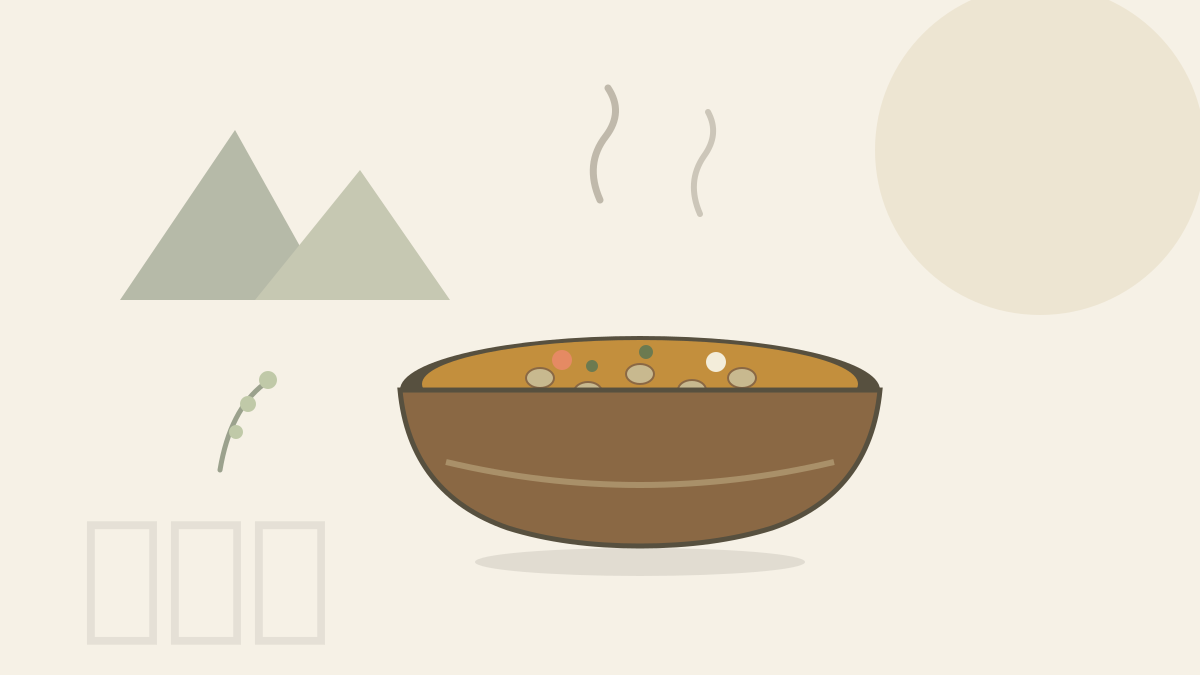
The Iya Valley's whole buckwheat-groat porridge — nutty grains in clear dashi with chicken and mountain vegetables. Comfort food from Japan's steepest hidden valley.
By Japanese Cookbook Kitchen · May 26, 2026
四国 ShikokuKamakura era, 1185–1333
 丼
丼- Prep
- 15 min
- Cook
- 30 min
- Serves
- 4
- Level
- Beginner
The Iya Valley cuts through western Tokushima so steeply that its houses seem pinned to the slopes, and for eight centuries it has told the same founding story: that survivors of the Taira — the Heike — fled here after their annihilation at Dan-no-ura in 1185, climbing until no road could follow. Historians treat the refugee tradition with respect if not certainty; the vine bridges and Heike place-names remain. What nobody disputes is what the valley did next. Rice will not grow on a 40-degree gradient, so Iya grew buckwheat — and lacking flat boards and easy water for noodle-making, its cooks simply boiled the whole grain and called it their rice. Sobagome, they named it: soba-as-rice.
Zōsui usually means rice stretched with broth; here the buckwheat plays both parts. The groats keep a springy, poppy chew that outperforms rice in soup, and their nuttiness turns a modest dashi into something that tastes older than it is. It is a thirty-minute dish carrying eight hundred years of stubbornness, and it asks only that you rinse the groats. History has done the rest.
Boil the groats separately and rinse them before they meet the dashi. Buckwheat sheds a starchy murk that will cloud your careful broth, and the ten extra minutes buys you a soup that stays clear to the last bowl.
板前の一言 · A word from the kitchen
Ingredients材料
Serves 4
Groats
- 150 gsobagome (whole hulled buckwheat groats) — sold as buckwheat groats or kasha (untoasted); Tokushima packets labeled sobagome are ideal
Soup
- 1 Lawase dashi
- 150 gchicken thigh, cut in small dice
- 100 gdaikon, in thin quarter-rounds
- 1/2carrot, in thin quarter-rounds
- 3dried shiitake, soaked and sliced — add the soaking water to the dashi — free depth
- 1 sheetaburaage (fried tofu), blanched and slivered
- 2 tbspusukuchi (light) soy sauce
- 1 tbspsake
- 1/2 tspsalt
- 2scallions, sliced, to finish
Method作り方
Step 1: Cook the groats alone
Boil the sobagome in plenty of unsalted water for 10 to 12 minutes until tender with a gentle pop, then drain and rinse under cold water. They should be plump, separate, and faintly pearly — this rinse is what keeps the finished soup clean instead of gluey.
Step 2: Build the soup
Bring the dashi to a bare simmer with the sake, slip in the chicken, and skim once it firms. Add daikon, carrot, shiitake, and aburaage and simmer gently about 10 minutes, until the daikon turns translucent.
Step 3: Season pale
Season with usukuchi soy and salt to a savoriness just shy of satisfying — the groats will drink some of it. The broth should stay light amber; this is a mountain dish, not a soy soup.
Step 4: Marry and serve hot
Add the cooked groats and simmer 3 to 4 minutes, no more, so they warm through without slumping into porridge. Scatter with scallion and serve steaming, ideally to someone who has just come in from the cold.
道具 · The tools
Equipment
Rice cooker
炊飯器Consistent short-grain rice with zero attention — the one appliance nearly every page here leans on.
Shop on Amazon →
Equipment links are Amazon affiliate links. As an Amazon Associate we earn from qualifying purchases, at no cost to you. Disclosure.
Questions from the kitchen
Why groats instead of soba noodles?
Because the Iya Valley's slopes made both rice paddies and flat noodle-rolling boards a luxury. Boiling the whole grain skips milling, rolling, and cutting entirely — it is soba stripped to its minimum viable form, and the payoff is a chewy, nutty grain that holds its shape in soup the way rice never quite does.
Is the Heike story actually true?
The core of it is treated as historical tradition rather than mere legend: after the Taira (Heike) clan's destruction at Dan-no-ura in 1185, survivors are held to have fled into deep Shikoku, and Iya's hamlets have claimed that descent for centuries. What is certain is the agriculture — the valley grew buckwheat because its gradients and thin soil could not grow rice.
Can I make it vegetarian?
Easily — drop the chicken, build the broth from kombu and the shiitake soaking water, and double the aburaage. The dish predates abundant meat anyway; chicken is the modern comfort, not the foundation.
次はこちら · Cook next
Keep the burner on
 丼
丼Rice & Donburi · 50 min · Intermediate
Katsudonカツ丼
Crisp tonkatsu simmered with onions in sweet dashi-soy and set with barely-cooked egg over rice — the Taishō-era donburi that made yōshoku fully Japanese.
 丼
丼Rice & Donburi · 25 min · Beginner
Unadonうな丼
Kabayaki eel lacquered in sweet tare over hot rice — an Edo summer ritual with the best marketing legend in Japanese food history. Store-bought eel welcome.
 丼
丼Rice & Donburi · 45 min · Beginner
Salted Salmon Onigiri鮭お握り
Proper rice balls with salted salmon — how to cook and season the rice, shape with wet hands, and keep the nori crisp until the first bite.