Shinshū Zaru Soba
ざる蕎麦
Nagano's cold buckwheat noodles on a bamboo tray with proper tsuyu, wasabi where it belongs, and the sobayu finish — Edo-era mountain food at its most exact.
By Japanese Cookbook Kitchen · June 3, 2026
 麺
麺- Prep
- 20 min
- Cook
- 10 min
- Serves
- 2
- Level
- Beginner
Buckwheat is the crop of high, cold, forgiving-nothing ground, which is a fair description of old Shinshū. Nagano's mountain villages were milling and eating soba centuries before it was fashionable, and when the cut noodle — sobakiri — spread through Japan in the Edo period, the highlands already had the raw material and the cold, soft water to make it sing. Togakushi, the shrine village in the mountains north of Nagano city, built a pilgrimage cuisine around it that still draws lines out the door.
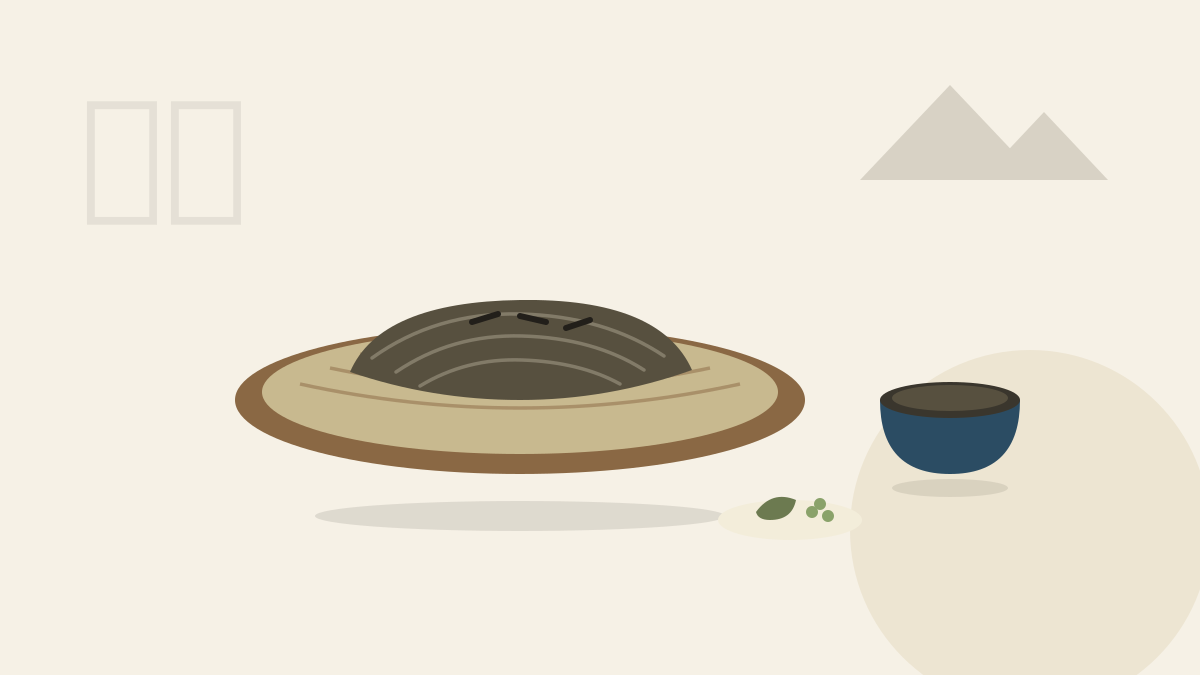
Zaru soba is the noodle at its most exposed: cold, on bamboo, with nothing but a strong tsuyu, wasabi in its correct place, and a finish of sobayu — the cooking water, drunk warm in the emptied cup. Every step is small and every step shows. It is the rare dish where doing less, precisely, is the entire skill.
The wash matters more than the boil. Rinse the cooked soba under cold running water, rubbing like you're doing laundry, until the water runs clear — surface starch is what makes sad, gluey soba sad and gluey.
板前の一言 · A word from the kitchen
Ingredients材料
Serves 2
Noodles
- 200 gdried soba noodles — look for ni-hachi — 80 percent buckwheat — from a Nagano maker if your shop stocks one
- plenty of water, unsalted
Tsuyu and garnish
- 100 mlsoy sauce
- 100 mlmirin
- 1 tbspsugar
- 400 mlawase dashi — made katsuobushi-heavy; the tsuyu should taste almost too strong straight — it's a dip, not a soup
- 2 tspfresh wasabi, grated
- 2scallions, sliced into fine rings and rinsed
- 1/2 sheetnori, cut into threads
Method作り方
Step 1: Make the tsuyu ahead
Simmer soy, mirin, and sugar for 2 minutes, add the dashi, return to a bare simmer, and chill completely. A rested tsuyu — even a day ahead — tastes rounder; every serious soba shop keeps its kaeshi far longer than that.
Step 2: Boil in an ocean
Cook the soba in the largest pot you own, uncovered, at a rolling boil for the packet time minus 30 seconds. Do not salt the water. Before draining, ladle off and reserve a cup of the cloudy cooking water — that is your sobayu.
Step 3: Wash the noodles cold
Drain and rinse under cold running water, rubbing the noodles firmly between your hands until they feel slick and springy, then tighten them in ice water for 30 seconds. Drain hard — water in the tray dilutes everything downstream.
Step 4: Plate on the zaru
Mound the soba loosely on bamboo trays or a slatted plate so air reaches it, and scatter the nori threads on top. Serve the chilled tsuyu in cups alongside with scallions and wasabi on a separate small dish.
Step 5: Dip, slurp, finish with sobayu
Put a dab of wasabi directly on the noodles — not in the cup — lift a modest bundle, dip the bottom third into the tsuyu, and slurp without apology. When the noodles are gone, pour the warm sobayu into the remaining tsuyu and drink it as the closing course.
道具 · The tools
Equipment
Zaru (draining basket)
ざるFor draining and serving cold noodles, and rinsing rice — a bamboo or mesh basket that lets everything breathe.
Shop on Amazon →Grater (oroshigane)
おろし金Fine, wet grating for ginger, daikon oroshi, and fresh wasabi — a Western microplane is close.
Shop on Amazon →
Equipment links are Amazon affiliate links. As an Amazon Associate we earn from qualifying purchases, at no cost to you. Disclosure.
Questions from the kitchen
Why does Nagano get to claim soba?
Altitude and poor soil — buckwheat thrives where rice sulks, and highland Shinshū grew it out of necessity long before it became pride. By the Edo period the region's soba had a national reputation; Togakushi, a shrine village north of Nagano city, remains one of Japan's most storied soba destinations, its noodles traditionally served in small bundles called botchi.
Why not just stir the wasabi into the tsuyu?
Heat and liquid flatten wasabi within a minute or two, and it muddies the dip for every subsequent bite. On the noodles, it stays bright and you control each mouthful. Soba etiquette sounds fussy until you taste the difference, at which point it reclassifies as physics.
What exactly is sobayu and why would I drink it?
The water the soba cooked in, cloudy with buckwheat starch and water-soluble protein. Poured into the leftover tsuyu it makes a warm, nutty, faintly sweet broth that finishes the meal and wastes nothing. Shops bring it in a red lacquered pot without being asked; at home you just remember to save a cup.
次はこちら · Cook next
Keep the burner on
 麺
麺Noodles · 70 min · Intermediate
Weeknight Shoyu Ramen醤油ラーメン
A clear, chicken-and-dashi shoyu ramen you can honestly make on a Tuesday — with a proper tare, marinated eggs, and no ten-hour bone boil.
 麺
麺Noodles · 25 min · Beginner
Izumo Soba出雲そば
Shimane's dark whole-grain soba served warigo style — three stacked lacquer rounds, sauce poured over the noodles, an Edo-era ritual from the land of the gods.
 麺
麺Noodles · 65 min · Intermediate
Sanuki Udon, Kake Style讃岐うどん
Kagawa's proudly chewy udon in hot iriko dashi — hand-kneaded, properly rested, and eaten with the speed and reverence Shikoku demands.