Jakoten
じゃこ天
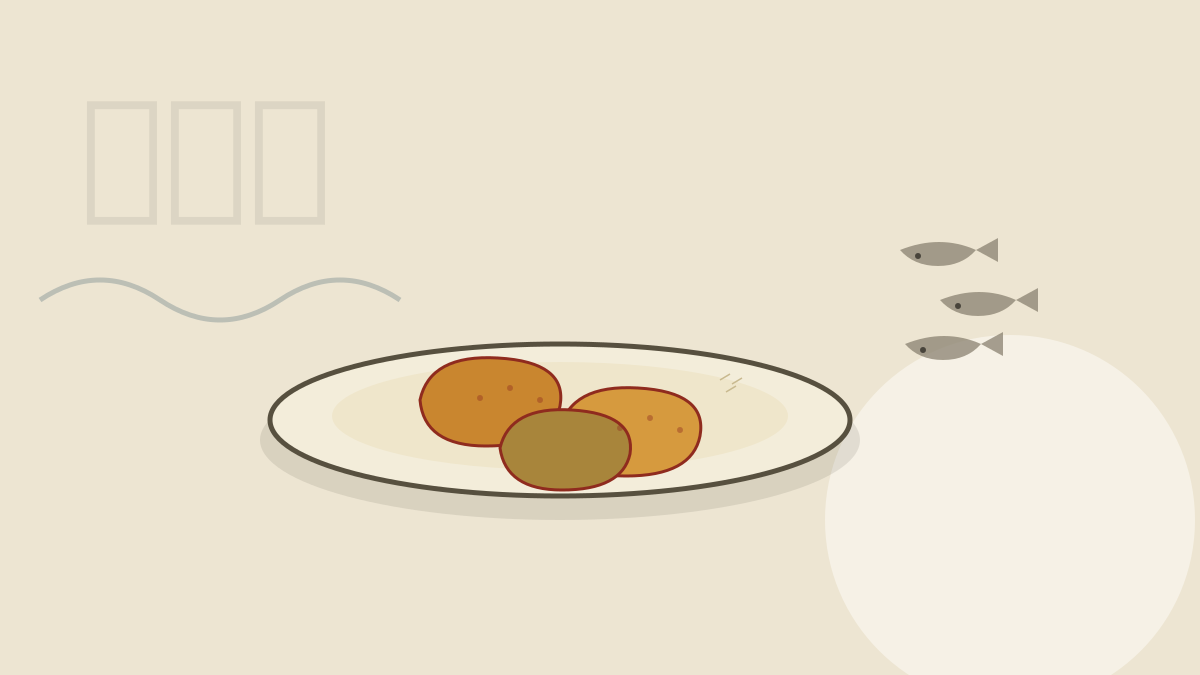
Uwajima's whole-fish fried cakes — small silver fish ground bones and all, shaped and fried. A Date-domain transplant now central to Ehime's coast.
By Japanese Cookbook Kitchen · May 18, 2026
 居酒屋
居酒屋- Prep
- 30 min
- Cook
- 15 min
- Serves
- 4
- Level
- Intermediate
Jakoten belongs to Uwajima, a port at the far southwestern tip of Ehime, and its story runs unusually straight for regional food. When the Uwajima domain was carved out in 1614, its first lord was Date Hidemune — eldest but illegitimate son of Date Masamune, the one-eyed warlord of Sendai far up in Tōhoku. A branch of the northern Date house thus took root on Shikoku's coast, and retainers brought their kitchens with them. The technique of grinding small fish into a bound cake is generally traced to that transplant, one of the few regional dishes whose migration sits on documented domain history rather than on a good story.
What makes jakoten itself is thrift and the sea. The local hotarujako are too small and bony to fillet, so they go into the grinder whole — bones, silver skin, and all — which gives the fried cake a faint mineral grain and a savor deeper than any smooth surimi. Salt draws the proteins into a sticky paste, a little starch and egg white tighten it, and a hot fry puffs the cakes gold. Eat them with ginger and soy, or drop one into a bowl of udon. Uwajima never threw the small fish back, and the coast is richer for it.
The bones are the point. Grinding the small fish whole gives jakoten its faint gravel of calcium and its deep-sea savor — fillet them out and you've made a blander, lesser cake.
板前の一言 · A word from the kitchen
Ingredients材料
Serves 4
- 400 gwhole small silver fish (hotarujako, sand lance, or small horse mackerel) — gutted and heads off; in Uwajima the tiny hotarujako go in bones and all — small sardines or a mix work at home
- 1 tspsalt
- 1 tbspsake
- 1 tspsugar
- 1egg white
- 1 tbsppotato starch (katakuriko)
- neutral oil, for frying
- grated ginger and soy sauce, to serve
Method作り方
Step 1: Clean the fish
Gut the small fish and pull the heads; leave the bones. Rinse and pat very dry. If your fish are larger than a finger, fillet them but keep some of the fine bones for texture and calcium.
Step 2: Grind to a paste
Pound or process the whole fish with the salt until tacky and cohesive — the salt draws out the proteins that bind surimi. Work in the sake, sugar, egg white, and potato starch until you have a smooth, sticky paste.
Step 3: Shape the cakes
With wet hands, form the paste into flat ovals about 1 cm thick and the size of a palm. The traditional Uwajima shape is a rough teardrop with a dimpled surface — no need for perfection.
Step 4: Fry until set and golden
Heat oil to 170°C and fry the cakes 3 to 4 minutes per side until deep gold, puffed, and cooked through. They should feel springy, not soft, in the middle.
Step 5: Serve hot or griddled
Eat them straight from the oil with grated ginger and a little soy, or re-crisp cold ones on a dry griddle. In Uwajima they turn up in udon, over rice, and beside a cold beer with equal ease.
道具 · The tools
Equipment
Flat griddle / teppan
鉄板A wide flat surface for okonomiyaki, monjayaki, and yakisoba — cast iron or an electric hot plate.
Shop on Amazon →Suribachi & surikogi
すり鉢The ridged grinding bowl and wooden pestle for sesame, miso dressings, and hiyajiru.
Shop on Amazon →Grater (oroshigane)
おろし金Fine, wet grating for ginger, daikon oroshi, and fresh wasabi — a Western microplane is close.
Shop on Amazon →
Equipment links are Amazon affiliate links. As an Amazon Associate we earn from qualifying purchases, at no cost to you. Disclosure.
Questions from the kitchen
How did a fish cake reach Uwajima from Sendai?
Through the Date family. In 1614 Date Masamune's illegitimate first son, Date Hidemune, was installed as lord of the new Uwajima domain, a branch of the Sendai Date house far to the north in Tōhoku. Retainers and their foodways came south with him, and jakoten's ground-fish technique is commonly traced to that documented domain link. It is a rare case where the migration story rests on real administrative history rather than legend.
Do I really grind the bones in?
For authentic jakoten, yes. Uwajima uses tiny fish called hotarujako whole, which is where the dish gets its slightly coarse, mineral edge. If you can only get larger fish, fillet most of it but grind in a portion of the soft bones for character.
Can I bake instead of fry?
You can, and it's lighter, but you lose the crackle and the puff that frying gives. If you bake, brush the cakes with oil and use a hot oven; accept that it's a different, quieter pleasure.
次はこちら · Cook next
Keep the burner on
 居酒屋
居酒屋Izakaya · 25 min · Beginner
Gōya Chanpurūゴーヤーチャンプルー
Okinawa's bitter melon stir-fry with tofu, pork, and egg — the Ryūkyū Kingdom's everyday masterpiece, and the honest way to make peace with gōya.
 居酒屋
居酒屋Izakaya · 40 min · Beginner
Osaka Okonomiyakiお好み焼き
Osaka's cabbage-and-batter griddle cake with pork belly, sauce, and dancing katsuobushi — postwar street food perfected. Dashi in the batter is the difference.
 居酒屋
居酒屋Izakaya · 35 min · Intermediate
Chicken Karaage鶏の唐揚げ
Japanese fried chicken with a soy-ginger marinade, a potato-starch crust, and the double-fry that keeps it crackling — izakaya standard, home method.