Osaka Okonomiyaki
お好み焼き
Osaka's cabbage-and-batter griddle cake with pork belly, sauce, and dancing katsuobushi — postwar street food perfected. Dashi in the batter is the difference.
By Japanese Cookbook Kitchen · June 27, 2026
 居酒屋
居酒屋- Prep
- 20 min
- Cook
- 20 min
- Serves
- 2
- Level
- Beginner
Okonomiyaki as Osaka knows it is a Shōwa dish, and specifically a postwar one: when rice was scarce and American wheat flour wasn't, the city's griddles turned flour, water, and cabbage into dinner. The genius was making scarcity taste like abundance — a hot, saucy, savory-sweet slab that cost almost nothing and felt like a feast. Osaka never stopped eating it after the hard years ended, which tells you everything.
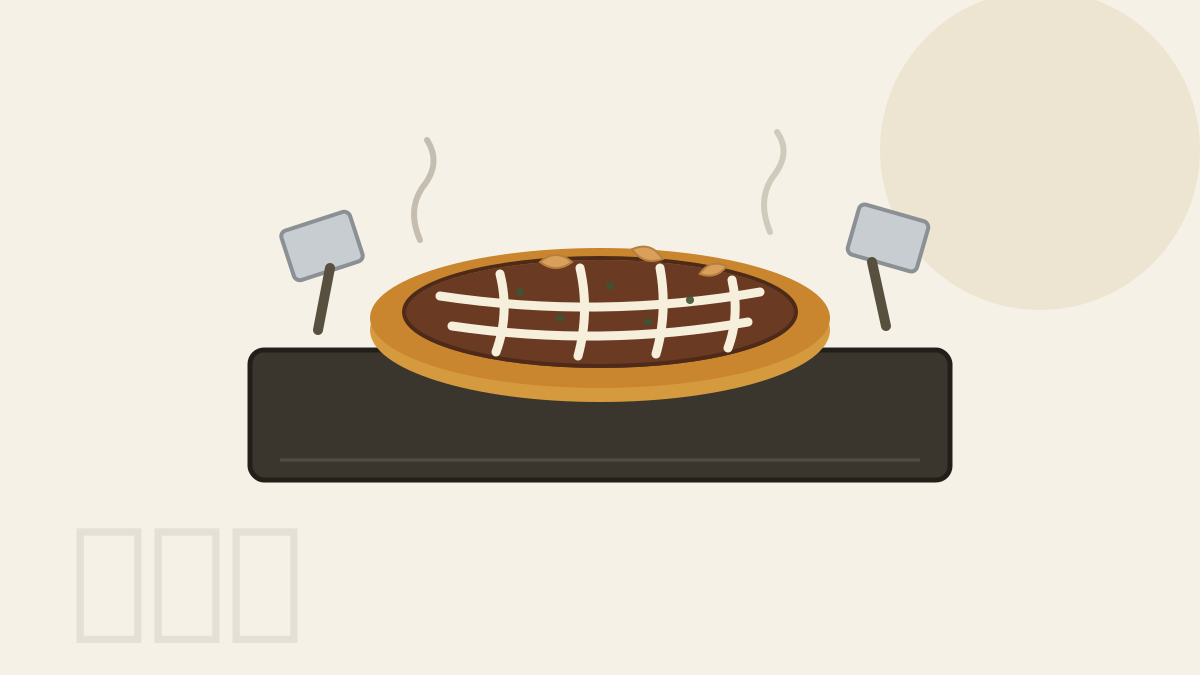
Done properly it's a texture argument: crisp griddled faces, an interior just barely set, cabbage steaming inside its own batter. Three decisions get you there — dashi in the batter instead of water, grated nagaimo for lift, and the discipline to never, ever press down with the spatula. The topping ritual (sauce, mayo lattice, aonori, katsuobushi flakes moving in the heat) is not decoration; it's the flavor system.
Make it once as written, then do as the name commands and cook it how you like it. In Osaka, that's not a compromise. That's the dish.
Press it and you've killed it. The spatula is for turning, not for squeezing — a fluffy okonomiyaki is full of steam you were told to leave alone.
板前の一言 · A word from the kitchen
Ingredients材料
Serves 2
Batter
- 120 gplain flour
- 150 mlcold awase dashi — this, not water, is why shop okonomiyaki tastes better than yours did
- 60 gnagaimo (mountain yam), grated — optional but transformative — it makes the interior soufflé-light
- 2eggs
- 300 gcabbage, chopped small — about a quarter head; not shredded fine — you want 1 cm confetti
- 3scallions, sliced
- 2 tbsptenkasu (tempura crumbs) — optional; adds richness and lift
To cook & finish
- 6 slicesthin pork belly
- 1 tbspneutral oil
- okonomiyaki sauce — Otafuku brand is the benchmark
- Japanese mayonnaise, aonori, and katsuobushi
Method作り方
Step 1: Make the batter, then wait to add cabbage
Whisk flour, dashi, and grated nagaimo into a smooth batter and rest it 15 minutes. Fold in the eggs, cabbage, scallions, and tenkasu only at the last minute — cabbage that sits in batter weeps and turns the cake dense.
Step 2: Set the first side
Heat oil in a skillet or on a griddle over medium. Pile in half the mixture as a thick 2 cm round — don't flatten it. Lay three pork belly slices on the raw top. Cook 5 minutes, lidded, until the bottom is deep gold.
Step 3: The one flip
Flip with confidence (two spatulas help), pork side down, and cook 5 to 6 minutes more, uncovered, until the pork is crisp and the center is set. Do not press. Flip once more briefly if you want the pork on top crackling.
Step 4: Dress it like you mean it
Paint generously with okonomiyaki sauce, cross-hatch with mayonnaise, and finish with aonori and a big handful of katsuobushi, which will wave at you as it warms. Cut in wedges straight on the griddle if you can.
道具 · The tools
Equipment
Nonstick frying pan
フライパンFor chanpurū, gyoza, pancakes, and anything that needs a clean release and even browning.
Shop on Amazon →Flat griddle / teppan
鉄板A wide flat surface for okonomiyaki, monjayaki, and yakisoba — cast iron or an electric hot plate.
Shop on Amazon →Grater (oroshigane)
おろし金Fine, wet grating for ginger, daikon oroshi, and fresh wasabi — a Western microplane is close.
Shop on Amazon →
Equipment links are Amazon affiliate links. As an Amazon Associate we earn from qualifying purchases, at no cost to you. Disclosure.
Questions from the kitchen
What does "okonomiyaki" actually mean?
Roughly "grilled how you like it" — okonomi is "your preference." The name is an open invitation: shrimp, squid, kimchi, cheese, and mochi are all orthodox additions in Osaka, where the dish is a canvas first and a recipe second.
Osaka style or Hiroshima style?
Osaka (this recipe) mixes everything into one batter. Hiroshima layers instead — a crepe of batter, a mountain of cabbage, pork, and a full serving of yakisoba noodles, stacked and pressed. Both cities consider the other's version a misunderstanding.
I can't find nagaimo or tenkasu. Is it still worth making?
Yes. The cake will be slightly denser without nagaimo and slightly leaner without tenkasu, but dashi in the batter and unpressed cooking still put you ahead of most restaurant versions abroad. Both ingredients freeze well when you do find them.
次はこちら · Cook next
Keep the burner on
 居酒屋
居酒屋Izakaya · 25 min · Beginner
Gōya Chanpurūゴーヤーチャンプルー
Okinawa's bitter melon stir-fry with tofu, pork, and egg — the Ryūkyū Kingdom's everyday masterpiece, and the honest way to make peace with gōya.
 居酒屋
居酒屋Izakaya · 35 min · Intermediate
Chicken Karaage鶏の唐揚げ
Japanese fried chicken with a soy-ginger marinade, a potato-starch crust, and the double-fry that keeps it crackling — izakaya standard, home method.
 居酒屋
居酒屋Izakaya · 140 min · Intermediate
Sōkiソーキ
Okinawa's soy-and-awamori simmered pork spare ribs — the fall-apart soba topping that grew into a dish of its own. Slow-cooked, sweet-savory, and deeply islander.