Inaniwa Udon
稲庭うどん
Akita's thin, hand-stretched udon — once a guarded domain secret — served cold and glossy with two dipping sauces. Silk-smooth noodles, minimal cooking.
By Japanese Cookbook Kitchen · May 20, 2026
 麺
麺- Prep
- 15 min
- Cook
- 8 min
- Serves
- 2
- Level
- Beginner
Inaniwa udon comes from a single village in southern Akita, and for most of its history you could not have made it at home if you tried. The technique — a hand-stretched, air-dried, ribbon-thin noodle — took hold in the mid-1600s, and the Satake lords who ruled the Akita domain treated it as a guarded specialty, its method held within one family and its production kept deliberately small. That secrecy held, more or less, until the Meiji era opened the craft up. What survived is a noodle unlike any other udon in Japan: flat rather than round, pale and slightly glassy, with a smoothness that comes from being pulled thin by hand over days rather than cut by machine.
Because the artistry is already in the strand, the cooking is almost nothing. Boil it briefly — it is far thinner than ordinary udon and will overcook if you treat it like the fat stuff — then shock it in ice water and rub off the surface starch until it gleams. Akita serves it cold with two dipping sauces: a clean soy tsuyu built on awase dashi, and a nutty sesame dare, alternating between them mouthful to mouthful. It is a rare dish where the honest move is to buy the best version of the ingredient and do almost nothing to it. Respect the noodle; it took a domain three centuries to let it out.
Buy the good dried Inaniwa noodles and get out of their way. The craft is already in the noodle; your only job is not to overcook it.
板前の一言 · A word from the kitchen
Ingredients材料
Serves 2
Noodles
- 200 gdried Inaniwa udon — the flat, ribbon-thin kind; there is no home substitute that behaves the same, so buy the real thing
- ice water, for the shock bath
Soy dipping sauce (tsuyu)
- 120 mlawase dashi — kombu and katsuobushi; make it strong, it will be chilled
- 2 tbspsoy sauce
- 2 tbspmirin
- grated ginger and thin scallion, to serve
Sesame dipping sauce (goma-dare)
- 3 tbspwhite sesame paste (or well-ground toasted sesame)
- 100 mlawase dashi
- 1 tbspsoy sauce
- 1 tspsugar
- 1 tsprice vinegar
Method作り方
Step 1: Make both sauces first
Warm the mirin to burn off its edge, combine with dashi and soy for the tsuyu, and chill. Whisk the sesame paste with dashi, soy, sugar and vinegar until pourable. Cold noodles wait for no one, so have these ready.
Step 2: Boil in plenty of water
Inaniwa udon is thin and cooks fast — usually two to three minutes; trust the package, not your udon instincts. Use a big pot so the water never stops moving and the strands don't clump.
Step 3: Shock and rub
Drain and plunge into ice water, then gently rub the noodles between your hands under running water. This washes off surface starch and is what gives Inaniwa its famous glassy, slippery sheen.
Step 4: Plate cold, sauces alongside
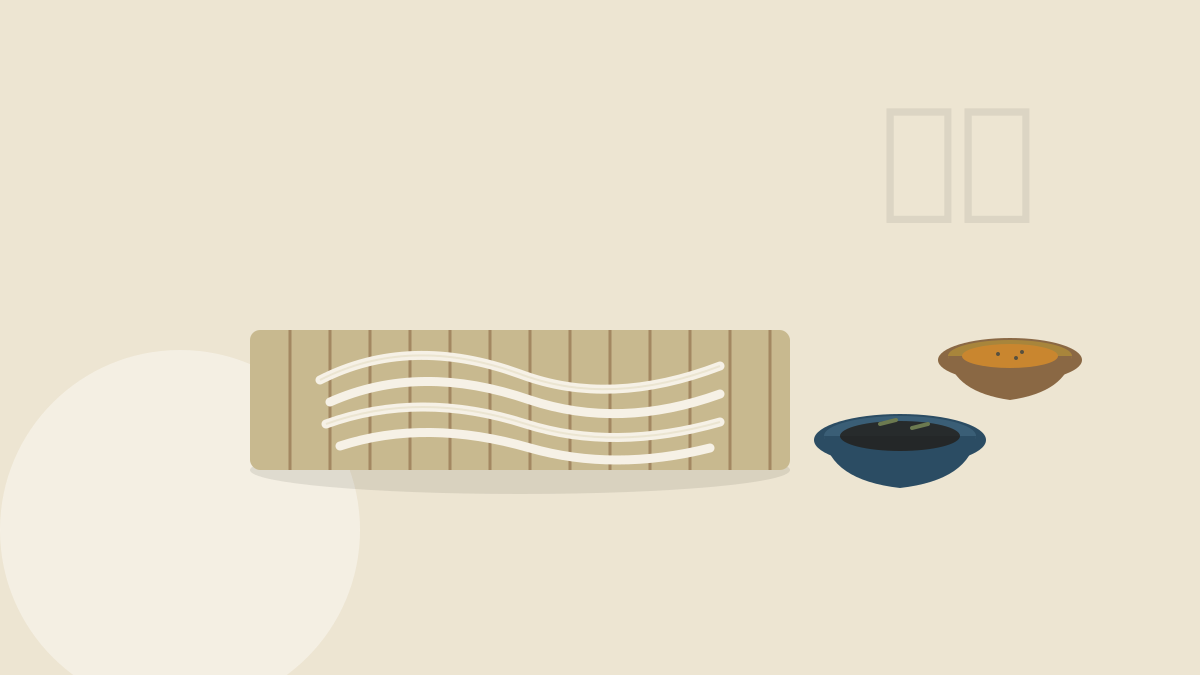
Pile the drained noodles on a bamboo mat or a cold plate and serve both dipping sauces in small cups. Eat by dipping a few strands at a time — soy first to taste the wheat, sesame after for richness.
道具 · The tools
Equipment
Zaru (draining basket)
ざるFor draining and serving cold noodles, and rinsing rice — a bamboo or mesh basket that lets everything breathe.
Shop on Amazon →Makisu (bamboo mat)
巻きすFor rolling maki and shaping pressed sushi — the cheap tool that unlocks a dozen dishes.
Shop on Amazon →Grater (oroshigane)
おろし金Fine, wet grating for ginger, daikon oroshi, and fresh wasabi — a Western microplane is close.
Shop on Amazon →
Equipment links are Amazon affiliate links. As an Amazon Associate we earn from qualifying purchases, at no cost to you. Disclosure.
Questions from the kitchen
Why was Inaniwa udon a secret?
The Inaniwa method dates to the 1600s in the village of the same name, and the Satake domain that ruled Akita treated it as a controlled specialty — production and the technique were tightly restricted, and for generations the recipe passed within a single family. It only opened up broadly in the Meiji era. So the secrecy is real history, not marketing.
Why serve it cold, and with two sauces?
Cold is where the noodle's smooth, springy texture shows best — heat softens the very quality you paid for. Two sauces is Akita custom: a clean soy tsuyu to taste the wheat, and a nutty sesame dare for contrast. Alternating between them is half the pleasure.
Can I use regular dried udon?
You can eat it, but it isn't the same dish. Standard udon is thick and chewy; Inaniwa is thin, flat and glassy — a different texture entirely. For this recipe, the specific noodle is the point, so seek it out.
次はこちら · Cook next
Keep the burner on
 麺
麺Noodles · 70 min · Intermediate
Weeknight Shoyu Ramen醤油ラーメン
A clear, chicken-and-dashi shoyu ramen you can honestly make on a Tuesday — with a proper tare, marinated eggs, and no ten-hour bone boil.
 麺
麺Noodles · 25 min · Beginner
Izumo Soba出雲そば
Shimane's dark whole-grain soba served warigo style — three stacked lacquer rounds, sauce poured over the noodles, an Edo-era ritual from the land of the gods.
 麺
麺Noodles · 65 min · Intermediate
Sanuki Udon, Kake Style讃岐うどん
Kagawa's proudly chewy udon in hot iriko dashi — hand-kneaded, properly rested, and eaten with the speed and reverence Shikoku demands.