Imo Kenpi
芋けんぴ
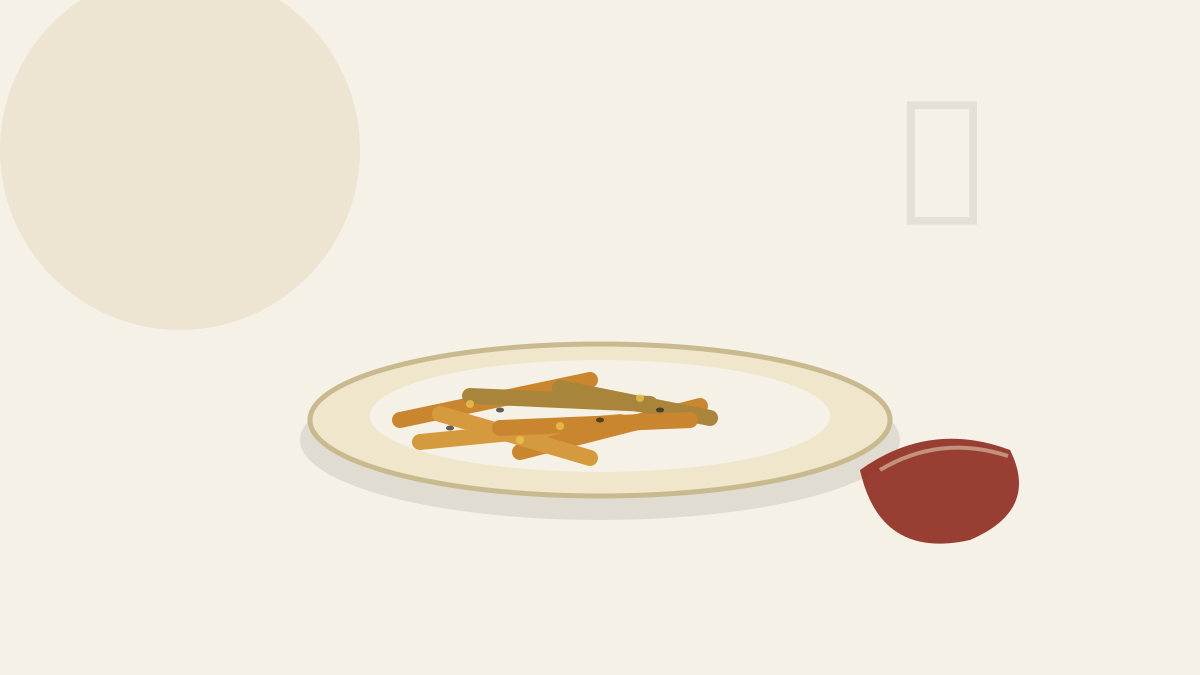
Kōchi's crisp candied sweet-potato sticks — satsumaimo fried twice and lacquered in Tosa sugar syrup. The sweet snack that eats like a habit.
By Japanese Cookbook Kitchen · May 11, 2026
 甘味
甘味- Prep
- 20 min
- Cook
- 25 min
- Serves
- 6
- Level
- Intermediate
Sweet potato is a latecomer to Japan and a lifesaver. Satsumaimo arrived by way of the Ryūkyū islands and the southern Satsuma domain in the early sixteenth and seventeenth centuries, prized because it grew in thin, sandy soil where rice would fail — insurance against famine. Tosa province, today's Kōchi, on the warm Pacific underbelly of Shikoku, was well suited to it. Pair a reliable sweet potato with the sugar that Edo-period Shikoku learned to produce, and you get imo kenpi: a snack born of two crops meeting in the same kitchen.
The name is borrowed. Kenpi once meant a hard, dried flour sweet eaten by Tosa samurai; the sweet-potato version simply took the word for its own hard, dry, candied character. Getting it right is a matter of frying twice — once cool to cook the potato through, once hot to crisp it — then lacquering the sticks in a syrup cooked just to the thread and tossing until it turns sandy. Done well, imo kenpi shatters, then dissolves into caramel and roasted sweet potato. It is almost impossible to eat just one, which is the entire point.
Two fries, not one. A low first fry cooks the potato through and drives off water; a hot second fry crisps it. Skip the first and the center stays chewy under a hard shell.
板前の一言 · A word from the kitchen
Ingredients材料
Serves 6
- 500 gsatsumaimo (Japanese sweet potato) — leave the skin on for color and grip; cut into 5 mm batons the length of a finger
- neutral oil, for deep frying
- 120 gsugar — Tosa cooks lean on their local sugar; plain granulated is fine
- 3 tbspwater
- 1 tsprice vinegar — a splash keeps the syrup from crystallizing too fast
- 1 pinchsalt
- black sesame, optional
Method作り方
Step 1: Cut and soak
Cut the sweet potato into even 5 mm batons and soak in cold water 10 minutes to rinse off surface starch. Drain and dry them thoroughly on a towel — wet potato spits violently in hot oil.
Step 2: First fry, low and slow
Heat oil to 150°C and fry the batons 6 to 8 minutes until cooked through and barely colored. You are drying them out, not browning them. Lift and drain.
Step 3: Second fry, hot and short
Raise the oil to 180°C and fry again 2 to 3 minutes until golden and audibly crisp. Drain well; any clinging oil will keep the sugar from gripping.
Step 4: Cook the syrup to the thread
In a wide pan, dissolve the sugar in the water with the vinegar and salt, then simmer without stirring until it thickens and a drizzle forms a fine thread — about 110°C. Don't let it color.
Step 5: Toss and separate
Off the heat, add the hot potato and toss fast until every stick is coated and the syrup goes matte and sandy. Spread on parchment, separating them with chopsticks, scatter sesame, and cool completely until glassy.
道具 · The tools
Equipment
Frying thermometer
温度計The difference between crisp karaage and greasy karaage is holding the oil at temperature — stop guessing.
Shop on Amazon →Cooking chopsticks (saibashi)
菜箸Long chopsticks for turning, plating, and beating eggs streaky — the Japanese kitchen’s default hand.
Shop on Amazon →
Equipment links are Amazon affiliate links. As an Amazon Associate we earn from qualifying purchases, at no cost to you. Disclosure.
Questions from the kitchen
When did Kōchi start growing sweet potato?
Satsumaimo reached Japan through the Ryūkyū kingdom and Satsuma domain in the early seventeenth century and spread as a famine-proof crop that thrives in poor, sandy soil. Kōchi — old Tosa province — took to it, and by the Edo period the prefecture was pairing its potatoes with locally produced sugar. Imo kenpi grew out of that pantry.
What is the name about?
Kenpi originally named a stiff, dried wheat-flour confection eaten by the Tosa samurai class. When cooks applied the same hard, dry, candied idea to sweet-potato sticks, the name came along. So imo kenpi means, roughly, sweet-potato kenpi — an old word borrowed for a newer snack.
Mine went sticky instead of crisp. Why?
Almost always the syrup was undercooked or the potato was still oily. Cook the syrup until it threads, drain the second fry hard, and toss quickly off the heat so the sugar sets dry rather than staying tacky.
次はこちら · Cook next
Keep the burner on
 甘味
甘味Sweets & Wagashi · 45 min · Beginner
Matcha Basque Cheesecake抹茶バスクチーズケーキ
The burnt Basque cheesecake that conquered Reiwa-era Japan, rebuilt with ceremonial matcha — scorched top, molten center, and green-tea bitterness doing the work of coffee.
 甘味
甘味Sweets & Wagashi · 60 min · Beginner
Aomori Baked Apples焼きりんご
Aomori Fuji apples baked with butter and honey until collapsing and caramelized — a Meiji-era orchard sweet from Japan's apple country, warm from the oven.
 甘味
甘味Sweets & Wagashi · 35 min · Beginner
Dorayakiどら焼き
Honey-sweet pancake sandwiches filled with red bean paste — a beloved wagashi you can make in a skillet, plus a quick anko from canned azuki.