Matcha Basque Cheesecake
抹茶バスクチーズケーキ
The burnt Basque cheesecake that conquered Reiwa-era Japan, rebuilt with ceremonial matcha — scorched top, molten center, and green-tea bitterness doing the work of coffee.
By Japanese Cookbook Kitchen · July 7, 2026
関東 KantōHeisei & Reiwa era, 1989–present
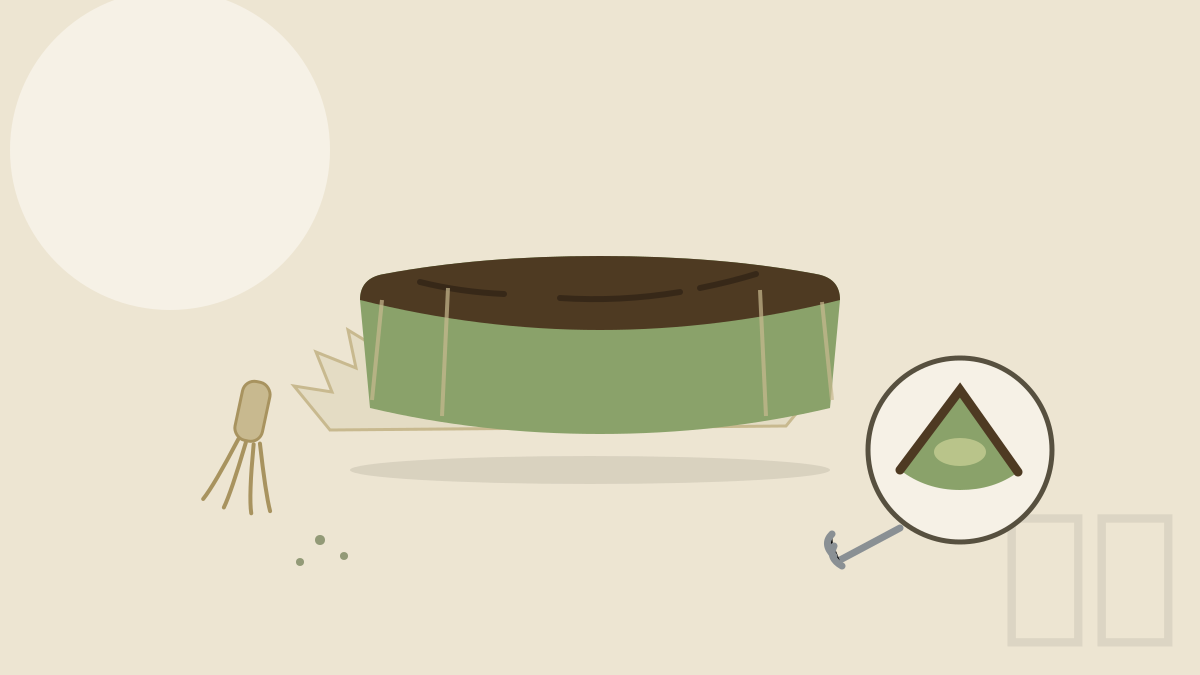 甘味
甘味- Prep
- 15 min
- Cook
- 30 min
- Serves
- 8
- Level
- Beginner
Every era of this site's timeline ends the same way: Japan meets a foreign dish, takes it seriously, and sends it back improved. The Reiwa era's clearest case began in San Sebastián — the deliberately burnt, crustless "tarta de queso" of a Basque bar called La Viña — and detonated in Japan around 2019, when Tokyo bakeries and then Lawson's legendary convenience- store "Basuchii" made scorched cheesecake a national event. The konbini, Japan's great Heisei-Reiwa food institution, did for this cake what Edo street stalls once did for sushi: made excellence ambient.
The matcha version is the fusion earning its keep rather than posing. Basque cheesecake runs on bitterness against cream — normally the scorch alone carries it — and matcha is bitterness with better manners. Green tea deepens the burnt notes, cuts the richness, and turns the cross-section a jade-to-mahogany gradient that explains the dish's photogenic career.
It is also, quietly, the easiest "impressive" dessert in existence: one bowl, no water bath, no crust, and a pan lined with deliberately crumpled paper. The only skill is stopping — pulling it scorched outside and molten inside, while it still wobbles. Sixteen centuries of Japanese dessert history and it ends, for now, with a cake you cannot overthink.
The scorch is the flavor and the wobble is the texture — pull it while the center still shakes like it's not ready. It is. It sets as it cools and stays molten at heart.
板前の一言 · A word from the kitchen
Ingredients材料
Serves 8
- 400 gcream cheese, fully softened
- 130 gsugar
- 3eggs, room temperature
- 200 mlheavy cream
- 12 ggood matcha — culinary grade is fine; dull, army-green matcha will taste how it looks
- 15 gflour
- 1 pinchsalt
Method作り方
Step 1: Prepare the pan the lazy way
Heat the oven to 230°C. Crumple a large sheet of parchment, uncrumple it, and press it into a 15 cm round pan, pleats and all, overhanging the rim. The rustic creases are the signature — this cake forbids perfectionism at the pan stage.
Step 2: Beat until merely smooth
Beat cream cheese and sugar until smooth, then the eggs one at a time on low. This is the anti-soufflé — you want no extra air, just silk. Scrape the bowl more than feels necessary.
Step 3: Sift in the matcha properly
Whisk the matcha and flour into a few spoonfuls of the cream until you have a smooth, lump-free paste, then blend the paste and the remaining cream into the batter with the salt. Matcha added dry to a wet batter never fully surrenders its lumps.
Step 4: Bake hot and brief
Pour into the pan and bake 28 to 32 minutes at 230°C, until the top is deeply browned — genuinely scorched at the edges — while the center still wobbles broadly when nudged.
Step 5: Cool completely, chill briefly
Cool in the pan to room temperature (it will sink; it is supposed to), then chill 2 hours. Serve in thin wedges, cool but not cold — refrigerator-cold mutes both the cream and the matcha.
道具 · The tools
Equipment
Fine sieve / muslin
こし器For straining dashi clear and dusting flour — line it with muslin or paper for the cleanest stock.
Shop on Amazon →Chasen (matcha whisk)
茶筅The split-bamboo whisk that beats matcha to a fine froth — nothing else raises the same crema.
Shop on Amazon →
Equipment links are Amazon affiliate links. As an Amazon Associate we earn from qualifying purchases, at no cost to you. Disclosure.
Questions from the kitchen
What is Japanese about a Basque cheesecake?
The dish is from San Sebastián, but its second life is Japanese — a Reiwa-era phenomenon that swept Tokyo's patisseries and, decisively, the convenience stores; Lawson's "Basuchii" (2019) sold millions and put burnt cheesecake in every neighborhood in Japan within months. Rebuilt with matcha, it joins a century-old Japanese tradition of adopting a foreign dessert and making it speak the local language — exactly what castella did in 1580.
Why does my matcha taste flat or muddy?
Heat and age are matcha's enemies. Use a recently opened tin, store it cold and dark, and accept that a 230°C oven costs some top notes — which is why this recipe uses a generous 12 g. If the flavor still fades, your matcha was tired before it met the batter.
How do I know when it's done, really?
Trust the wobble, not a skewer (a skewer will lie — the center is meant to be underdone). Deep mahogany top, edges risen, and a center that jiggles like set custard when you shake the pan. If you wait for the middle to firm in the oven, you've baked a different, sadder cake.
次はこちら · Cook next
Keep the burner on
 甘味
甘味Sweets & Wagashi · 60 min · Beginner
Aomori Baked Apples焼きりんご
Aomori Fuji apples baked with butter and honey until collapsing and caramelized — a Meiji-era orchard sweet from Japan's apple country, warm from the oven.
 甘味
甘味Sweets & Wagashi · 35 min · Beginner
Dorayakiどら焼き
Honey-sweet pancake sandwiches filled with red bean paste — a beloved wagashi you can make in a skillet, plus a quick anko from canned azuki.
 甘味
甘味Sweets & Wagashi · 30 min · Beginner
Kibi Dangoきびだんご
Okayama's soft millet dumplings, the sweet Momotarō traded for loyalty — from Kibitsu shrine offerings to a modern mochi-flour confection anyone can make.