Dorayaki
どら焼き
Honey-sweet pancake sandwiches filled with red bean paste — a beloved wagashi you can make in a skillet, plus a quick anko from canned azuki.
By Japanese Cookbook Kitchen · June 12, 2026
 甘味
甘味- Prep
- 15 min
- Cook
- 20 min
- Serves
- 6
- Level
- Beginner
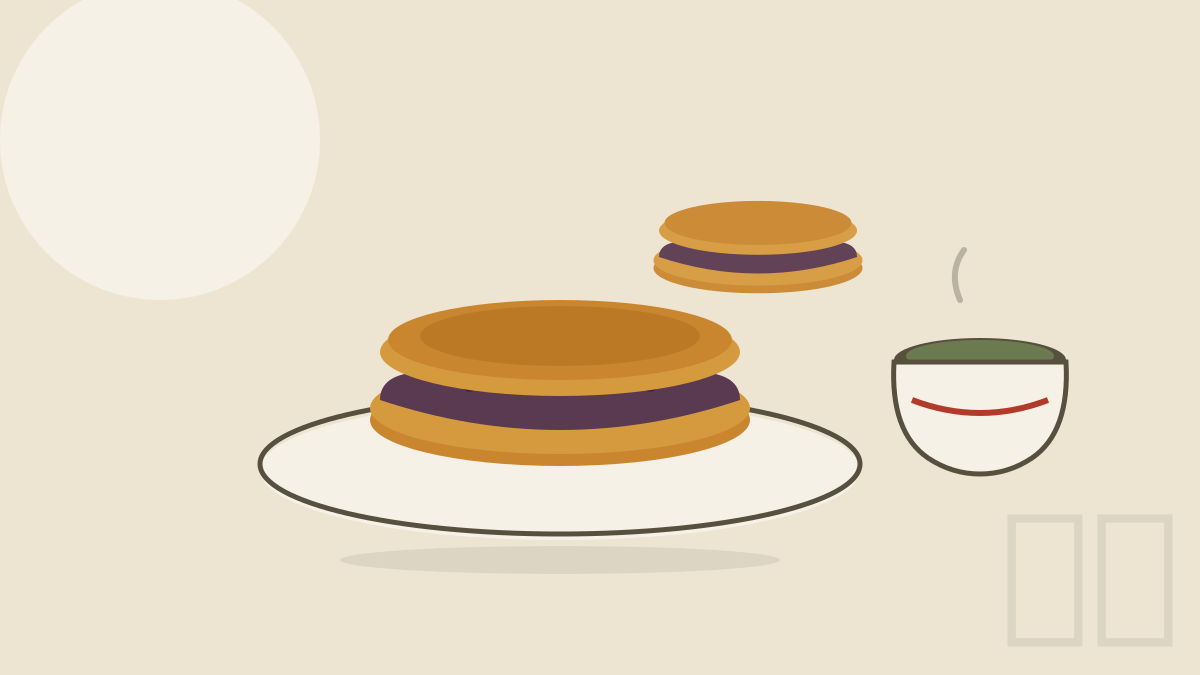
Dorayaki is the wagashi that needs no cultural on-ramp: two small honeyed pancakes hugging a heart of sweet red bean paste. It's the favorite food of Doraemon, the robot cat half the planet grew up with, and it's sold in every convenience store in Japan — which makes it easy to forget how good the homemade version is, warm-adjacent, with the honey still fragrant.
The pancake is a castella cousin, not a breakfast pancake — eggier, denser, glossier, with honey doing the heavy lifting on both flavor and that deep chestnut color. The technique that matters is pan management: medium-low heat, an oiled-then-wiped surface, and a batter poured from a height so it levels itself into neat rounds.
The anko can absolutely come from a tub — that's not a compromise, it's what most Japanese home cooks do. Some afternoon when the tea is already brewing, simmer canned azuki with sugar into your own tsubuan and see if the ritual suits you.
The first pancake tells you about your pan, not about you. Adjust the heat, wipe the surface, and the second one will come out the color of a chestnut.
板前の一言 · A word from the kitchen
Ingredients材料
Serves 6
Pancakes
- 2eggs
- 70 gsugar
- 1.5 tbsphoney
- 100 gplain flour
- 0.5 tspbaking soda
- 2–3 tbspwater — to loosen the batter to a slow ribbon
Filling
- 300 gtsubuan (chunky red bean paste) — store-bought is respectable; or simmer canned azuki with sugar until thick
Method作り方
Step 1: Make the batter and rest it
Whisk eggs, sugar, and honey until pale and slightly thickened, about 2 minutes of real effort. Sift in flour and baking soda, fold until smooth, and rest 15 minutes. Then stir in water until the batter falls from the whisk in a slow, continuous ribbon.
Step 2: Heat the pan properly
Warm a nonstick skillet over medium-low, film it with oil, then wipe it almost entirely away with a paper towel. An oily pan gives blotchy pancakes; a wiped pan gives the even chestnut-brown face dorayaki is judged on.
Step 3: Cook the pancakes
Ladle 3 tablespoons of batter from a height so it self-levels into a 9 cm round. When bubbles pierce the surface and the edges look set — about 2 minutes — flip once and give it 1 minute more. Park under a clean towel so they stay supple, and repeat for 12 pancakes.
Step 4: Fill and press
Spoon a generous mound of anko onto the pale side of one pancake, slightly domed in the center, and cap with a second. Cup it in your palm and press the edges gently so the sandwich curves into its classic lens shape.
Step 5: Rest before serving
Wrap each dorayaki in plastic for 30 minutes if you can wait — the pancakes soften into the paste and the whole thing becomes one tender article. Green tea, no debate.
道具 · The tools
Equipment
Nonstick frying pan
フライパンFor chanpurū, gyoza, pancakes, and anything that needs a clean release and even browning.
Shop on Amazon →Fine sieve / muslin
こし器For straining dashi clear and dusting flour — line it with muslin or paper for the cleanest stock.
Shop on Amazon →
Equipment links are Amazon affiliate links. As an Amazon Associate we earn from qualifying purchases, at no cost to you. Disclosure.
Questions from the kitchen
What is anko, exactly?
Azuki beans cooked down with sugar. Tsubuan keeps the beans partly whole; koshian is pressed smooth. For dorayaki, tsubuan is traditional — the texture stands up to the pancake.
Why honey in the batter?
Honey is what separates dorayaki from Western pancakes — it deepens the browning, keeps the crumb moist for days, and gives that castella-like fragrance. Don't substitute syrup; the flavor is structural.
How long do they keep?
Two days wrapped at room temperature, and they genuinely improve overnight. They also freeze well individually wrapped — thaw an hour on the counter and they're bento-ready.
次はこちら · Cook next
Keep the burner on
 甘味
甘味Sweets & Wagashi · 45 min · Beginner
Matcha Basque Cheesecake抹茶バスクチーズケーキ
The burnt Basque cheesecake that conquered Reiwa-era Japan, rebuilt with ceremonial matcha — scorched top, molten center, and green-tea bitterness doing the work of coffee.
 甘味
甘味Sweets & Wagashi · 60 min · Beginner
Aomori Baked Apples焼きりんご
Aomori Fuji apples baked with butter and honey until collapsing and caramelized — a Meiji-era orchard sweet from Japan's apple country, warm from the oven.
 甘味
甘味Sweets & Wagashi · 30 min · Beginner
Kibi Dangoきびだんご
Okayama's soft millet dumplings, the sweet Momotarō traded for loyalty — from Kibitsu shrine offerings to a modern mochi-flour confection anyone can make.