Dekomawashi
でこまわし
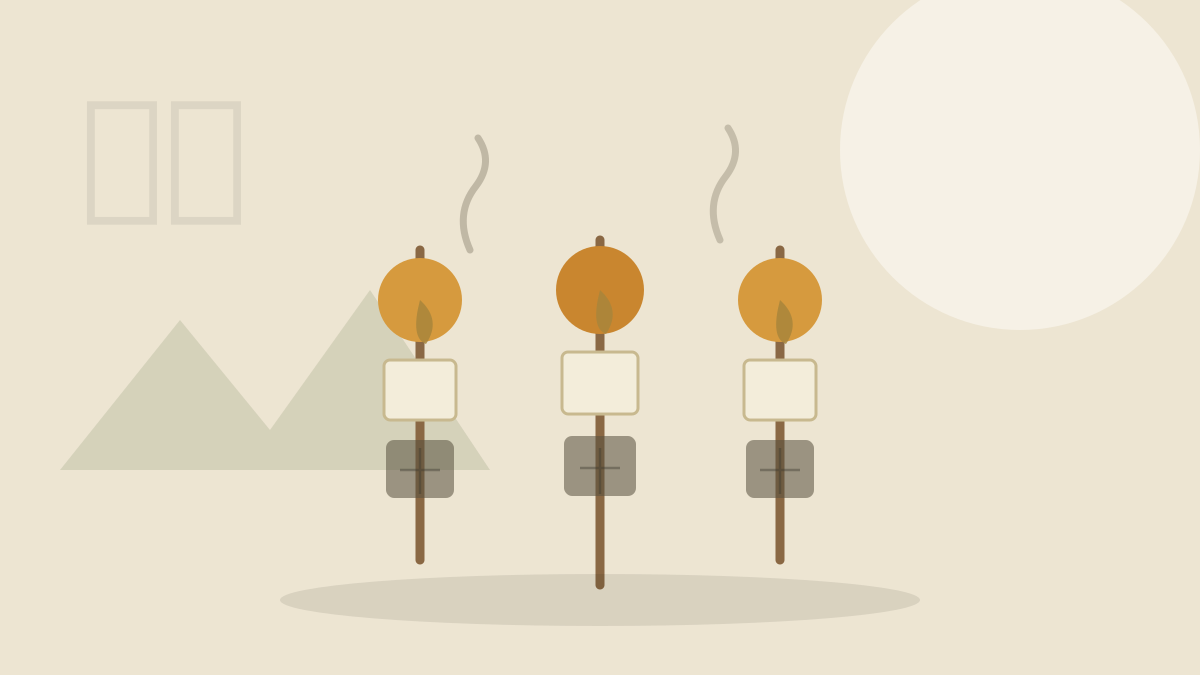
Iya valley hearth skewers of potato, tofu, and konnyaku, painted with sweet miso and turned slowly by the fire — Tokushima's mountain izakaya classic.
By Japanese Cookbook Kitchen · May 4, 2026
 居酒屋
居酒屋- Prep
- 25 min
- Cook
- 30 min
- Serves
- 4
- Level
- Beginner
The Iya valley cuts deep into the mountains of western Tokushima, a place of gorges, vine bridges, and villages that clung to slopes too steep for paddies. Local lore holds that survivors of the Taira clan hid here after their defeat in the Genpei War of 1180–1185, and whether or not every family descends from fallen samurai, the isolation was real: rice was scarce, and the land gave buckwheat, potatoes, tofu, and konnyaku instead. Around the irori, the sunken hearth at the center of the old farmhouse, those humble things were threaded onto skewers and turned by the fire until they were hot, smoky, and worth eating.
The magic is the dengaku miso — a barley miso loosened with mirin and a little sugar into a glaze that caramelizes at the edges. Potato brings sweetness, konnyaku brings that faintly rubbery bounce the Japanese prize as a texture in its own right, and tofu soaks up smoke and salt. Turn the skewers patiently, let the miso tighten without burning, and finish with yuzu or sansho. It is mountain food that never left the mountains, and it is better for it.
The turning is not theater. Rotating the skewer keeps the miso from scorching and lets each face take a little smoke — hurry it and you get burnt sugar on one side and raw miso on the other.
板前の一言 · A word from the kitchen
Ingredients材料
Serves 4
Skewers
- 8small waxy potatoes (kotsu-imo or new potatoes) — the Iya originals are tiny, marble-sized dochu potatoes; small new potatoes are the closest supermarket match
- 1 blockfirm tofu, drained and cut into 8 cubes
- 200 gkonnyaku, cut into 8 squares — par-boil 2 minutes and score a cross-hatch on each face so it drinks the miso
- 8bamboo skewers, soaked
Dengaku miso
- 100 gbarley or country miso (inaka miso)
- 2 tbspmirin
- 1 tbspsugar
- 1 tbspsake
- yuzu zest or sansho, to finish
Method作り方
Step 1: Cook the potatoes gently
Simmer the whole small potatoes in lightly salted water until a skewer slides through, about 15 minutes, then drain and let them steam-dry. In the Iya original they are boiled skin-on; leave them so.
Step 2: Ready the tofu and konnyaku
Press the tofu 20 minutes so it holds a skewer without crumbling. Par-boil the scored konnyaku two minutes to drive off its lime smell. Both want to be dry on the surface before they meet the fire.
Step 3: Whisk the dengaku miso
Warm the miso, mirin, sugar, and sake in a small pan over low heat, stirring until it loosens to a thick, glossy paste that falls off the spoon in a ribbon. Don't let it boil hard or it turns grainy.
Step 4: Thread and grill
Thread one potato, one tofu cube, and one konnyaku square per skewer. Grill over charcoal or a hot dry pan until lightly colored, turning often so every face warms through.
Step 5: Paint, turn, and finish
Brush the miso over all sides and keep turning the skewers by the heat for a few minutes until the glaze tightens and just catches. Finish with yuzu zest or a pinch of sansho and eat hot off the stick.
Questions from the kitchen
Where does the strange name come from?
Deko means a puppet head — the region's Awa ningyō jōruri puppet theater is famous — and mawashi means to turn. A skewer of round potato and pale tofu turned by hand over the hearth looked, to someone, like turning a puppet's head. The story is folk etymology, told fondly rather than proven, and that is exactly how Iya tells it.
Why potato, tofu, and konnyaku specifically?
Because that is what the Iya valley had. This is one of Japan's steepest, most remote mountain regions — long romanticized as a refuge for defeated Taira clan survivors after the twelfth-century Genpei War — with thin soil that grew buckwheat, tubers, and konnyaku rather than rice. Dekomawashi is upland pantry food, dressed up by a hot fire.
Can I do this without charcoal?
Yes. A dry cast-iron pan or a grill pan gives you enough color and heat; you lose only the faint smoke. Keep turning either way — the whole point of the dish is in the wrist.
次はこちら · Cook next
Keep the burner on
 居酒屋
居酒屋Izakaya · 25 min · Beginner
Gōya Chanpurūゴーヤーチャンプルー
Okinawa's bitter melon stir-fry with tofu, pork, and egg — the Ryūkyū Kingdom's everyday masterpiece, and the honest way to make peace with gōya.
 居酒屋
居酒屋Izakaya · 40 min · Beginner
Osaka Okonomiyakiお好み焼き
Osaka's cabbage-and-batter griddle cake with pork belly, sauce, and dancing katsuobushi — postwar street food perfected. Dashi in the batter is the difference.
 居酒屋
居酒屋Izakaya · 35 min · Intermediate
Chicken Karaage鶏の唐揚げ
Japanese fried chicken with a soy-ginger marinade, a potato-starch crust, and the double-fry that keeps it crackling — izakaya standard, home method.