An-mochi Zōni
あん餅雑煮
Kagawa's startling New Year soup — sweet red-bean mochi in white miso broth. A dish built on the sugar the Sanuki domain once guarded as a secret.
By Japanese Cookbook Kitchen · May 25, 2026
 鍋
鍋- Prep
- 30 min
- Cook
- 25 min
- Serves
- 4
- Level
- Intermediate
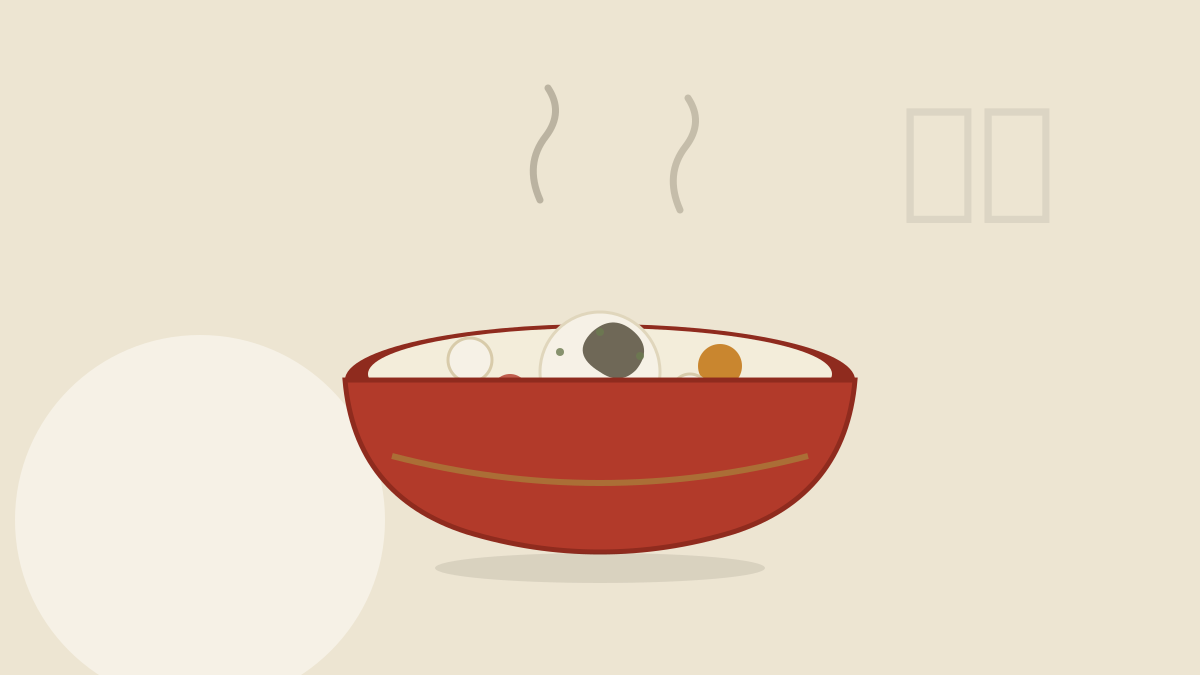
Zōni, the New Year soup of mochi in broth, changes shape across Japan — clear in Tokyo, white-miso in Kyoto, region by region — but Kagawa's version stops outsiders cold. Here, in old Sanuki province, the mochi at the center of the bowl is filled with sweet red-bean anko, and it melts into a pale, savory white-miso broth. The explanation is economic. During the Edo period Sanuki became a noted producer of wasanbon, an exceptionally fine sugar, and accounts describe the domain guarding its sugar-making as a jealously-kept secret, the crop taxed and controlled. Sweetness was a luxury, so the local story goes that families hid a little of it inside the most important dish of the year, where it became tradition.
Making it is an exercise in restraint. Draw a clean awase dashi, keep the white miso gentle and never let it boil, and simmer the daikon and carrot in rounds — a shape that reads at New Year as a wish for a smooth year. The an-mochi wants only to be warmed until it turns molten inside; hot anko burns like lava and scorches over direct flame, so coax it soft in barely-simmering water. What lands in the bowl is genuinely strange the first time and quietly addictive by the second — sweet, salty, and unmistakably Kagawa.
The sweet-and-savory shock is the whole idea — don't correct it. White miso and dashi should stay gentle so the anko mochi can be the loud one in the bowl.
板前の一言 · A word from the kitchen
Ingredients材料
Serves 4
Broth
- 800 mlawase dashi
- 90 gwhite miso (saikyō or a mild sweet miso) — Kagawa uses a lot of it; the broth should be pale and almost milky
- 60 gdaikon, thinly sliced in rounds
- 60 gcarrot, thinly sliced in rounds
- kintoki carrot if you can find it, for the red New Year color
Mochi and finish
- 4an-mochi (round mochi filled with sweet red-bean anko) — sold at New Year in Kagawa; to make your own, wrap 20 g anko in pounded or shaped mochi
- aonori or a little mitsuba, to finish
Method作り方
Step 1: Draw the awase dashi
Make a clean awase dashi from kombu and katsuobushi. Kagawa's zōni is built on a proper dashi even though the star is sweet — the savory floor is what keeps the bowl from becoming dessert.
Step 2: Simmer the vegetables
Simmer the daikon and carrot rounds in the dashi until just tender. Round slices are traditional at New Year — the shape reads as a wish for a smooth, harmonious year.
Step 3: Soften the miso in
Lower the heat, loosen the white miso in a ladle of the hot dashi, and stir it back in. Keep it below a simmer from here; boiling white miso turns it flat and grainy.
Step 4: Warm the an-mochi through
Simmer or grill the an-mochi gently until soft and molten inside — a few minutes in just-below-boiling water is safest, since the sweet filling scorches easily over direct heat. Handle it carefully; hot anko is like lava.
Step 5: Build the bowl
Nestle one an-mochi in each bowl, arrange the vegetables around it, and ladle over the warm white-miso broth. Finish with aonori or mitsuba and serve at once, before the mochi slumps.
道具 · The tools
Equipment
Donabe
土鍋The clay hot-pot that makes nabemono taste like nabemono — a gentle, even simmer that carries straight to the table.
Shop on Amazon →Stovetop fish grill
焼き網A yakiami grate for salted fish, mochi, and reviving nori over an open flame.
Shop on Amazon →Mandoline (benriner)
スライサーPaper-thin daikon, cucumber, and cabbage in seconds — the Japanese mandoline home cooks actually own.
Shop on Amazon →
Equipment links are Amazon affiliate links. As an Amazon Associate we earn from qualifying purchases, at no cost to you. Disclosure.
Questions from the kitchen
Sweet bean paste in miso soup — is that real?
It is, and Kagawa is proud of it. An-mochi zōni is the standard New Year soup across much of the old Sanuki province, and locals eat the sweet anko mochi melting into savory white miso without a second thought. The first spoonful surprises almost everyone from outside; the second usually wins them over.
Why would sugar end up inside the New Year mochi?
Because Sanuki had sugar and, for a time, wasn't supposed to share it. The domain became a major producer of wasanbon, a fine domestic sugar, and Edo-period accounts describe the process being guarded as a closely-held domain secret. Sugar was precious and taxed, so the story goes that households smuggled a little sweetness into the one dish that mattered most — the New Year zōni — where it quietly stayed.
Where do I get an-mochi outside Japan?
You likely won't, so make them. Shape or pound plain mochi, flatten a piece in your palm, seat about 20 g of sweet red-bean anko in the middle, and pinch it closed into a smooth round. Fresh is far better than any shelf-stable version anyway.
次はこちら · Cook next
Keep the burner on
 鍋
鍋Nabemono & Soups · 45 min · Beginner
Ishikari Nabe石狩鍋
Hokkaidō's salmon and miso hot pot, born on the Ishikari River in the Meiji fishing boom — sweet corn, potatoes, and a knob of butter at the end.
 鍋
鍋Nabemono & Soups · 55 min · Beginner
Imoni芋煮
Yamagata's taro and beef stew, simmered in soy and sake — the dish an entire prefecture cooks together on riverbanks every autumn since Edo times.
 鍋
鍋Nabemono & Soups · 65 min · Intermediate
Hōtōほうとう
Yamanashi's wide flat noodles simmered straight in miso broth with kabocha — the one-pot field ration that fed Takeda Shingen's armies in the Sengoku era.