Hōtō
ほうとう
Yamanashi's wide flat noodles simmered straight in miso broth with kabocha — the one-pot field ration that fed Takeda Shingen's armies in the Sengoku era.
By Japanese Cookbook Kitchen · June 20, 2026
中部 ChūbuMuromachi era, 1336–1573
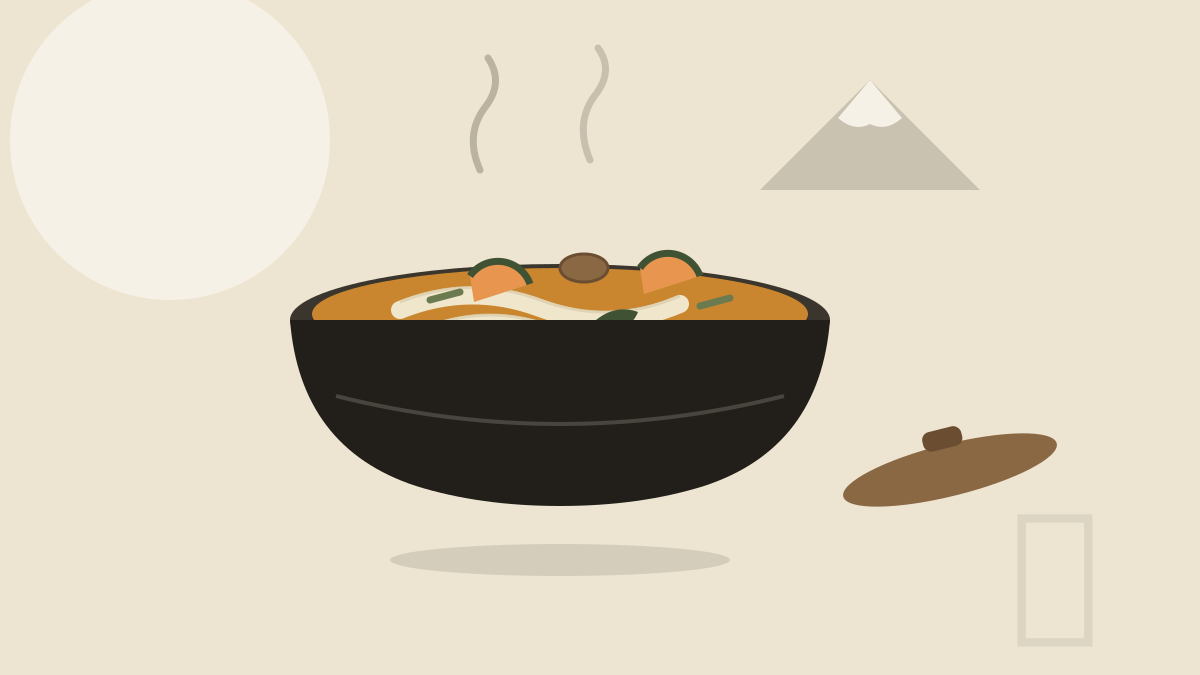 鍋
鍋- Prep
- 40 min
- Cook
- 25 min
- Serves
- 4
- Level
- Intermediate
Kai province — today's Yamanashi — is all mountains. Rice was always a struggle there, wheat was not, and out of that agricultural fact came hōtō: fat, hand-cut wheat ribbons simmered straight in miso broth with kabocha and whatever the field offered. No salt in the dough, no separate boil; the noodle's raw flour thickens the soup into something between stew and blanket.
The dish wears Sengoku armor in local legend — Takeda Shingen, the province's great sixteenth-century warlord, is said to have fed his armies on it, and every hōtō restaurant in Yamanashi will remind you of this before you sit down. Whatever the paperwork says, the design brief is plainly military: one pot, cheap calories, hot enough to make a mountain winter negotiable.
It's also the best gateway noodle-making in Japanese cooking — a soft, unfussy dough, rolled thick, cut wide, with the soup hiding every imperfection. If handmade noodles intimidate you, start your career here.
Do not salt the noodle dough and do not boil it separately — the raw flour cooks in the soup and thickens it. That cloudiness is not a flaw; it is the dish.
板前の一言 · A word from the kitchen
Ingredients材料
Serves 4
Noodles
- 250 gall-purpose flour — plus plenty for dusting
- 120 mlwarm water
Soup
- 1.2 Lawase dashi — or the shōjin kombu-shiitake version — both are period-plausible
- 4 tbspmiso — a rustic red or awase
- 400 gkabocha squash, in thick wedges, skin on
- 150 gdaikon, in quarter-moons
- 1carrot, in quarter-moons
- 4fresh shiitake, halved
- 200 gthin pork belly slices — optional — omit for the temple-style pot
- 2negi, in 3 cm lengths
- 2 handfulsspinach or napa cabbage
Method作り方
Step 1: Make the dough
Mix flour and warm water — no salt — into a shaggy mass, knead 5 minutes until smooth, and rest under a bowl for 30 minutes. Hōtō dough is soft and forgiving; this is the easiest noodle in Japan.
Step 2: Roll and cut wide
Roll out to a generous 3 mm on a floured board and cut into ribbons a full 2 cm wide. Dust them well and don't stack them wet.
Step 3: Start the pot
Bring the dashi to a simmer with the daikon and carrot and cook 8 minutes. Add the kabocha, shiitake, and pork, and simmer 5 more.
Step 4: Noodles straight in
Shake excess flour off the noodles and lower them into the simmering pot. Cook 8 to 10 minutes, nudging occasionally, as the broth turns silky and the kabocha edges begin to melt into it.
Step 5: Miso at the end
Dissolve in the miso, add the negi and greens, and give it one final minute. Serve in deep bowls — the pot at the table, if you have a burner — and expect silence.
道具 · The tools
Equipment
Donabe
土鍋The clay hot-pot that makes nabemono taste like nabemono — a gentle, even simmer that carries straight to the table.
Shop on Amazon →Portable gas burner
カセットコンロThe tabletop butane burner that turns any nabe into a shared meal — cook and eat from the same pot.
Shop on Amazon →
Equipment links are Amazon affiliate links. As an Amazon Associate we earn from qualifying purchases, at no cost to you. Disclosure.
Questions from the kitchen
Is hōtō a noodle dish or a stew?
Yamanashi would say yes. The noodles cook in the broth and thicken it, the kabocha half-collapses into it, and the result eats like neither soup nor pasta. Locals will also tell you, correctly, that it is not udon — the dough has no salt and never meets its own boiling water.
Did Takeda Shingen really eat this?
The Sengoku warlord is Yamanashi's favorite son and hōtō's favorite legend — a one-pot, high-calorie field meal suits an army, and mountainous Kai province grew wheat and millet where rice struggled. Firm documentation is thin, as it is for most food origin stories; the logic, at least, holds up.
What if I don't want to make noodles?
Fresh udon is the wrong texture but a decent Tuesday compromise — add it later and expect a thinner broth. Better: many Japanese grocers abroad stock dried hōtō. But the handmade version is 30 minutes of work for a noodle with no technique barrier at all.
次はこちら · Cook next
Keep the burner on
 鍋
鍋Nabemono & Soups · 45 min · Beginner
Ishikari Nabe石狩鍋
Hokkaidō's salmon and miso hot pot, born on the Ishikari River in the Meiji fishing boom — sweet corn, potatoes, and a knob of butter at the end.
 鍋
鍋Nabemono & Soups · 55 min · Beginner
Imoni芋煮
Yamagata's taro and beef stew, simmered in soy and sake — the dish an entire prefecture cooks together on riverbanks every autumn since Edo times.
 鍋
鍋Nabemono & Soups · 65 min · Beginner
Imotakiいも炊き
Ehime's riverside taro stew — chicken, taro, and konnyaku simmered in a sweet-soy broth under the harvest moon. Shikoku's answer to Tōhoku's imoni.