Hot Yuzu Honey
柚子はちみつ湯
A hot, non-alcoholic yuzu-and-honey drink from Kōchi's mountain groves — the winter-solstice citrus of Umaji village, warmed into a cup against the cold.
By Japanese Cookbook Kitchen · July 6, 2026
 飲
飲- Prep
- 5 min
- Cook
- 5 min
- Serves
- 2
- Level
- Beginner
Yuzu is a knobbly, intensely fragrant citrus prized far more for its aroma than its sour juice, and no prefecture is more bound to it than Kōchi. The southern face of Shikoku grows the great majority of Japan's yuzu, and the mountain village of Umaji became almost a synonym for the fruit — a small, aging community that rebuilt its fortunes around yuzu groves and processing when other livelihoods dried up. The fruit is woven into midwinter itself: on the solstice, tōji, Japanese households have long floated whole yuzu in a hot bath, the yuzu-yu, to ward off colds and carry good health into the cold months. Warming that same fruit into a cup is only a short step from the bath.
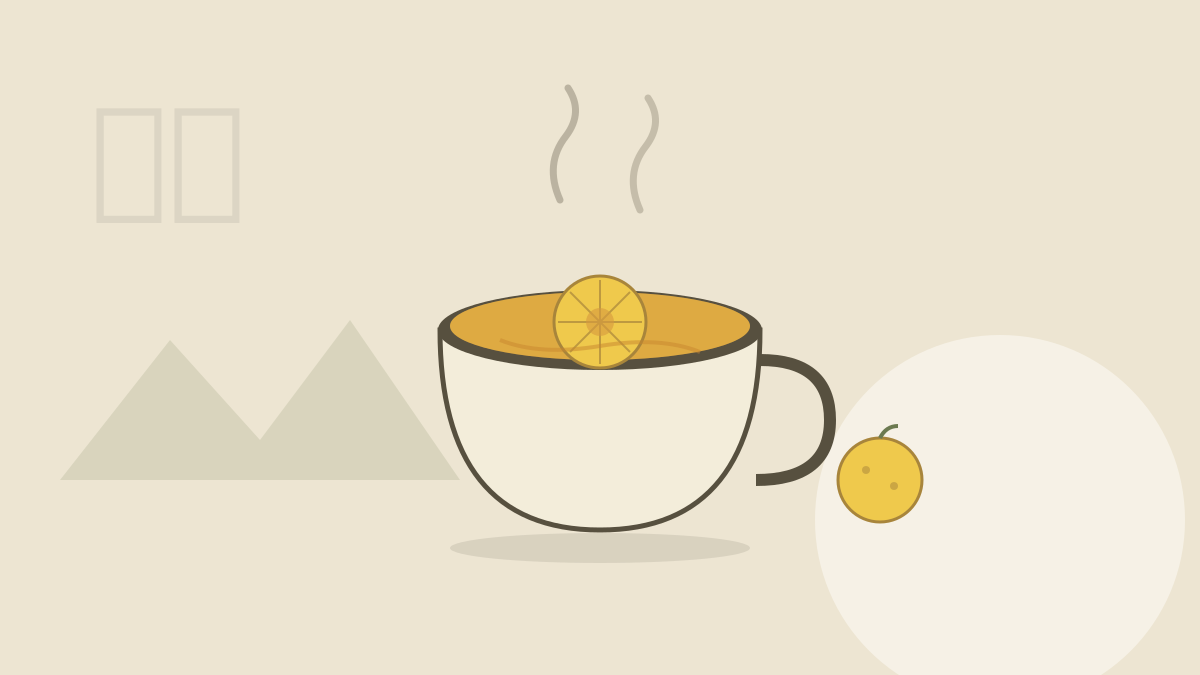
There is almost no technique here, only care. Squeeze the yuzu, but take a little of the zest too — the peel oil carries most of the perfume. Stir the juice and zest into honey, then pour on water that has just dropped off the boil, never a hard rolling boil, which scalds the fresh citrus fragrance and flattens the honey. The cup turns cloudy gold and smells of a whole grove. Add a slice of yuzu to float or a grating of ginger for extra warmth, and drink it cradled in both hands on a cold Kōchi night — the solstice fruit, brought from the bath to the table.
Don't pour boiling water straight onto the honey and juice — let it drop off the boil for a moment first. A rolling boil scalds the fresh citrus perfume and flattens the honey's floral top notes.
板前の一言 · A word from the kitchen
Ingredients材料
Serves 2
- 2yuzu — Kōchi yuzu — the groves of Umaji village are the famous source; use the juice and a little of the fragrant zest
- 2 tbsphoney — a mild wildflower honey lets the yuzu lead
- 500 mljust-off-the-boil water
- a thin slice of yuzu or a little grated ginger, optional
Method作り方
Step 1: Juice and zest the yuzu
Halve the yuzu and squeeze out the juice, catching the seeds. Grate or pare a little of the zest as well — much of yuzu's magic is in the oil of the peel, not the juice alone.
Step 2: Spoon honey into the cups
Divide the honey between two heatproof cups and add the yuzu juice and a pinch of the zest. Stir them together into a fragrant syrup before any water goes in.
Step 3: Add water off the boil
Let the kettle drop from a rolling boil for a few seconds, then pour the hot water over the honey and yuzu. Stir until the honey dissolves fully and the cup turns cloudy-gold.
Step 4: Finish and warm through
Float a thin slice of yuzu on top, or grate in a little fresh ginger for extra heat on a cold night. Drink it hot, cradling the cup — this is a drink meant as much for the hands as the throat.
道具 · The tools
Equipment
Grater (oroshigane)
おろし金Fine, wet grating for ginger, daikon oroshi, and fresh wasabi — a Western microplane is close.
Shop on Amazon →
Equipment links are Amazon affiliate links. As an Amazon Associate we earn from qualifying purchases, at no cost to you. Disclosure.
Questions from the kitchen
What is the winter-solstice connection?
On the winter solstice, tōji, it is a long-standing Japanese custom to take a yuzu-yu — a hot bath with whole yuzu floating in it — believed to ward off colds and invite good health through the cold months. The fruit is so tied to midwinter that warming it into a drink follows naturally. This cup is the solstice custom brought from the bath to the table.
Why Kōchi yuzu specifically?
Kōchi grows the lion's share of Japan's yuzu, and the mountain village of Umaji became almost synonymous with it — a small, aging community that revived itself around yuzu cultivation and processing. When people speak of great Japanese yuzu, Umaji is one of the first names raised. Any good yuzu works here, but that is the grove the dish tips its hat to.
Can I make it without fresh yuzu?
Bottled yuzu juice will do in a pinch, and it's genuinely useful out of season, but you lose the peel oil that carries most of the aroma. If you only have bottled juice, add a strip of any citrus zest to compensate, and accept that fresh is a different, brighter cup.
次はこちら · Cook next
Keep the burner on
 飲
飲Drinks · 15 min · Beginner
Amazake甘酒
Naturally sweet rice-koji ferment with roots in the Nara chronicles — a non-alcoholic, no-sugar drink Edo peddlers sold as a summer energy tonic.
 飲
飲Drinks · 5 min · Beginner
Matcha, Whisked Properly抹茶
How to whisk usucha — thin matcha — at home the Uji way: right water temperature, a proper chasen, and the wrist. Non-alcoholic, ready in a minute.
 飲
飲Drinks · 15 min · Beginner
Mugicha麦茶
Roasted barley tea — caffeine-free, faintly sweet, the sound of a Japanese summer. Roast your own grain or cold-brew a jug; from warlord's mugiyu to the fridge.