Matcha, Whisked Properly
抹茶
How to whisk usucha — thin matcha — at home the Uji way: right water temperature, a proper chasen, and the wrist. Non-alcoholic, ready in a minute.
By Japanese Cookbook Kitchen · July 6, 2026
関西 KansaiMuromachi era, 1336–1573
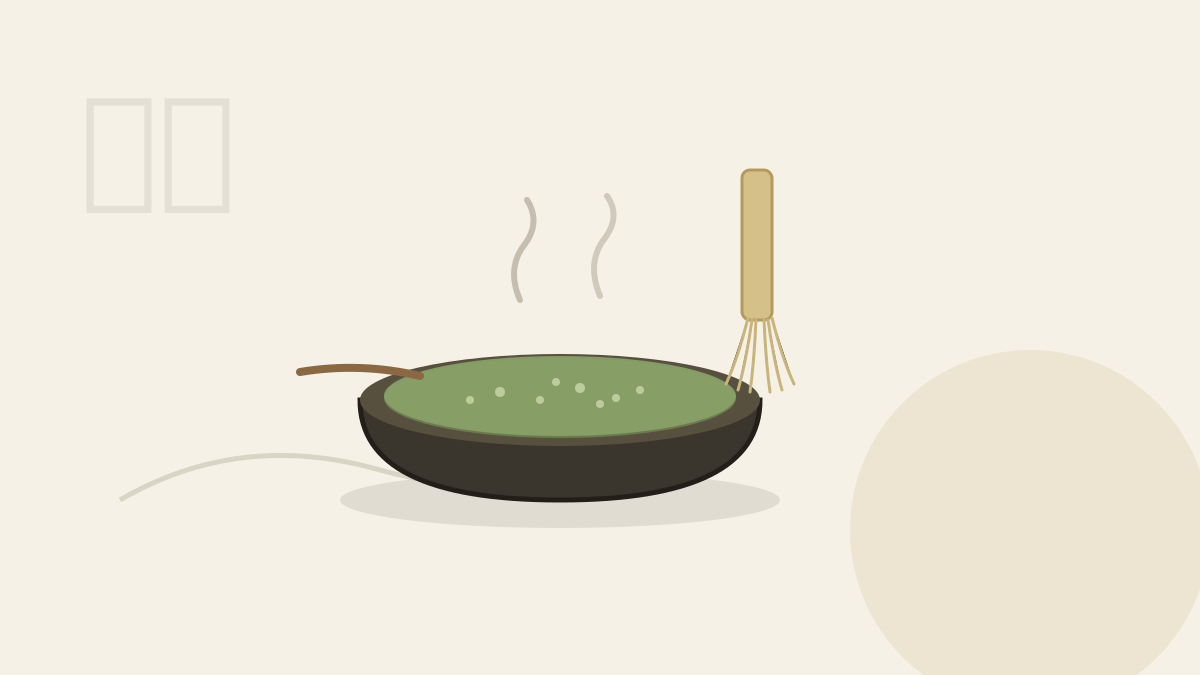 飲
飲- Prep
- 5 min
- Cook
- 0 min
- Serves
- 1
- Level
- Beginner
Whisked matcha as we know it is a Muromachi-era achievement (1336–1573). Powdered tea had arrived from Song China with Zen monks centuries earlier, but it was in the fifteenth century that the practice matured into something distinctly Japanese. Murata Jukō, often called the founder of the wabi tea ideal, taught a stripped-down, contemplative style; a lineage of tea masters carried it forward until Sen no Rikyū, in the sixteenth century, fixed the aesthetic that still governs the tea room today. Behind all of it stood Uji, just south of Kyoto, whose shaded fields have grown Japan's most prized tea since the medieval period and grow it still.
You don't need a tea room to drink usucha — thin tea — well. You need three things the masters obsessed over: fine powder, correct water, and the wrist. Sift the matcha so it can't clump. Use water at 70 to 80°C, never boiling, because heat is what turns good matcha bitter and this is the mistake nearly everyone makes at home. Then whisk fast and light in a W motion, from the wrist, until a pale even foam rises — a matter of fifteen seconds, not a workout.
It is genuinely a one-minute drink once the kettle's on, and a small daily ritual worth keeping. Buy good Uji tea in small tins, keep it cold and sealed, and drink it soon. The whole tradition, four centuries deep, comes down to treating a delicate green powder gently and paying attention for sixty seconds.
The froth comes from speed, not force — light, fast W-strokes with the wrist, not the arm. Press the whisk into the bowl and you'll only bruise the tea and tire your hand.
板前の一言 · A word from the kitchen
Ingredients材料
Serves 1
For one bowl of usucha
- 2 gmatcha — about one and a half chashaku scoops, or a scant teaspoon; use a culinary or everyday grade for daily drinking and save ceremonial grade for when you'll taste it clearly
- 70 mlwater at 70-80°C — boiling water scorches matcha into bitterness — let a fresh boil sit two minutes, or pour between two vessels to shed heat
Tools
- 1chawan (tea bowl) — a wide bowl gives the whisk room to move
- 1chasen (bamboo whisk)
- 1fine sieve — optional but worth it — sifted matcha never clumps
Method作り方
Step 1: Warm the bowl and wake the whisk
Pour a little hot water into the chawan, swirl the chasen in it to soften the bamboo tines, then discard the water and wipe the bowl dry. A warm bowl holds temperature; a soaked whisk won't snap.
Step 2: Sift the matcha in
Push the matcha through a fine sieve into the bowl. Matcha is stone-ground to an almost impossibly fine powder that clumps the moment it meets air, and sifting is the difference between a smooth bowl and a lumpy one.
Step 3: Add the water off the boil
Pour in the 70 to 80°C water. This is the single most common mistake at home — boiling water pulls harsh, astringent bitterness from the tea, while cooler water keeps it sweet and rounded. Let a fresh boil rest two minutes.
Step 4: Whisk in fast W-strokes
Hold the chasen lightly and whisk briskly in a W or M motion across the surface — from the wrist, not the shoulder — for 15 to 20 seconds until a fine, pale foam covers the top. Lift the whisk through the centre to settle the froth, and drink promptly.
道具 · The tools
Equipment
Fine sieve / muslin
こし器For straining dashi clear and dusting flour — line it with muslin or paper for the cleanest stock.
Shop on Amazon →Chasen (matcha whisk)
茶筅The split-bamboo whisk that beats matcha to a fine froth — nothing else raises the same crema.
Shop on Amazon →
Equipment links are Amazon affiliate links. As an Amazon Associate we earn from qualifying purchases, at no cost to you. Disclosure.
Questions from the kitchen
What's the difference between usucha and koicha?
Usucha is "thin tea" — more water, less matcha, whisked to a froth, and what you'll drink day to day. Koicha is "thick tea," made with far more matcha and only a little water, kneaded rather than whisked into something closer to warm paint, and reserved for the most formal moments and the finest leaf.
Do I really need a bamboo whisk?
For proper froth, yes. The many fine tines of a chasen aerate the tea in a way a fork or milk frother can't quite match, and a metal whisk bruises the delicate powder. A chasen is inexpensive, and it lasts for years if you dry it tines-up on its stand.
Why does my matcha taste bitter?
Almost always the water was too hot, or the matcha was old or low grade. Drop your water to 70 to 80°C, sift before whisking, and buy small tins you finish quickly — matcha stales fast once opened. Uji tea kept cold and sealed stays sweet far longer.
次はこちら · Cook next
Keep the burner on
 飲
飲Drinks · 15 min · Beginner
Amazake甘酒
Naturally sweet rice-koji ferment with roots in the Nara chronicles — a non-alcoholic, no-sugar drink Edo peddlers sold as a summer energy tonic.
 飲
飲Drinks · 15 min · Beginner
Mugicha麦茶
Roasted barley tea — caffeine-free, faintly sweet, the sound of a Japanese summer. Roast your own grain or cold-brew a jug; from warlord's mugiyu to the fridge.
 飲
飲Drinks · 3 min · Beginner
Imo Shōchū Oyuwari芋焼酎のお湯割り
Southern Kyūshū's ritual pour — sweet-potato shōchū cut with hot water, water first, spirit second, so the earthy aroma blooms; the everyday drink of Kagoshima and Miyazaki.