Taipien
太平燕
Kumamoto's glass-noodle soup, carried over by Fujian immigrants in the Meiji years — a Chinese celebration dish that faded at home and survives only in Japan.
By Japanese Cookbook Kitchen · May 27, 2026
 麺
麺- Prep
- 25 min
- Cook
- 20 min
- Serves
- 4
- Level
- Beginner
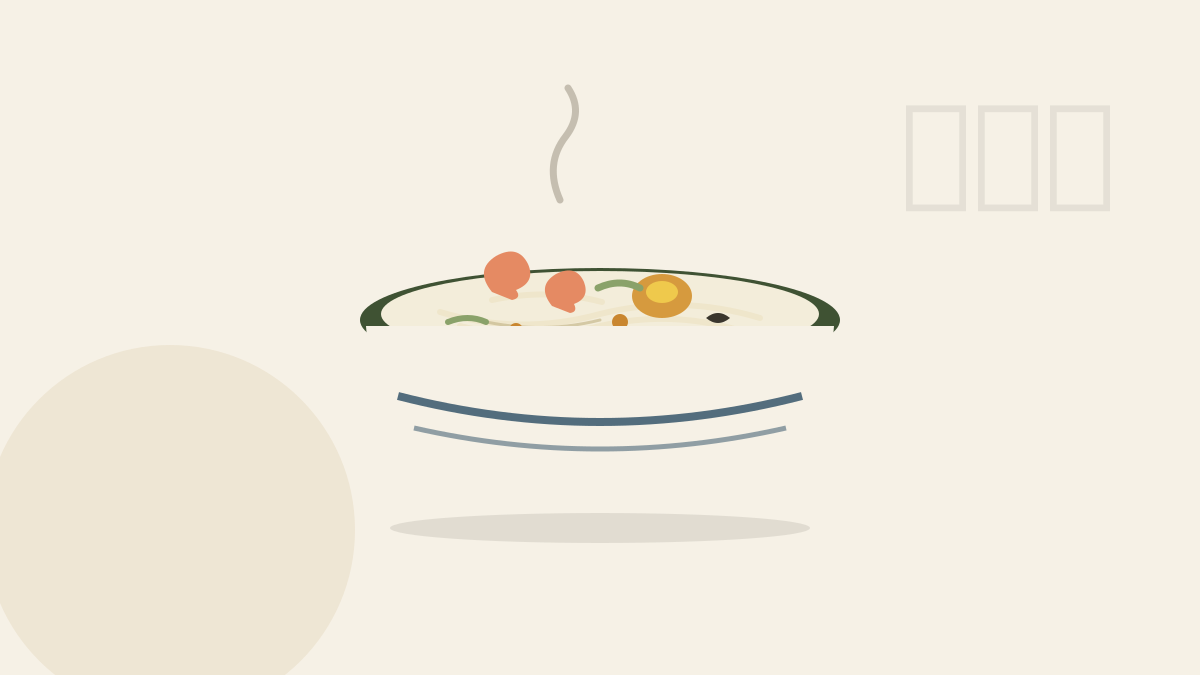
Taipien is a dish with dual citizenship and only one working passport. Its ancestor is tài píng yàn, a Fuzhou soup served at weddings and reunions — duck eggs for peace, dumplings wrapped in pounded-fish skins for plenty. When Fujianese immigrants settled in Kumamoto in the Meiji years, the wrappers were impossible and duck eggs scarce, so the city's early Chinese restaurants — Kairakuen and Kōrantei both tell versions of the founding story — rebuilt it from what Japan sold: mung-bean glass noodles standing in for the dumplings, a fried boiled hen's egg for the duck egg. The original faded in China; the adaptation is now so local that Kumamoto children meet it in school lunch and assume the whole country eats it.
It's also simply a lovely thing to cook on a weeknight. The method is champon's — sear pork and vegetables hard in a wok, then boil the broth right on top of them — but the harusame keep everything light, slippery, and quick. The fried egg deserves its cult: a minute in hot oil turns the white into a gold, chewy jacket that holds against the soup. Kumamoto calls taipien health food. Kumamoto is grading on a curve, and the bowl is better for it.
Fry the boiled eggs before they go in — a minute in hot oil blisters the whites gold and keeps them from tasting like an afterthought. In Kumamoto that fried egg has its own name and its own fans.
板前の一言 · A word from the kitchen
Ingredients材料
Serves 4
Soup
- 1.2 Lchicken stock — a mixed chicken-and-pork stock is the restaurant standard; good homemade chicken stock alone is nothing to apologize for
- 2 tbsplight soy sauce (usukuchi)
- 1 tbspsake
- 1 tspsalt
- 1/2 tspwhite pepper
- 1 tspsesame oil
Bowl
- 120 gdried harusame (mung bean glass noodles)
- 150 gthinly sliced pork shoulder
- 8shrimp, peeled
- 100 gsquid, scored and sliced
- 1/4 headcabbage, in ribbons
- 1/2carrot, in thin half-moons
- 4dried shiitake, soaked and sliced
- 20 gkikurage (wood ear), rehydrated
- 4eggs, hard-boiled and peeled
- neutral oil, for frying the eggs and the wok
Method作り方
Step 1: Fry the eggs
Pat the boiled eggs bone-dry and fry them in a centimetre of hot oil, rolling them around, until the whites blister and turn gold. Halve them and set aside. This step reads as optional and is not — it's the dish's signature.
Step 2: Soak the noodles
Cover the harusame with hot water for 4 to 5 minutes until pliable but still with a core, then drain and snip once or twice with scissors. They'll finish cooking in the soup and drink it as they go.
Step 3: Stir-fry the toppings
In a wok, sear the pork over high heat, then add squid, shrimp, cabbage, carrot, shiitake, and kikurage and stir-fry two minutes, until the cabbage edges catch. The little scorch is flavor the soup can't make on its own.
Step 4: Marry in the broth
Pour the stock into the wok, season with soy, sake, salt, and white pepper, and boil two minutes so the vegetables and broth agree with each other.
Step 5: Noodles in, bowls out
Add the drained harusame, cook 90 seconds until glassy and slippery, and finish with sesame oil. Ladle into deep bowls, making sure the noodles surface, and crown each with a golden fried egg half.
道具 · The tools
Equipment
Zaru (draining basket)
ざるFor draining and serving cold noodles, and rinsing rice — a bamboo or mesh basket that lets everything breathe.
Shop on Amazon →Mandoline (benriner)
スライサーPaper-thin daikon, cucumber, and cabbage in seconds — the Japanese mandoline home cooks actually own.
Shop on Amazon →
Equipment links are Amazon affiliate links. As an Amazon Associate we earn from qualifying purchases, at no cost to you. Disclosure.
Questions from the kitchen
Is taipien really unknown in China?
In its Kumamoto form, essentially yes. The ancestor is tài píng yàn, a Fuzhou celebration soup of duck eggs and yàn — dumplings with wrappers made of pounded fish and starch. The Japanese version swapped glass noodles for the dumplings and a fried hen's egg for the duck egg, and that adaptation never traveled back. A Fuzhou native would recognize the name and not the bowl.
How did a Fuzhou soup end up in Kumamoto?
Meiji-era treaty ports brought Fujianese merchants and cooks to Kyūshū, and the Chinese restaurants they opened in Kumamoto — the old houses like Kairakuen and Kōrantei both lay claim to early versions — adapted the homeland dish to Japanese ingredients. It dug in deep: taipien turns up in Kumamoto school lunches, which is as naturalized as food gets.
Is this a diet food?
Kumamoto will happily tell you so — glass noodles instead of wheat, a light broth, a pile of vegetables and seafood. It's certainly the gentlest bowl in the Kyūshū noodle canon. The fried egg is where the virtue ends, and it should stay.
次はこちら · Cook next
Keep the burner on
 麺
麺Noodles · 70 min · Intermediate
Weeknight Shoyu Ramen醤油ラーメン
A clear, chicken-and-dashi shoyu ramen you can honestly make on a Tuesday — with a proper tare, marinated eggs, and no ten-hour bone boil.
 麺
麺Noodles · 25 min · Beginner
Izumo Soba出雲そば
Shimane's dark whole-grain soba served warigo style — three stacked lacquer rounds, sauce poured over the noodles, an Edo-era ritual from the land of the gods.
 麺
麺Noodles · 65 min · Intermediate
Sanuki Udon, Kake Style讃岐うどん
Kagawa's proudly chewy udon in hot iriko dashi — hand-kneaded, properly rested, and eaten with the speed and reverence Shikoku demands.