Taco Rice
タコライス
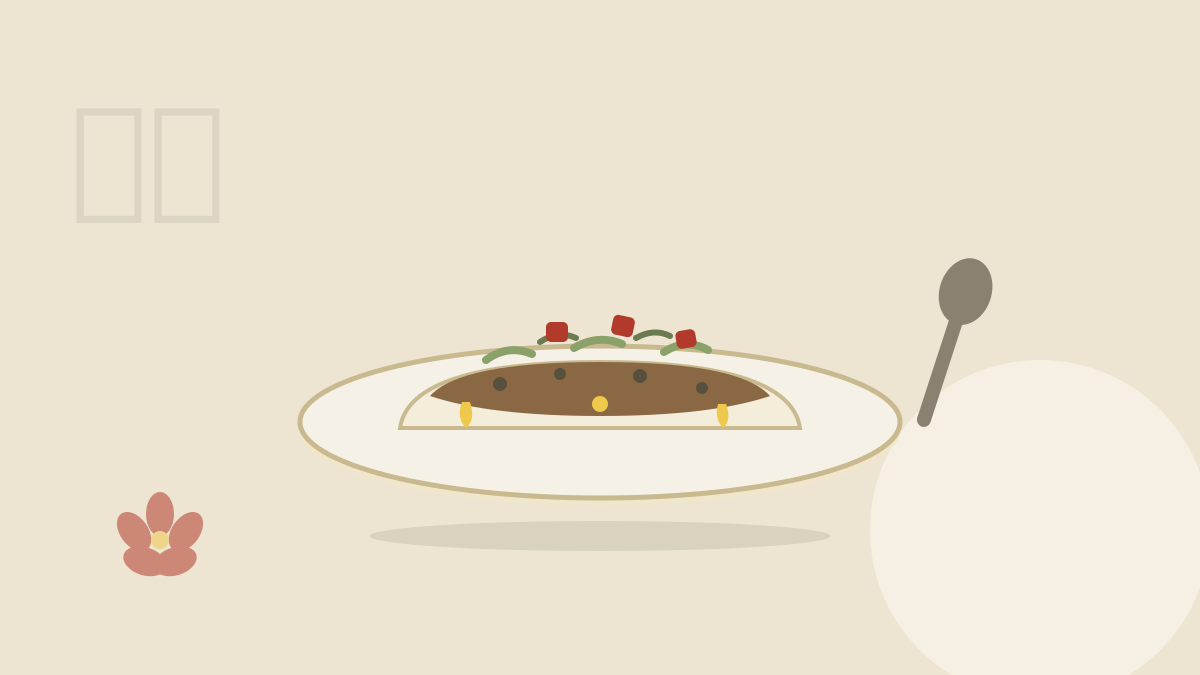
Taco fillings on hot Japanese rice — invented in 1984 in Kin town beside Camp Hansen, and now Okinawa's frankest, most cheerful piece of base-town cooking.
By Japanese Cookbook Kitchen · May 11, 2026
沖縄 OkinawaShōwa era, 1926–1989
 丼
丼- Prep
- 15 min
- Cook
- 15 min
- Serves
- 2
- Level
- Beginner
Taco rice has an origin story with a name, a date, and an address, which makes it a rarity in food history. In 1984, Matsuzo Gibo ran an eatery in Kin town, hard against the gates of Camp Hansen, feeding Marines whose dollars had been losing ground since the 1972 reversion returned Okinawa to Japan and to the yen. Tacos sold well but didn't fill anyone up, so Gibo dropped the fillings — seasoned beef, cheese, lettuce, tomato — onto a bed of hot Japanese rice. Cheap, huge, and instantly legible to both a nineteen-year-old from Texas and a taxi driver from Naha.
There's no need to dress this up as anything grander than what it is: base-economy cooking, invented to solve a cash-flow problem, that turned out to be genuinely good. The hot rice melts the cheese from underneath, the cool lettuce and tomato keep the richness honest, and the whole thing eats faster than you intend it to. Okinawa took a hard history and made lunch out of it — that, too, is a tradition.
The rice must be hot enough to soften the cheese from below — that quiet melt is the whole architecture of the dish. Cold rice makes a salad; nobody ordered a salad.
板前の一言 · A word from the kitchen
Ingredients材料
Serves 2
Taco meat
- 300 gground beef, or beef and pork blend
- 1/2onion, finely chopped
- 1garlic clove, minced
- 1 tbspchili powder — the mild American blend, not straight cayenne
- 1 tspground cumin
- 2 tbspketchup
- 1 tbspWorcestershire sauce
- 100 mlwater
- salt and black pepper
To assemble
- 400 ghot cooked Japanese short-grain rice
- 60 gcheese, shredded — a mild melting cheddar blend; on-base commissary cheese is the historically accurate choice
- 3 leavesiceberg lettuce, shredded
- 1tomato, seeded and diced
- hot sauce or salsa, to serve
Method作り方
Step 1: Make the taco meat
Sweat the onion and garlic in a dry-ish pan until translucent, then add the beef and brown it hard, breaking it fine. Fine crumbles matter — the meat has to sit on rice grains, not roll off them.
Step 2: Season and simmer
Add chili powder and cumin and fry 30 seconds until fragrant, then add ketchup, Worcestershire, and water. Simmer 5 minutes until the mixture is moist but not wet, and season. It should taste a shade too bold on its own; the rice is coming.
Step 3: Build in strict order
Hot rice into wide bowls, cheese straight onto the rice so it melts, then the hot meat, then lettuce, then tomato. The order is not negotiable — it's the difference between taco rice and a pile.
Step 4: Serve immediately
Pass hot sauce or salsa at the table. Eat with a spoon, mixing as you go, the way it's done two blocks from Camp Hansen's gate.
道具 · The tools
Equipment
Rice cooker
炊飯器Consistent short-grain rice with zero attention — the one appliance nearly every page here leans on.
Shop on Amazon →Portable gas burner
カセットコンロThe tabletop butane burner that turns any nabe into a shared meal — cook and eat from the same pot.
Shop on Amazon →
Equipment links are Amazon affiliate links. As an Amazon Associate we earn from qualifying purchases, at no cost to you. Disclosure.
Questions from the kitchen
Who actually invented taco rice?
Matsuzo Gibo, a restaurateur in Kin town, next to the Marine Corps base Camp Hansen, in 1984. He served tacos to Marines and wanted something cheaper and more filling for young men paid in thinning dollars, so he put the fillings on rice at his Parlor Senri; his King Tacos shops spread it across the island. Unusually for a dish this famous, the origin is documented rather than disputed.
Is taco rice considered real Okinawan food?
Ask anyone under sixty on the island and the answer is yes, without embarrassment. Okinawa has been mixing outside influences into its kitchen since the Ryūkyū Kingdom traded with China and Siam; the American bases were simply the next ingredient to arrive. School lunches serve it, convenience stores sell it, and homesick Okinawans crave it.
There's no octopus in this, right?
Right. The tako here is Spanish taco, not Japanese tako (octopus) — a pun the island has been enjoying at visitors' expense for forty years.
次はこちら · Cook next
Keep the burner on
 丼
丼Rice & Donburi · 50 min · Intermediate
Katsudonカツ丼
Crisp tonkatsu simmered with onions in sweet dashi-soy and set with barely-cooked egg over rice — the Taishō-era donburi that made yōshoku fully Japanese.
 丼
丼Rice & Donburi · 25 min · Beginner
Unadonうな丼
Kabayaki eel lacquered in sweet tare over hot rice — an Edo summer ritual with the best marketing legend in Japanese food history. Store-bought eel welcome.
 丼
丼Rice & Donburi · 45 min · Beginner
Salted Salmon Onigiri鮭お握り
Proper rice balls with salted salmon — how to cook and season the rice, shape with wet hands, and keep the nori crisp until the first bite.