Senbei-jiru
せんべい汁
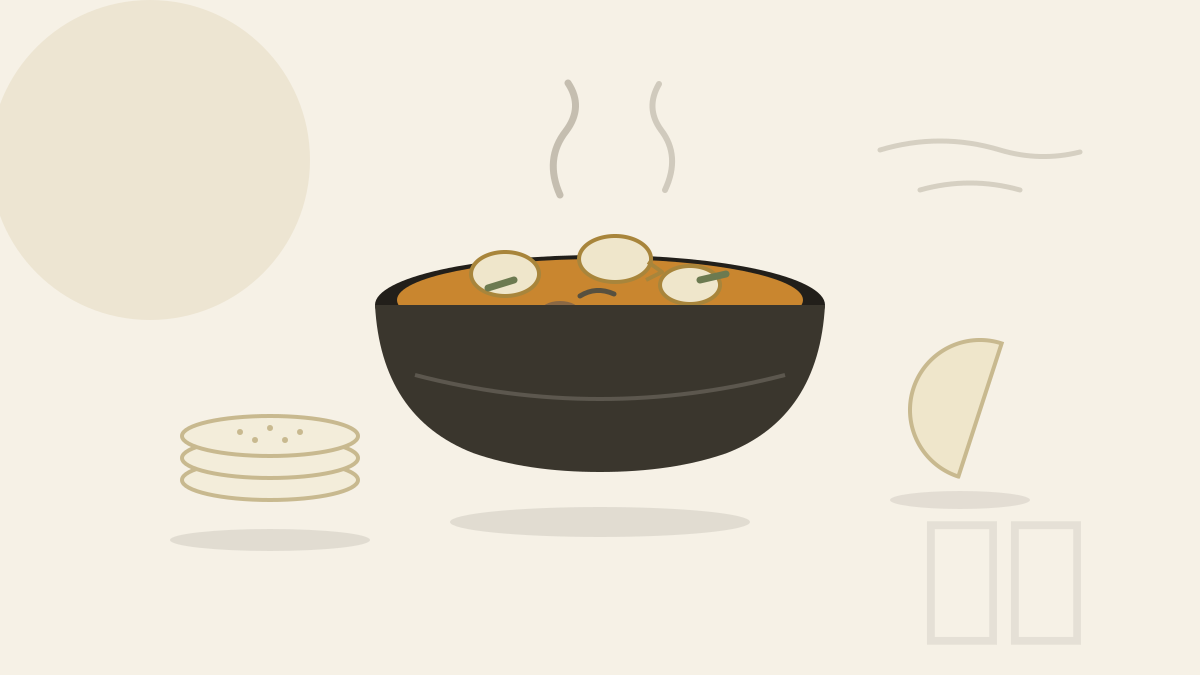
Hachinohe's hot pot of wheat crackers simmered in chicken and gobō broth — Nanbu senbei bred for soup, from a cold coast where the rice crop so often failed.
By Japanese Cookbook Kitchen · June 2, 2026
 鍋
鍋- Prep
- 20 min
- Cook
- 30 min
- Serves
- 4
- Level
- Beginner
Senbei-jiru is what a smart, poor, cold place does with its own hardship. The old Nanbu domain around Hachinohe sits in the path of the yamase — the cold, fog-bearing summer wind off the Pacific that killed rice in the fields and brought famine after famine through the Edo period, the Tenmei and Tenpō disasters worst among them. Wheat, buckwheat, and millet would still grow, and flat wheat crackers baked hard in iron molds became the region's keeping-staple. Dropping those crackers into the evening's broth, attested locally from late Edo, turned preservation food back into dinner.
The pleasure of the dish is entirely textural. Soup senbei are baked to withstand the pot, and after a few minutes of simmering they land somewhere between fresh pasta and a dumpling's skin — supple, slippery, faintly wheaty, holding a chicken-and-gobō broth in every fold. It is humble in the way of things that have stopped apologizing for it: since winning the B-1 Grand Prix in 2012, Hachinohe will happily tell you its famine dish beat all of Japan. Break the crackers yourself; it is satisfying, and it is tradition.
Use senbei sold for soup — kayaki or otsuyu senbei — not the snacking kind. Soup senbei are baked hard on purpose and hold an al dente chew; snack senbei surrender into porridge within a minute.
板前の一言 · A word from the kitchen
Ingredients材料
Serves 4
- 8Nanbu senbei for soup (otsuyu senbei) — sold in packs labeled かやき or おつゆ; Japanese groceries abroad increasingly stock them
- 300 gboneless chicken thigh, in bite-size pieces
- 1/2gobō (burdock root), shaved into ribbons
- 1/2carrot, in thin half-moons
- 4fresh shiitake, sliced
- 100 gshirataki noodles, drained
- 1naganegi, sliced diagonally
- 1 Lawase dashi
- 3 tbspsoy sauce
- 2 tbspsake
Method作り方
Step 1: Brown the chicken lightly
In the pot, render the chicken over medium heat until the edges catch color. The little fond at the bottom is the difference between a broth and a very good broth.
Step 2: Build the soup
Add the dashi, gobō, carrot, shiitake, and shirataki. Simmer 15 minutes, skimming once — the gobō should perfume everything before any seasoning goes in.
Step 3: Season
Add the soy sauce and sake and taste. It should be a shade saltier than you want to sip, because the senbei will drink some of that seasoning down.
Step 4: Break in the senbei
Snap each cracker into two or three pieces and slide them into the simmering broth with the negi. Push them under so every piece is submerged.
Step 5: Simmer to al dente
Cook 4 to 6 minutes, until the senbei have gone supple and slippery but still bite back — Hachinohe compares the texture to firm pasta, and Hachinohe is right. Serve straight from the pot before they soften further.
道具 · The tools
Equipment
Donabe
土鍋The clay hot-pot that makes nabemono taste like nabemono — a gentle, even simmer that carries straight to the table.
Shop on Amazon →
Equipment links are Amazon affiliate links. As an Amazon Associate we earn from qualifying purchases, at no cost to you. Disclosure.
Questions from the kitchen
What exactly is a Nanbu senbei?
A thin, hard round cracker of wheat flour and salt, baked in iron molds — the staple carbohydrate of the old Nanbu domain, where cold yamase winds off the Pacific ruined rice harvests with grim regularity. Wheat and buckwheat survived where rice failed, and the long-keeping senbei became both daily bread and famine insurance.
Can I use something else if I can't find soup senbei?
Nothing substitutes exactly — the dish is the cracker. Plain hard water crackers dissolve too fast, and rice senbei are the wrong grain entirely. If you cannot source them, make suiton-style flour dumplings in the same broth and you will have senbei-jiru's cousin hittsumi instead, which is no punishment.
How old is the dish, and why is it suddenly famous?
Simmering senbei in broth is attested around Hachinohe from the late Edo period, once soup-grade crackers were being baked locally. The modern fame is precisely datable: Hachinohe's boosters took senbei-jiru to the national B-1 Grand Prix street-food championships and won the 2012 title, and the dish has been the city's calling card since.
次はこちら · Cook next
Keep the burner on
 鍋
鍋Nabemono & Soups · 45 min · Beginner
Ishikari Nabe石狩鍋
Hokkaidō's salmon and miso hot pot, born on the Ishikari River in the Meiji fishing boom — sweet corn, potatoes, and a knob of butter at the end.
 鍋
鍋Nabemono & Soups · 55 min · Beginner
Imoni芋煮
Yamagata's taro and beef stew, simmered in soy and sake — the dish an entire prefecture cooks together on riverbanks every autumn since Edo times.
 鍋
鍋Nabemono & Soups · 65 min · Intermediate
Hōtōほうとう
Yamanashi's wide flat noodles simmered straight in miso broth with kabocha — the one-pot field ration that fed Takeda Shingen's armies in the Sengoku era.