Satsuma-age
さつま揚げ
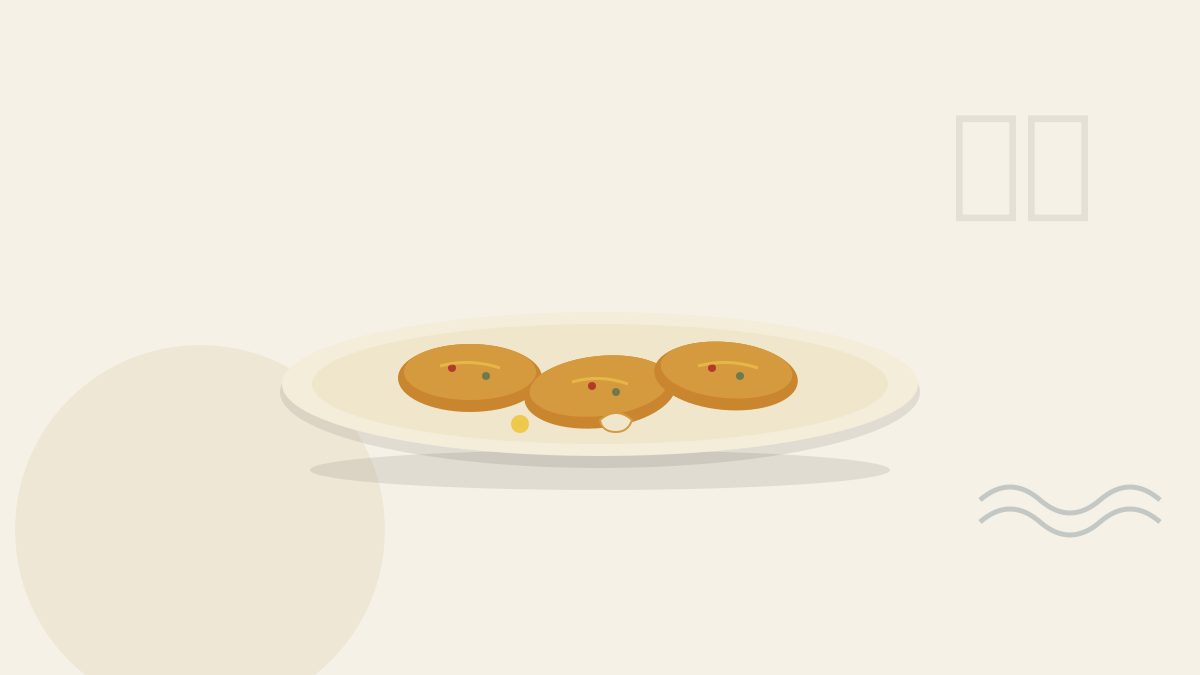
Kagoshima's deep-fried fish cakes — white fish pounded to a springy paste, seasoned, and fried golden; a Ryūkyū dish that traveled north through Satsuma and stayed.
By Japanese Cookbook Kitchen · May 25, 2026
 居酒屋
居酒屋- Prep
- 30 min
- Cook
- 15 min
- Serves
- 4
- Level
- Intermediate
Satsuma-age carries its own history in its name. The deep-fried fish cake is tied to Kagoshima, the old Satsuma domain at the southern end of Kyūshū, but its technique came from further south still. The Ryūkyū Kingdom — today's Okinawa — made a fried fish paste called chikiagī, descended from an older cake named chigiage, and when Satsuma brought Ryūkyū under its control in the early seventeenth century, that frying method traveled north along a well-documented trade route. Kagoshima adopted it, kept the local name tsukeage, and the rest of Japan came to know it as satsuma-age — the cake named for the domain that handed it on.
Everything good about it is a matter of protein and cold. Salt worked into cold fish dissolves the muscle into a gel that fries up bouncy and springy, not mealy; the shōchū, sugar, and miso in the paste are pure Satsuma seasoning. Eat them hot with ginger and soy, or the way Kagoshima prefers — cooled, with a smear of karashi and a glass of imo-jōchū at hand. Either way they are proof that the best regional dishes are often the ones that came from somewhere else.
The bounce is everything, and the bounce comes from cold. Keep the fish, the bowl, and your hands cold while you pound the paste — warm surimi turns mealy. If the paste ever slackens, chill it before you fry.
板前の一言 · A word from the kitchen
Ingredients材料
Serves 4
Fish paste
- 400 gwhite fish fillet, skinned — cod, hake, or a mix; a little oily fish like horse mackerel adds depth
- 1 tspsalt — the salt is structural — it dissolves the fish protein into a bouncy gel, so don't cut it
- 1egg white
- 1 tbsppotato starch
- 1.5 tbspimo-jōchū or sake
- 2 tspsugar
- 1 tspmirin
- 1 tspwhite miso
Folded in
- 2scallions, finely sliced
- 40 gcarrot, minced fine
- 30 gburdock or gobō, minced — optional but traditional; soak in water first to keep it pale
- 1 knobginger, grated
To fry
- 1 Lneutral oil — for deep-frying, held at 160°C
Method作り方
Step 1: Pound the paste cold
Cut the fish into chunks and process with the salt until it turns sticky and pale — the salt breaks the fish protein into a gel, which is the whole secret of the spring. Add egg white, starch, shōchū, sugar, mirin, and miso and blend to a smooth, glossy paste, keeping everything cold.
Step 2: Fold in the vegetables
Scrape the paste into a chilled bowl and fold in the scallion, carrot, gobō, and ginger by hand. Fry a teaspoon of the mixture to taste and adjust the salt or sugar now, before you commit.
Step 3: Shape with wet hands
Wet your hands and pat the paste into flat ovals about a centimeter thick. Wet hands stop the sticky surimi from clinging and give the cakes their smooth, glossy skin.
Step 4: Fry low, then finish higher
Slide the cakes into 160°C oil and fry gently until they float and set, about four minutes, so the inside cooks through without the outside scorching. Raise the heat at the end for a minute to color them golden.
Step 5: Drain and serve two ways
Drain on a rack. Eat them hot with grated ginger and soy, or the Kagoshima way — at room temperature with a little karashi mustard, alongside a glass of imo-jōchū. They keep for a few days and turn up sliced into oden and udon.
道具 · The tools
Equipment
Heavy pot / Dutch oven
厚手鍋Deep, heat-retentive, and stable — for deep-frying without temperature crashes and long simmers without scorching.
Shop on Amazon →Frying thermometer
温度計The difference between crisp karaage and greasy karaage is holding the oil at temperature — stop guessing.
Shop on Amazon →Frying spider & tongs
揚げ網Lift fried food clean out of the oil and drain it fast, before the crust turns soft.
Shop on Amazon →Grater (oroshigane)
おろし金Fine, wet grating for ginger, daikon oroshi, and fresh wasabi — a Western microplane is close.
Shop on Amazon →
Equipment links are Amazon affiliate links. As an Amazon Associate we earn from qualifying purchases, at no cost to you. Disclosure.
Questions from the kitchen
How did a fish cake get named after Satsuma?
Because Satsuma is where mainland Japan met it. The technique of frying fish paste came from the Ryūkyū Kingdom, where a similar cake called chikiagī — and its ancestor chigiage — was made. Satsuma controlled Ryūkyū from the early 1600s, and the frying method traveled up that documented trade route into Kagoshima, where locals still call it tsukeage. Elsewhere in Japan it became satsuma-age, named for the domain it arrived through.
Why does the salt matter so much?
Salt isn't just seasoning here — it's structural. When you work salt into fish, it dissolves the myosin protein into a sticky sol that sets on cooking into a springy gel. That bounce is what separates real satsuma-age from a soft, mealy fritter. Under-salt and you lose the texture entirely.
Can I make these without a food processor?
Traditionally they were pounded in a suribachi, the ridged Japanese mortar, and you can still do it that way — it's a workout but it works. Pound the salted fish to a paste first, then work in the rest. Keep it cold throughout and don't rush the pounding; the smoothness is the point.
次はこちら · Cook next
Keep the burner on
 居酒屋
居酒屋Izakaya · 25 min · Beginner
Gōya Chanpurūゴーヤーチャンプルー
Okinawa's bitter melon stir-fry with tofu, pork, and egg — the Ryūkyū Kingdom's everyday masterpiece, and the honest way to make peace with gōya.
 居酒屋
居酒屋Izakaya · 40 min · Beginner
Osaka Okonomiyakiお好み焼き
Osaka's cabbage-and-batter griddle cake with pork belly, sauce, and dancing katsuobushi — postwar street food perfected. Dashi in the batter is the difference.
 居酒屋
居酒屋Izakaya · 35 min · Intermediate
Chicken Karaage鶏の唐揚げ
Japanese fried chicken with a soy-ginger marinade, a potato-starch crust, and the double-fry that keeps it crackling — izakaya standard, home method.