Sara Udon
皿うどん
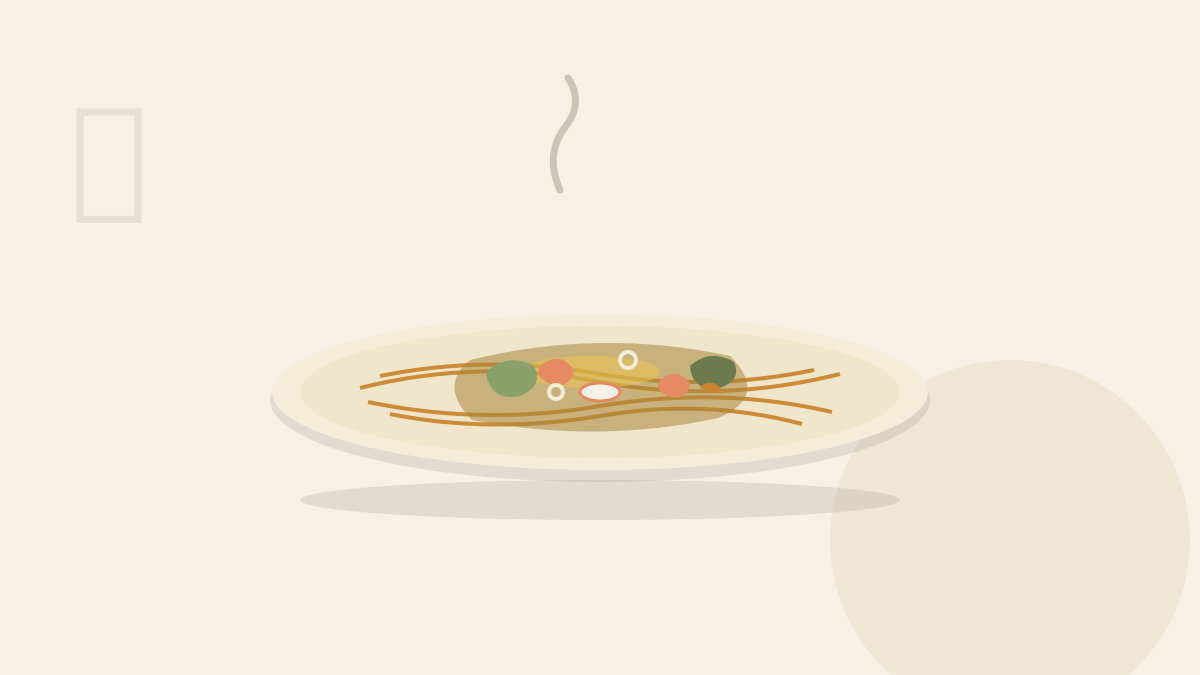
Champon's crispy sibling from Nagasaki — a nest of fried thin noodles under a glossy ankake sauce of pork, seafood, and vegetables, eaten with the noodles still crackling.
By Japanese Cookbook Kitchen · May 11, 2026
九州 KyūshūTaishō era, 1912–1926
 麺
麺- Prep
- 20 min
- Cook
- 15 min
- Serves
- 2
- Level
- Intermediate
If champon is Nagasaki's generosity in a bowl, sara udon is the same idea sent out the door. In the early twentieth century, the Chinese restaurants that had invented champon — Shikairō foremost among them — needed a version that could be delivered without a soup sloshing over the sides. Their answer was to serve the champon topping as a thick ankake sauce ladled over a plate of crisp fried noodles. They called it sara udon, "plate udon," with a straight face, though the crackling threads on the plate are nothing like udon at all. Nagasaki has always enjoyed a joke at the expense of a name.
The dish lives or dies on one contrast: the top of the noodle nest still crackling while the bottom has gone silk-soft under the sauce. That window is short, which is why sara udon is sauced at the table and eaten at once. A starch-thick ankake glossy enough to coat a spoon, a splash of Worcestershire in the local style, and the good sense to pour last — get those right and you have one of the most quietly clever dishes Japan's port cities ever built.
Sauce the noodles at the table, not in the kitchen. The whole pleasure of sara udon is the contrast — crackle giving way to soft — and it lasts about ninety seconds before the sauce wins. Pour, then eat.
板前の一言 · A word from the kitchen
Ingredients材料
Serves 2
The crisp base
- 2 nestsfine fried sara udon noodles — sold pre-fried in Nagasaki; substitute thin fried chow mein noodles or fry your own thin noodles until golden
Ankake sauce
- 400 mlpork-and-chicken stock — the same milky champon base, or a good chicken stock
- 80 gpork belly, sliced thin
- 6peeled shrimp
- 6squid rings
- 120 gcabbage, rough squares
- 1 handfulbean sprouts
- 40 gkamaboko (fish cake), sliced
- 1/2carrot, thin half-moons
- 2fresh shiitake, sliced
- 2 tspsoy sauce
- 1 tspoyster sauce
- 1 pinchsugar
- 1.5 tbsppotato starch — slaked in 3 tbsp cold water; this is the gloss and the cling
Method作り方
Step 1: Ready the noodles and the table
Divide the fried noodles into two flat nests on serving plates and set them aside uncovered so they stay dry and crisp. Slake the potato starch in cold water and keep it by the stove.
Step 2: Sear the protein
Heat a little oil in a wok and sear the pork belly until its edges brown, then add shrimp, squid, and carrot for a minute. As with champon, the browning here is the backbone of the flavor.
Step 3: Add vegetables and stock
Toss in cabbage, shiitake, kamaboko, and bean sprouts for a minute, then pour in the stock with soy, oyster sauce, and sugar. Bring to a boil so the cabbage softens but keeps some spine.
Step 4: Thicken to a glossy ankake
Stir the slaked starch again and drizzle it in while the sauce boils, stirring constantly. It should turn glossy and thick enough to coat a spoon in about thirty seconds. Ankake means "starch-draped," and that sheen is the point.
Step 5: Sauce at the table
Carry the sauce and the plated noodles out together and ladle the sauce over the crisp nest at the table. Eat immediately, while the top noodles still crackle and the bottom ones have gone silky. Worcestershire sauce splashed on top is the Nagasaki move.
道具 · The tools
Equipment
Portable gas burner
カセットコンロThe tabletop butane burner that turns any nabe into a shared meal — cook and eat from the same pot.
Shop on Amazon →Zaru (draining basket)
ざるFor draining and serving cold noodles, and rinsing rice — a bamboo or mesh basket that lets everything breathe.
Shop on Amazon →
Equipment links are Amazon affiliate links. As an Amazon Associate we earn from qualifying purchases, at no cost to you. Disclosure.
Questions from the kitchen
How is sara udon related to champon?
They are siblings from the same Nagasaki kitchens of the early twentieth century — Shikairō is again credited with the dish. Sara udon, "plate udon," took the champon topping and served it over crisp fried noodles instead of soup, so it could travel as a delivery dish that wouldn't slosh. The name is a small joke: it uses no udon at all.
What is ankake, exactly?
Ankake is any dish finished with a starch-thickened sauce — an, a glossy slurry that clings. Here it does double duty: it carries the seafood-pork flavor and it slowly soaks the noodles from crisp to soft as you eat, which is the entire experience.
My noodles went soggy immediately — what happened?
You either sauced them too early, in the kitchen, or your sauce was too thin. A properly thick ankake sits on top and soaks down gradually. Plate the noodles, keep them uncovered and dry, and pour only at the moment you sit down to eat.
次はこちら · Cook next
Keep the burner on
 麺
麺Noodles · 70 min · Intermediate
Weeknight Shoyu Ramen醤油ラーメン
A clear, chicken-and-dashi shoyu ramen you can honestly make on a Tuesday — with a proper tare, marinated eggs, and no ten-hour bone boil.
 麺
麺Noodles · 25 min · Beginner
Izumo Soba出雲そば
Shimane's dark whole-grain soba served warigo style — three stacked lacquer rounds, sauce poured over the noodles, an Edo-era ritual from the land of the gods.
 麺
麺Noodles · 65 min · Intermediate
Sanuki Udon, Kake Style讃岐うどん
Kagawa's proudly chewy udon in hot iriko dashi — hand-kneaded, properly rested, and eaten with the speed and reverence Shikoku demands.