Shinshū Oyaki
おやき
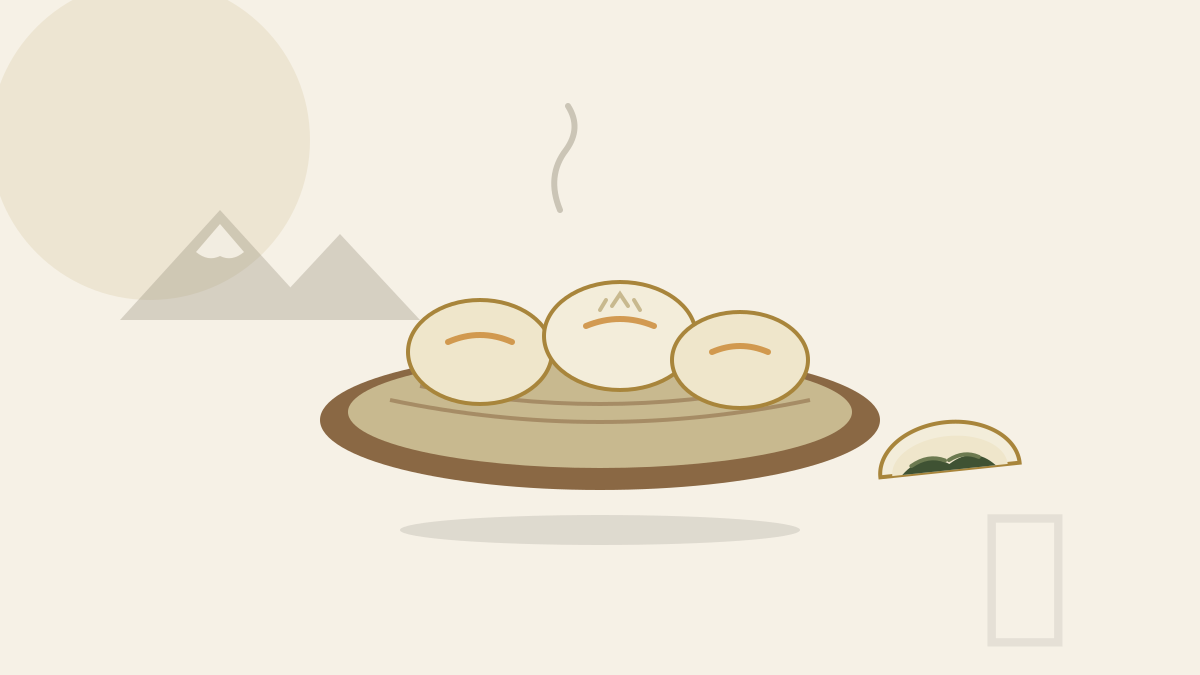
Nagano's stuffed wheat-and-buckwheat buns filled with nozawana or kabocha — the Edo-era answer of mountain villages where flour grew and rice would not.
By Japanese Cookbook Kitchen · May 29, 2026
 居酒屋
居酒屋- Prep
- 50 min
- Cook
- 25 min
- Serves
- 4
- Level
- Intermediate
Shinshū — the old name for Nagano — is Japan's roofline, a province of passes and terraces where rice was a rich man's crop and flour was daily bread. Out of that arithmetic came oyaki: rounds of wheat-and-buckwheat dough folded around fillings from the autumn barrel and the kitchen garden, originally roasted in the ash of the irori, the open sunken hearth. The habit is old — flour dumplings appear in Edo-period accounts of mountain Shinshū — and it survived because it worked: cheap, hot, portable, and capable of making salted greens taste like a reward.
Nozawana and kabocha are the canonical pair — one sharp and savory, one sweet and collapsing — though eggplant-miso partisans exist and are not wrong. The buns should be overstuffed to the point of structural anxiety. A tidy oyaki is a sign of insufficient ambition.
Season the fillings harder than tastes right on a spoon — the dough is plain by design and mutes everything by half. A bland oyaki is a filled disappointment.
板前の一言 · A word from the kitchen
Ingredients材料
Serves 4
Dough
- 200 gall-purpose flour
- 50 gbuckwheat flour — the Shinshū accent; all wheat works if that's the pantry
- 160 mlhot water
- 1 pinchsalt
Nozawana filling
- 200 gnozawana pickles, chopped — takana or well-squeezed pickled mustard greens are honest stand-ins
- 1 tspsesame oil
- 1 tbspmiso
- 1 tspsugar
- 1dried chile, seeded and sliced thin
Kabocha filling
- 250 gkabocha squash, seeded, in chunks
- 1 tbspsugar
- 1 pinchsalt
Method作り方
Step 1: Scald the dough
Stir hot water into the flours and salt, knead briefly once cool enough to touch, and rest 30 minutes under a damp cloth. Hot water tames the buckwheat and gives a supple, tear-resistant wrapper with no yeast and no waiting on one.
Step 2: Cook the fillings
For the nozawana: squeeze the pickles hard, then fry in sesame oil with miso, sugar, and chile until dry and glossy. For the kabocha: steam until collapsing, mash coarsely with sugar and salt. Cool both completely — hot filling steams holes through dough.
Step 3: Wrap
Divide the dough into 8, flatten each into a palm-size round thinner at the edges, and cup a generous spoonful of filling inside. Pleat the edges up and over, pinch closed, and set seam-down. Overfilled and barely closed is the authentic condition.
Step 4: Sear both faces
Brown the buns seam-down, then top, in a lightly oiled skillet over medium heat, about 3 minutes a side. This crust stands in for the irori hearth where oyaki were once buried in ash.
Step 5: Steam to finish
Add a finger of water to the hot pan, lid on, and steam 8 minutes until the dough is cooked through and the kitchen smells like a Nagano farmhouse. Eat warm, one of each, and argue about which filling wins.
道具 · The tools
Equipment
Nonstick frying pan
フライパンFor chanpurū, gyoza, pancakes, and anything that needs a clean release and even browning.
Shop on Amazon →
Equipment links are Amazon affiliate links. As an Amazon Associate we earn from qualifying purchases, at no cost to you. Disclosure.
Questions from the kitchen
Why buckwheat and wheat instead of rice?
Highland Shinshū — modern Nagano — is steep, cold, and short on paddy land. For centuries its villages ate what the slopes gave: buckwheat, wheat, millet. Oyaki is that constraint made portable, a flour wrapper around whatever the field and the pickle barrel offered, cooked on the hearth rather than in a rice pot.
What are nozawana?
The pickled leaves of a turnip green grown around Nozawa Onsen in northern Nagano, salted in barrels each autumn and eaten all winter. Sharp, faintly sour, a little fibrous — perfect chopped and fried with miso. Outside Japan, takana pickles or any firm salted mustard green will carry the idea honorably.
Baked, steamed, or fried — which is authentic?
All of them, depending on the village. The oldest method buries the buns in irori hearth ash; steaming and pan-searing are both common now, and Nagano shops argue the point cheerfully. The sear-then-steam here gives crust and a cooked crumb without requiring you to own a hearth.
次はこちら · Cook next
Keep the burner on
 居酒屋
居酒屋Izakaya · 25 min · Beginner
Gōya Chanpurūゴーヤーチャンプルー
Okinawa's bitter melon stir-fry with tofu, pork, and egg — the Ryūkyū Kingdom's everyday masterpiece, and the honest way to make peace with gōya.
 居酒屋
居酒屋Izakaya · 40 min · Beginner
Osaka Okonomiyakiお好み焼き
Osaka's cabbage-and-batter griddle cake with pork belly, sauce, and dancing katsuobushi — postwar street food perfected. Dashi in the batter is the difference.
 居酒屋
居酒屋Izakaya · 35 min · Intermediate
Chicken Karaage鶏の唐揚げ
Japanese fried chicken with a soy-ginger marinade, a potato-starch crust, and the double-fry that keeps it crackling — izakaya standard, home method.