Okinawa Soba
沖縄そば
Okinawa's wheat-noodle "soba" in a pork and katsuobushi broth — the beloved everyday bowl that fought mainland regulators for its own name and won in 1978.
By Japanese Cookbook Kitchen · May 2, 2026
沖縄 OkinawaTaishō era, 1912–1926
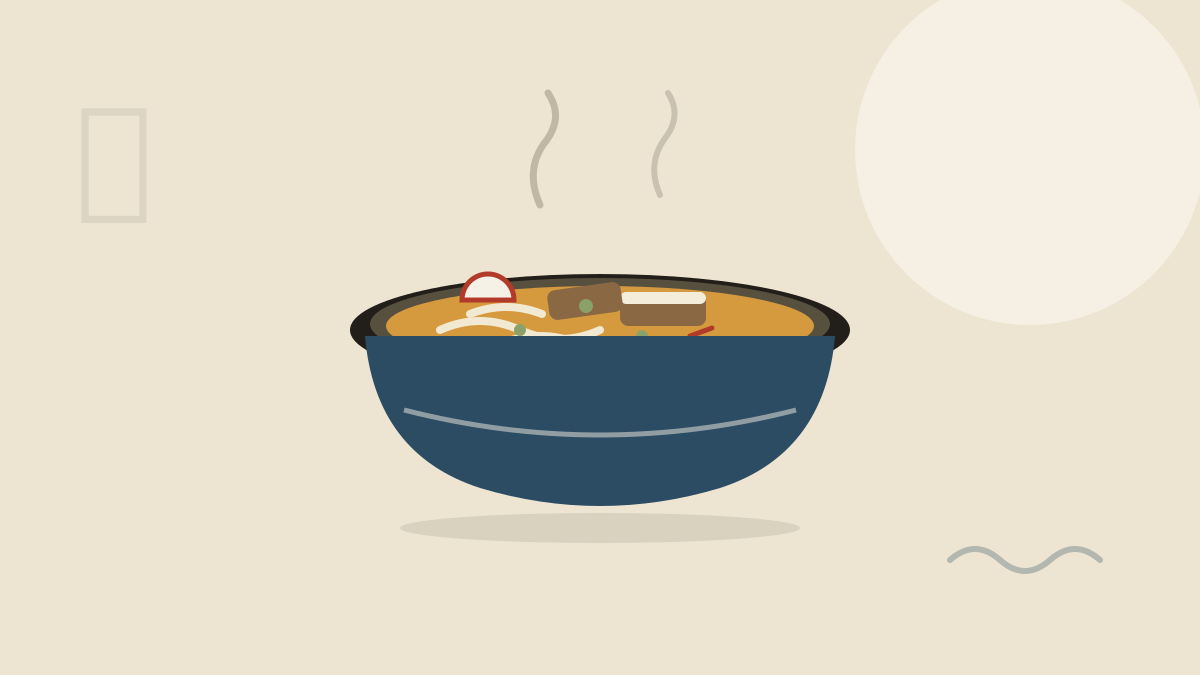 麺
麺- Prep
- 20 min
- Cook
- 180 min
- Serves
- 4
- Level
- Intermediate
Okinawa soba contains no buckwheat, and everyone involved has long since made peace with that. The noodle is pure wheat, kneaded firm and traditionally treated with lye water, descended from the Chinese-style noodles that shops in Naha began selling around the turn of the twentieth century — by the Taishō years the bowl had settled into the island's daily life. The broth is where Okinawa announces itself: pork bones simmered patiently, then rounded out with katsuobushi, the pork-loving Ryūkyū kitchen shaking hands with the mainland's dashi tradition in a single ladle.
The name nearly didn't survive. In 1976, four years after the island reverted to Japan, the Fair Trade Commission ruled that "soba" required 30 percent buckwheat; Okinawa's noodle cooperative argued for a century of local usage and, in 1978, won. Bureaucracy blinked. Make the broth properly — pork and dashi drawn separately, married at the end — and you'll understand why the island bothered to fight.
The broth is a marriage, not a merger — simmer the pork stock and draw the katsuobushi dashi separately, then combine at the end. Boil them together and the katsuobushi turns muddy while the pork turns thin.
板前の一言 · A word from the kitchen
Ingredients材料
Serves 4
Broth
- 800 gpork spare ribs or belly, in large pieces — the meat becomes your topping, so choose pieces you'd be happy to eat
- 2 Lwater
- 30 gkatsuobushi
- 10 cmpiece of kombu
- 2 tbsplight soy sauce
- 1 tbspsalt — start with less; pork stocks vary in how much they want
Noodles and toppings
- 4 portionsOkinawa soba noodles — thick wheat noodles, wavy or flat; fresh ramen noodles of the widest cut are the honest substitute
- 8 sliceskamaboko (fish cake)
- 4 tbspthinly sliced scallions
- beni shōga (red pickled ginger), to serve
- kōrēgūsu (awamori steeped with island chilies), optional but correct
Method作り方
Step 1: Blanch and simmer the pork
Cover the pork with cold water, bring to a boil, drain, and rinse — this one minute of housekeeping is the difference between a clean broth and a cloudy one. Return the pork to the pot with 2 liters of fresh water and simmer, lid ajar, for 2½ hours, skimming early and often.
Step 2: Draw the dashi
Separately, steep the kombu in 600 ml of water over the gentlest heat and pull it just before the boil. Add the katsuobushi, cut the heat, wait two minutes, and strain. You've made awase dashi; it will do the aromatic work the pork can't.
Step 3: Season the meat
Lift out the pork and simmer it 20 minutes in a small pan with a ladle of broth, the soy sauce, and a spoonful of sugar if you like it Naha-style. Slice thickly.
Step 4: Combine and season the broth
Strain the pork stock, combine with the dashi, and season with salt to a point just shy of satisfying — the toppings bring salt of their own.
Step 5: Assemble
Boil the noodles, drain hard, and settle them into warmed bowls. Ladle the broth over, then lay on pork, kamaboko, scallions, and a tuft of beni shōga. Pass the kōrēgūsu — three drops, not thirty.
道具 · The tools
Equipment
Frying spider & tongs
揚げ網Lift fried food clean out of the oil and drain it fast, before the crust turns soft.
Shop on Amazon →Zaru (draining basket)
ざるFor draining and serving cold noodles, and rinsing rice — a bamboo or mesh basket that lets everything breathe.
Shop on Amazon →Mandoline (benriner)
スライサーPaper-thin daikon, cucumber, and cabbage in seconds — the Japanese mandoline home cooks actually own.
Shop on Amazon →Fine sieve / muslin
こし器For straining dashi clear and dusting flour — line it with muslin or paper for the cleanest stock.
Shop on Amazon →
Equipment links are Amazon affiliate links. As an Amazon Associate we earn from qualifying purchases, at no cost to you. Disclosure.
Questions from the kitchen
Why is it called soba when there's no buckwheat in it?
Habit, then law. The noodle descends from Chinese-style wheat noodles sold in Naha from the early twentieth century, and locals simply called it soba. After Okinawa reverted to Japan in 1972, the Fair Trade Commission objected in 1976 that "soba" legally required at least 30 percent buckwheat. The prefecture's noodle-makers' cooperative pushed back, and on October 17, 1978 the name "Honba Okinawa soba" was formally approved — a date the island still celebrates as Okinawa Soba Day.
What noodles do I use outside Okinawa?
The widest fresh ramen noodles you can find, ideally a flat or wavy cut. Dried udon is too soft and slippery; actual buckwheat soba is simply a different dish. Some cooks add a pinch of baking soda to the boiling water to nudge the flavor toward the traditional lye-water noodle.
Is this the same as sōki soba?
Same bowl, different lid. Top it with soy-simmered spare ribs instead of sliced belly and you have sōki soba; with the ribs' cartilage melted soft, it's arguably the greater dish. We give sōki its own recipe.
次はこちら · Cook next
Keep the burner on
 麺
麺Noodles · 70 min · Intermediate
Weeknight Shoyu Ramen醤油ラーメン
A clear, chicken-and-dashi shoyu ramen you can honestly make on a Tuesday — with a proper tare, marinated eggs, and no ten-hour bone boil.
 麺
麺Noodles · 25 min · Beginner
Izumo Soba出雲そば
Shimane's dark whole-grain soba served warigo style — three stacked lacquer rounds, sauce poured over the noodles, an Edo-era ritual from the land of the gods.
 麺
麺Noodles · 65 min · Intermediate
Sanuki Udon, Kake Style讃岐うどん
Kagawa's proudly chewy udon in hot iriko dashi — hand-kneaded, properly rested, and eaten with the speed and reverence Shikoku demands.