Niigata Noppe
のっぺ
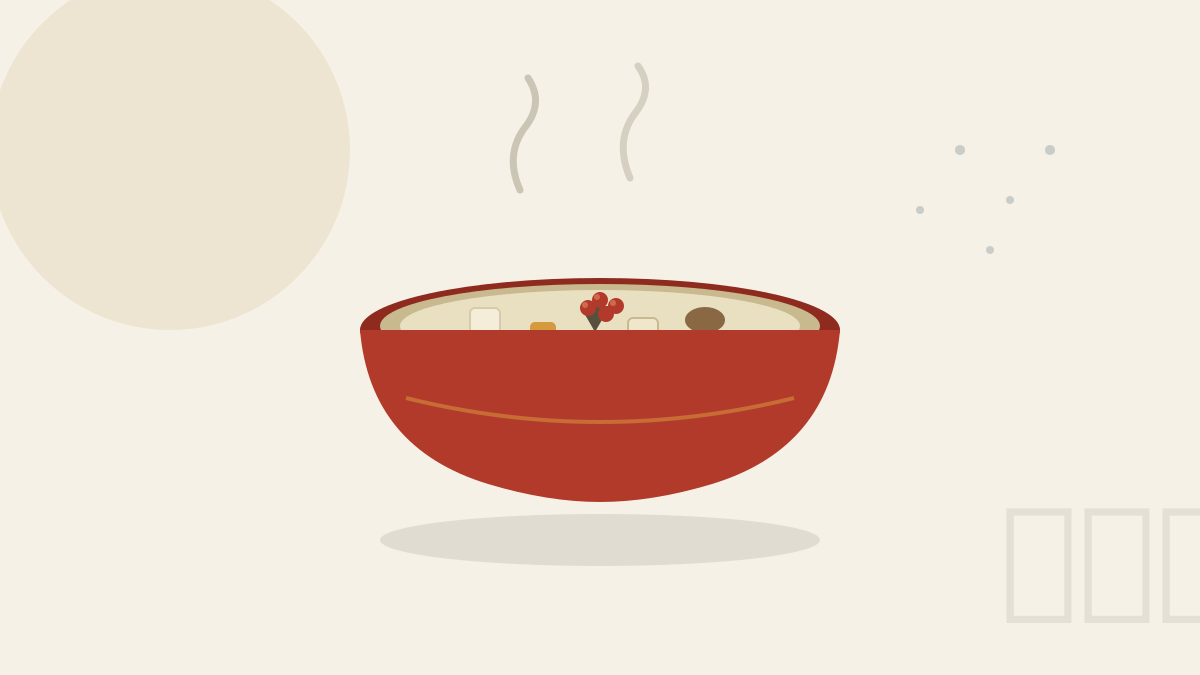
Niigata's New Year root-vegetable stew, thickened not by flour but by the satoimo dissolving into its own broth — served warm in winter, cold in summer.
By Japanese Cookbook Kitchen · June 6, 2026
 鍋
鍋- Prep
- 30 min
- Cook
- 35 min
- Serves
- 6
- Level
- Beginner
Noppe is Niigata's New Year in a bowl, and it argues quietly for the humble root over the flashy centerpiece. It is a stew of satoimo, daikon, carrot, shiitake, and konnyaku — winter storage vegetables, the things a snow-country household in the Echigo of the Edo period actually had on hand through the long Hokuriku winters. Versions of the dish exist across Japan under related names, but Niigata claims noppe with particular pride, and every family down the coast makes its own, argued over at the New Year table like all good regional food.
Its signature is a texture that comes from nowhere but the vegetables. The satoimo, sliced and only lightly rinsed, releases its starch as it simmers and lends the whole pot a soft natural viscosity — no roux, no slurry, just taro dissolving into dashi. That gentleness is the point. It is served hot in the depth of winter and, in a nice bit of Niigata thrift, chilled from the refrigerator in warmer months, when the same starch sets it to a light, spoonable coolness. Salmon and a spoon of bright ikura mark the festive version; the everyday pot is content to be vegetables and broth, and better the second day.
Don't rinse the sliced satoimo too aggressively — that surface starch is the thickener. Noppe gets its gentle body from the taro melting into the broth, so a cornstarch slurry is not just unnecessary, it's cheating.
板前の一言 · A word from the kitchen
Ingredients材料
Serves 6
- 400 gsatoimo (taro), peeled and thick-sliced — the star and the thickener both; slippery to peel, worth the trouble
- 150 gdaikon, quarter-moons
- 1carrot, quarter-moons
- 4dried shiitake, soaked and sliced — save the soaking water for the broth
- 100 gkonnyaku, torn into pieces
- 60 gkamaboko or chikuwa, sliced
- 100 gsalmon or chicken, bite-sized — Niigata often uses salmon; leave it out for a shōjin New Year pot
- 800 mlawase dashi — topped up with the shiitake soaking water
- 2 tbsplight soy sauce (usukuchi)
- 1 tbspsake
- 1 tspsalt
- 2 tbspikura (salmon roe) — the festive Niigata garnish; optional but traditional
Method作り方
Step 1: Prep the taro
Peel and thick-slice the satoimo and give it only a light rinse — you want to keep the surface starch that will thicken the pot. Salt-rubbing the slippery slices briefly makes them easier to handle.
Step 2: Simmer the hard roots
Bring the dashi and shiitake water to a simmer with the daikon, carrot, and konnyaku and cook about 10 minutes until the daikon turns translucent at the edges.
Step 3: Add taro and protein
Add the satoimo, shiitake, and salmon or chicken, and simmer gently for 15 to 20 minutes. Stir occasionally and watch the broth quietly thicken as the taro gives itself up.
Step 4: Season and rest
Season with usukuchi soy, sake, and salt — keep it light so the vegetables lead. Fold in the kamaboko at the end, then let the pot sit; noppe is always better after it settles.
Step 5: Serve warm or cold
Ladle it hot in winter, or chill it and serve cool in summer, when the starch sets it to a light spoonable body. Crown each bowl with a spoon of ikura for the New Year version.
道具 · The tools
Equipment
Donabe
土鍋The clay hot-pot that makes nabemono taste like nabemono — a gentle, even simmer that carries straight to the table.
Shop on Amazon →
Equipment links are Amazon affiliate links. As an Amazon Associate we earn from qualifying purchases, at no cost to you. Disclosure.
Questions from the kitchen
What actually thickens noppe?
The satoimo, and nothing else. Its surface starch dissolves into the broth as it simmers and gives the stew a soft natural viscosity. That is why you rinse the taro gently rather than scrubbing it clean, and why no flour or cornstarch belongs anywhere near the pot.
Is it really served cold?
Yes — in Niigata, noppe made ahead and chilled is a summer thing. The taro starch sets to a light, almost jellied coolness that eats beautifully in heat. Hot in winter, cold in summer, the same pot works both ways.
Can I make it vegetarian?
Easily. Skip the salmon, chicken, and fishcake, use a kombu-shiitake dashi instead of awase, and you have a shōjin-style New Year pot. The roots and taro carry it fine on their own.
次はこちら · Cook next
Keep the burner on
 鍋
鍋Nabemono & Soups · 45 min · Beginner
Ishikari Nabe石狩鍋
Hokkaidō's salmon and miso hot pot, born on the Ishikari River in the Meiji fishing boom — sweet corn, potatoes, and a knob of butter at the end.
 鍋
鍋Nabemono & Soups · 55 min · Beginner
Imoni芋煮
Yamagata's taro and beef stew, simmered in soy and sake — the dish an entire prefecture cooks together on riverbanks every autumn since Edo times.
 鍋
鍋Nabemono & Soups · 65 min · Intermediate
Hōtōほうとう
Yamanashi's wide flat noodles simmered straight in miso broth with kabocha — the one-pot field ration that fed Takeda Shingen's armies in the Sengoku era.