Nanakusa-gayu
七草粥
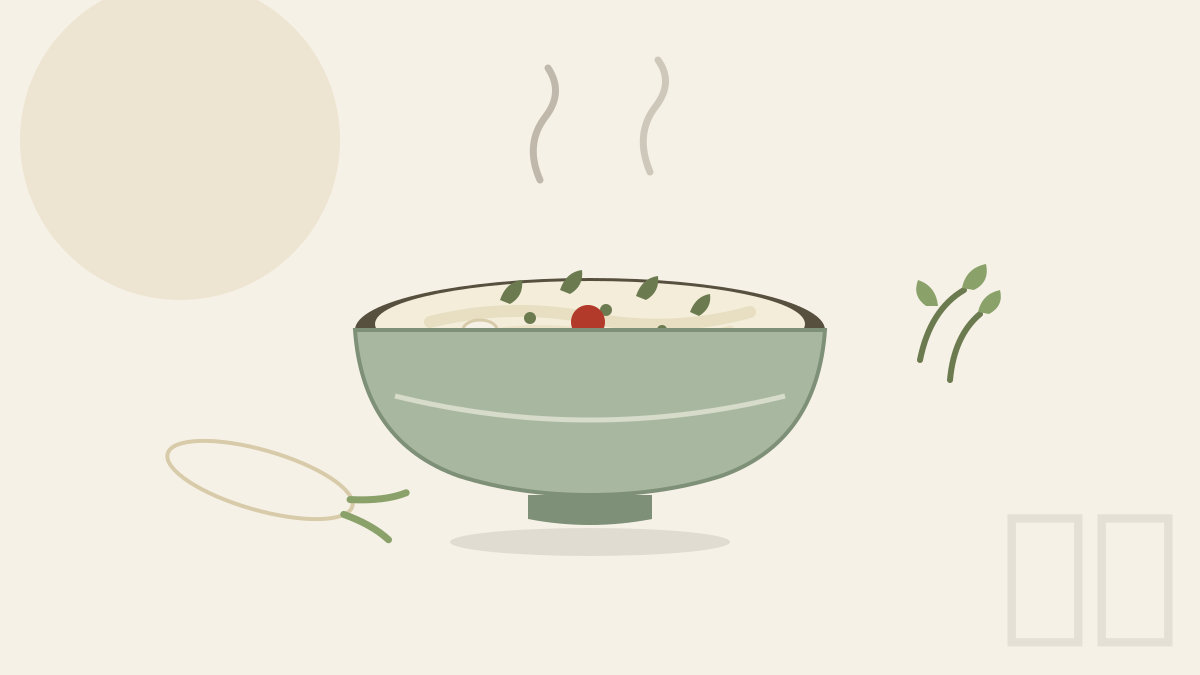
The seven-herb rice porridge Japan eats every January 7th — a Heian court ritual that survives because it's exactly what a body wants after the holidays.
By Japanese Cookbook Kitchen · June 4, 2026
 丼
丼- Prep
- 10 min
- Cook
- 40 min
- Serves
- 2
- Level
- Beginner
Some recipes survive on flavor. This one has survived a thousand years on timing. Every January 7th — Jinjitsu, the "festival of seven herbs" the Heian court adopted from Tang China — Japan eats the same breakfast: rice porridge with seven young greens, to rest a stomach worn out by New Year feasting and to borrow a little of spring's early nerve. Courtiers in tenth-century Kyoto chanted songs while chopping the herbs. The supermarket packets sold today are less poetic, but the calendar hasn't slipped a day.
The dish underneath the ritual is okayu, Japanese rice porridge, and it's worth mastering on its own — the 1:7 ratio, the low flame, the discipline of never stirring. Done right it's closer to silk than to gruel, and it's what every Japanese household still cooks for the sick, the tired, and the overfed.
Don't wait for January. Any two mild greens and a proper umeboshi make this a restorative Sunday supper — though there is something to be said for eating a dish on the same morning a Heian courtier did, eleven centuries upstream.
Okayu is never stirred while it cooks. Stirring bursts the grains and turns silk into paste — set the flame low, set the lid ajar, and leave it alone.
板前の一言 · A word from the kitchen
Ingredients材料
Serves 2
- 150 gJapanese short-grain rice — washed and drained
- 1 Lwater — the classic 1:7 ratio by volume, give or take your pot
- 0.5 tspfine salt
- 1 packetnanakusa (seven herbs) — sold in Japanese markets the first week of January; see the FAQ for honest substitutes
- umeboshi or shredded salted kombu — optional, at the table
Method作り方
Step 1: Start the rice cold
Combine the washed rice and water in a heavy pot and let it sit 20 minutes — grains that drink before they cook split open more evenly into silk.
Step 2: Simmer low and lidded
Bring just to a boil, then drop to the lowest flame, set the lid ajar, and cook 30 to 35 minutes without stirring, until the porridge is loose, white, and glossy.
Step 3: Blanch the herbs separately
Drop the nanakusa into boiling water for 30 seconds, shock in cold water, squeeze, and chop fine. Blanching keeps them green and takes the raw edge off the wilder ones.
Step 4: Marry at the last minute
Fold the herbs and salt into the porridge, count to thirty, and serve. The herbs should still taste like January — grassy, clean, a little defiant.
Step 5: Season in the bowl
An umeboshi pressed into the center or a pinch of salted kombu is traditional and, frankly, needed if you skipped the holiday excess this dish was designed to correct.
道具 · The tools
Equipment
Rice cooker
炊飯器Consistent short-grain rice with zero attention — the one appliance nearly every page here leans on.
Shop on Amazon →Heavy pot / Dutch oven
厚手鍋Deep, heat-retentive, and stable — for deep-frying without temperature crashes and long simmers without scorching.
Shop on Amazon →Portable gas burner
カセットコンロThe tabletop butane burner that turns any nabe into a shared meal — cook and eat from the same pot.
Shop on Amazon →
Equipment links are Amazon affiliate links. As an Amazon Associate we earn from qualifying purchases, at no cost to you. Disclosure.
Questions from the kitchen
What are the seven herbs?
Seri (water dropwort), nazuna (shepherd's purse), gogyō (cudweed), hakobera (chickweed), hotokenoza (nipplewort), suzuna (turnip), and suzushiro (daikon) — young spring shoots, several of them what English speakers would flatly call weeds. That's the point; they're the first green defiance of winter.
I can't buy a nanakusa packet. What do I use?
Keep the spirit, not the checklist: turnip and daikon with their greens (that's two of the seven already), plus watercress, mitsuba, or spinach. Seven mild greens beats four correct ones — the ritual asks for tender, slightly bitter, and new.
Why January 7th specifically?
Jinjitsu, one of the five seasonal festivals the Heian court imported from Tang China. Courtiers ate a seven-herb preparation for health and poetry in the ninth century; a thousand years later, supermarkets nationwide stock herb packets the first week of January. Few rituals anywhere have a longer unbroken run.
次はこちら · Cook next
Keep the burner on
 丼
丼Rice & Donburi · 50 min · Intermediate
Katsudonカツ丼
Crisp tonkatsu simmered with onions in sweet dashi-soy and set with barely-cooked egg over rice — the Taishō-era donburi that made yōshoku fully Japanese.
 丼
丼Rice & Donburi · 25 min · Beginner
Unadonうな丼
Kabayaki eel lacquered in sweet tare over hot rice — an Edo summer ritual with the best marketing legend in Japanese food history. Store-bought eel welcome.
 丼
丼Rice & Donburi · 45 min · Beginner
Salted Salmon Onigiri鮭お握り
Proper rice balls with salted salmon — how to cook and season the rice, shape with wet hands, and keep the nori crisp until the first bite.