Nagasaki Champon
ちゃんぽん
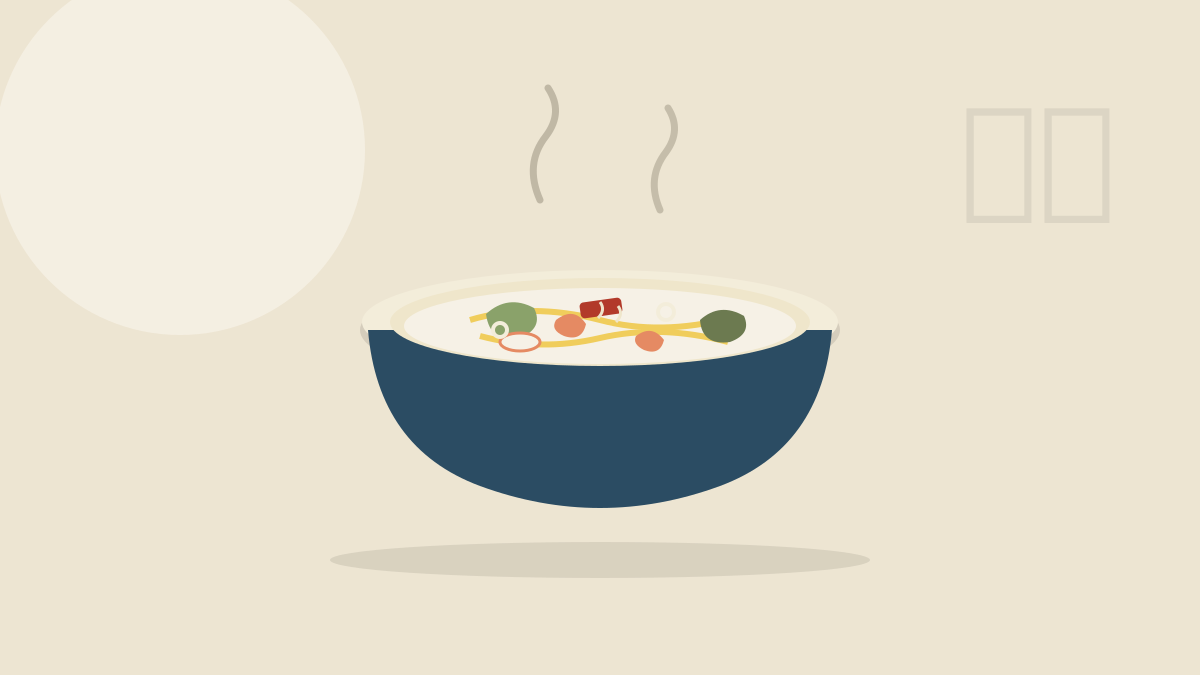
Nagasaki's everything-in-one-wok noodle bowl — pork, seafood, and cabbage seared hard, then simmered in a milky pork-and-chicken broth over springy champon noodles.
By Japanese Cookbook Kitchen · May 4, 2026
 麺
麺- Prep
- 25 min
- Cook
- 20 min
- Serves
- 2
- Level
- Intermediate
Champon is Nagasaki's argument, made in a bowl, that a port city belongs to everyone who lands in it. The dish was born in 1899 at Shikairō, a Chinese restaurant whose founder, Chen Ping-shun, wanted to feed the city's homesick, broke Chinese students cheaply and well. He took a Fujian noodle soup and buried it under whatever the Nagasaki docks were unloading — pork, cabbage, shrimp, squid, fish cake — bound together in a milky broth. The word itself is thought to echo a Fujian greeting, chiah-png, "have you eaten." In a treaty port that had been Japan's one window on the world for centuries, that was the right question.
What separates champon from a hundred other noodle soups is the technique of the wok: everything is seared hard and fast, then flooded with hot stock and boiled until the pork fat whips into a pale, clinging emulsion. There is no dashi here and no restraint — this is coastal, immigrant, working cooking, generous to the point of excess. Make it in a wide bowl, eat it too hot, and understand why the whole city claims it.
The milkiness is not cream — it's emulsion. Keep the broth at a hard boil once it goes in, so the fat and the stock beat themselves into that pale, clinging soup. A gentle simmer gives you thin, sad champon.
板前の一言 · A word from the kitchen
Ingredients材料
Serves 2
Broth and noodles
- 500 mlrich pork-and-chicken stock — tonkotsu and chicken bones simmered hard until cloudy; a good instant paitan base is an honest shortcut
- 2 portionschampon noodles — thick, chewy, and treated with kansui; ramen noodles are the nearest substitute
- 1 tbsplard
- 2 tspsoy sauce
- 1 tspsake
The wok pile
- 80 gpork belly, sliced thin
- 6peeled shrimp
- 6squid rings or small scallops
- 150 gcabbage, cut in rough squares
- 1 handfulbean sprouts
- 40 gkamaboko (fish cake), sliced — the pink-edged kind; it is the flavor of the coast
- 1/2carrot, thin half-moons
- 2fresh wood-ear or shiitake, sliced
Method作り方
Step 1: Get the broth hot and hold it
Bring the pork-and-chicken stock to a boil in a small pot with the soy sauce and sake, then keep it barely covered and hot on a back burner. You want it ready to pour the instant the vegetables are seared.
Step 2: Sear the pile in stages
Heat lard in a wide wok until it shimmers. Sear the pork belly until its fat renders and browns, then add shrimp, squid, and carrot for a minute. This is the browning that gives champon its depth — do not crowd it into a steam.
Step 3: Pile in the vegetables
Add cabbage, wood-ear, kamaboko, and bean sprouts and toss over high heat for ninety seconds. The cabbage should still have spine to it; it finishes in the broth.
Step 4: Flood and boil
Pour the hot broth straight into the wok and boil hard for two minutes. The fat rendered from the pork emulsifies with the stock here — this is the milky moment that makes it champon and not soup with noodles in it.
Step 5: Boil the noodles and marry
Champon is traditionally cooked in its own broth, but boiling the noodles separately for beginners keeps the soup clean. Drain them barely shy of done, drop into the wok, and boil one minute more so they take on the broth. Serve in a wide, deep bowl.
道具 · The tools
Equipment
Zaru (draining basket)
ざるFor draining and serving cold noodles, and rinsing rice — a bamboo or mesh basket that lets everything breathe.
Shop on Amazon →
Equipment links are Amazon affiliate links. As an Amazon Associate we earn from qualifying purchases, at no cost to you. Disclosure.
Questions from the kitchen
Where does champon actually come from?
From Shikairō, a Chinese restaurant that opened in Nagasaki in 1899. Its founder, Chen Ping-shun, cooked cheap, filling one-bowl meals for the city's poor Chinese students, piling a Fujian-style noodle soup with whatever was abundant at the port. The dish stayed and became Nagasaki's civic food.
What makes champon broth turn milky?
A hard boil. When pork fat and a gelatin-rich stock are boiled violently together, the fat breaks into tiny droplets suspended in the liquid — the same emulsion that makes tonkotsu ramen pale. Simmer it gently and it will never turn; you have to boil it like you mean it.
Can I use ramen noodles instead of champon noodles?
Yes, with a caveat. Real champon noodles are thicker and treated with a distinctive alkaline water that gives them a particular chew. Thick, chewy ramen noodles are the closest common stand-in; avoid thin, delicate strands, which go slack in this rich broth.
次はこちら · Cook next
Keep the burner on
 麺
麺Noodles · 70 min · Intermediate
Weeknight Shoyu Ramen醤油ラーメン
A clear, chicken-and-dashi shoyu ramen you can honestly make on a Tuesday — with a proper tare, marinated eggs, and no ten-hour bone boil.
 麺
麺Noodles · 25 min · Beginner
Izumo Soba出雲そば
Shimane's dark whole-grain soba served warigo style — three stacked lacquer rounds, sauce poured over the noodles, an Edo-era ritual from the land of the gods.
 麺
麺Noodles · 65 min · Intermediate
Sanuki Udon, Kake Style讃岐うどん
Kagawa's proudly chewy udon in hot iriko dashi — hand-kneaded, properly rested, and eaten with the speed and reverence Shikoku demands.