Masu-zushi
ます寿司
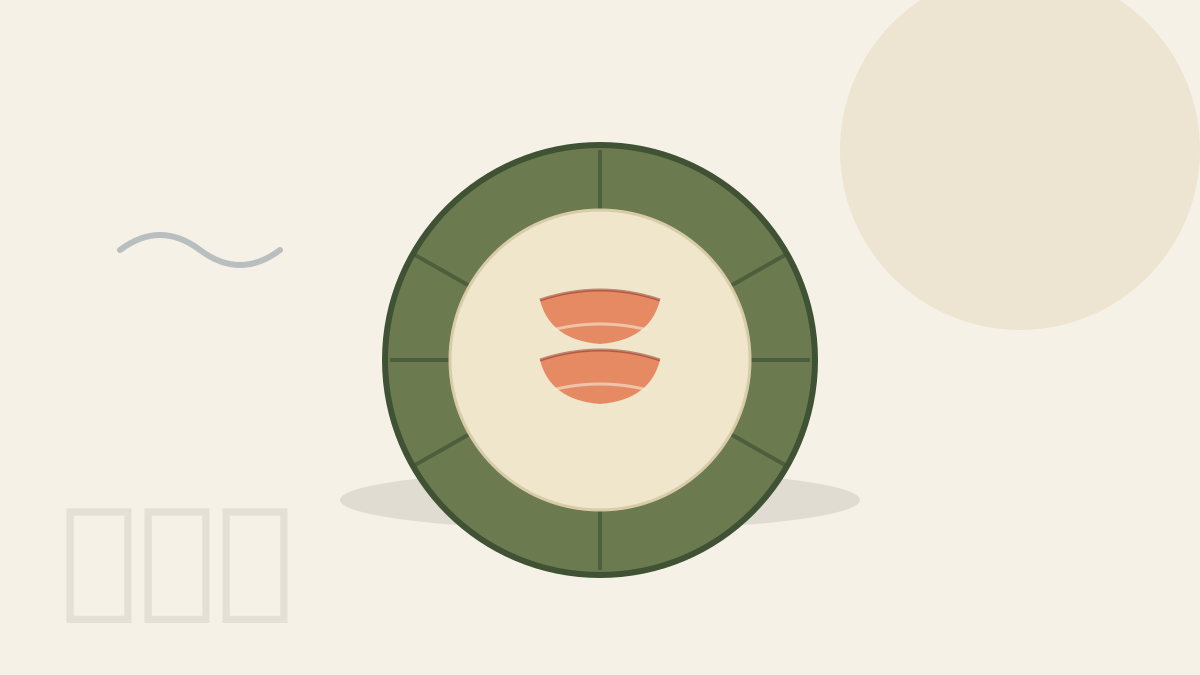
Toyama's pressed trout sushi, a bamboo-leaf round of vinegared rice and cured masu that was presented to the shogun in 1717 and still travels by rail today.
By Japanese Cookbook Kitchen · May 4, 2026
 寿司
寿司- Prep
- 40 min
- Cook
- 20 min
- Serves
- 4
- Level
- Intermediate
Toyama sits where the Jinzū River comes down off the northern Alps to meet the Sea of Japan, and masu-zushi is a river dish before it is a coast dish — built on the cherry trout that ran that water each spring. The pressed form we know crystallized in the early Edo period; the domain's own records credit a Toyama retainer, Yoshimura Shinpachi, with refining it, and note that in 1717 the domain presented masu-zushi to the eighth shogun, Yoshimune. That court offering is documented, which is more than most food origin stories can claim.
The technique is oshizushi — pressed sushi — in its most photogenic form: vinegared rice packed into a round mold lined with radiating bamboo leaves, the cured trout laid over the top, then weighted overnight until rice and fish set into a single dense disc. You cut it in wedges, through the leaf, like a tart. Do it right and the fish turns translucent and faintly sweet, the rice holds its shape against your chopsticks, and you understand why this became the ekiben every traveler carries home from Toyama.
Press it a full day. The rounds you buy at Toyama station were pressed the day before you eat them, and that patience is the whole difference between this and a sad rice patty with fish on top.
板前の一言 · A word from the kitchen
Ingredients材料
Serves 4
Rice
- 360 gJapanese short-grain rice — about 2 rice-cooker cups, cooked slightly firm
- 60 mlrice vinegar
- 2 tbspsugar
- 1 tspsalt
Fish and lining
- 300 gcherry trout or ocean trout, skin off, sliced thin — sakura masu is the original; a good ocean trout is an honest stand-in
- 3 tbsprice vinegar — for curing the fish
- 1 tspsalt — for the fish
- 8bamboo leaves (sasa) — fresh or the vacuum-packed kind from a Japanese grocer
Method作り方
Step 1: Season the rice
Warm the vinegar, sugar, and salt until dissolved, fold them through hot cooked rice with a cutting motion, and fan it to a glossy body temperature. It should be firm enough to press and never mushy.
Step 2: Cure the trout
Salt the sliced trout for 15 minutes, pat it dry, then bathe it in the 3 tbsp vinegar for 10 more. This firms the flesh and gives it the clean pressed-sushi tang; drain well before use.
Step 3: Line the mold
Arrange bamboo leaves in a round mold or a bowl, tips to the center like spokes, letting them overhang the rim so you can fold them back over the top later.
Step 4: Layer and press
Lay the trout over the leaves, pack the seasoned rice firmly on top, fold the overhanging leaves back over, and cover with a plate and a real weight. Press in the refrigerator overnight, or at least 6 hours.
Step 5: Turn out and cut
Invert the mold so the fish faces up, peel back the top leaves, and cut into wedges straight through the bottom leaf with a wet knife. Serve at cool room temperature.
道具 · The tools
Equipment
Shamoji (rice paddle)
しゃもじThe flat paddle for folding and cooling seasoned rice with a cutting motion — never a mash.
Shop on Amazon →Oshizushi mould
押し寿司型The wooden box that presses battera, masu-zushi, and iwakuni-zushi into sharp layered blocks. A loaf pan stands in.
Shop on Amazon →
Equipment links are Amazon affiliate links. As an Amazon Associate we earn from qualifying purchases, at no cost to you. Disclosure.
Questions from the kitchen
Do I need a proper wooden sushi mold?
No. A round cake pan, a shallow bowl, or even a foil-lined tin all work — you need a flat bottom, straight-ish sides, and something to press with. The wooden oke is traditional and does regulate moisture nicely, but the physics is just even weight over time.
Can I skip curing the trout and use it raw?
You can, and it will taste fine the day you make it, but the short vinegar cure is what lets masu-zushi sit pressed for a day without the fish going slack or suspect. It is the step that turns fresh trout into keeping food.
Why bamboo leaves — are they edible?
They are aromatic packaging, not food. Sasa leaves perfume the rice faintly, keep the round from drying, and historically helped it travel — mild antibacterial properties and all. Peel them off before eating; keep them on if you are photographing your wedge for anyone in Toyama.
次はこちら · Cook next
Keep the burner on
 寿司
寿司Sushi & Sashimi · 75 min · Intermediate
Iwakuni-zushi岩国寿司
Iwakuni's layered pressed sushi — "samurai sushi" built tall in a wooden frame for the castle above the Kintaikyō, remade at home in a humble loaf pan.
 寿司
寿司Sushi & Sashimi · 80 min · Intermediate
Okayama Barazushiばら寿司
Okayama's lavish scattered sushi — seafood and vegetables heaped over vinegared rice, a feast that folk history says outwitted a lord's frugality edict.
 寿司
寿司Sushi & Sashimi · 75 min · Advanced
Batteraバッテラ
Osaka's pressed mackerel sushi — cured saba and vinegared rice squared off in a mold. Named for the Portuguese bateira, the little boat it once resembled.