Okayama Barazushi
ばら寿司
Okayama's lavish scattered sushi — seafood and vegetables heaped over vinegared rice, a feast that folk history says outwitted a lord's frugality edict.
By Japanese Cookbook Kitchen · June 2, 2026
 寿司
寿司- Prep
- 50 min
- Cook
- 30 min
- Serves
- 4
- Level
- Intermediate
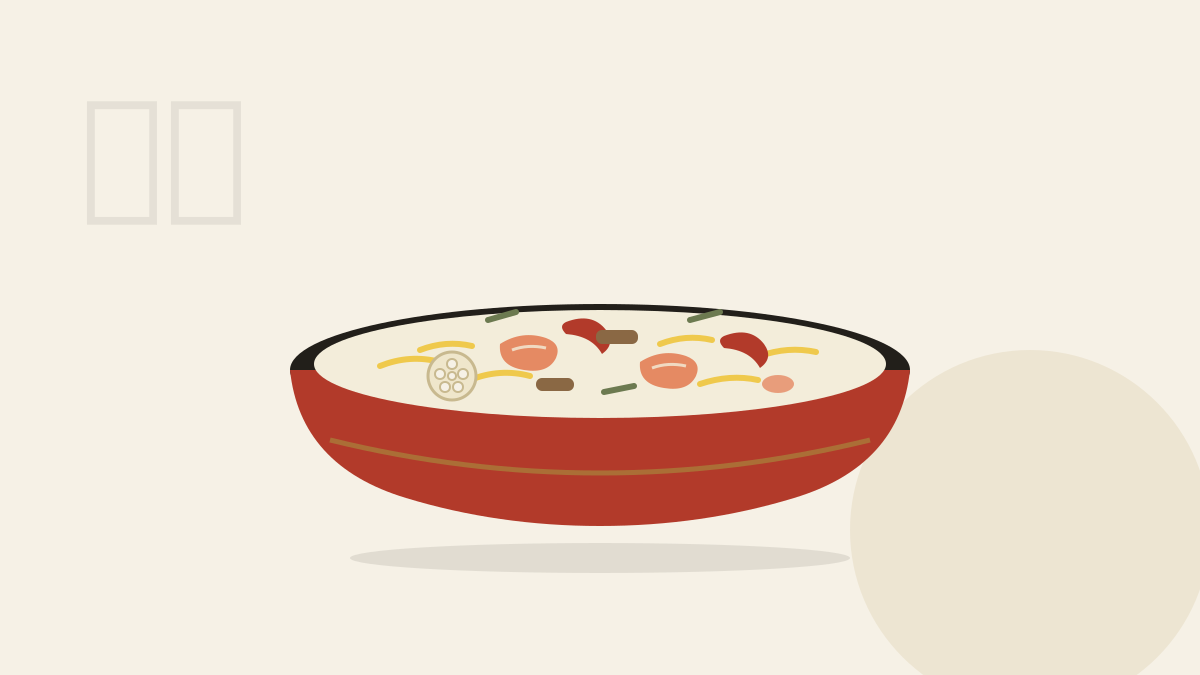
The villain of this dish, depending on whom you ask, is Ikeda Mitsumasa — the formidable Confucian reformer who governed Okayama from 1632. Amid famine and flood recovery, he issued frugality edicts restricting commoner meals to ichijū issai, one soup and one dish. The edict is documented; what follows is folklore, and Okayama tells it with relish. Townsfolk, the story goes, obeyed to the letter by burying sea bream, shrimp, anago, lotus root, and egg in and under a great bed of vinegared rice — a dozen luxuries, legally one dish. Compliance as a form of feast.
However it truly began, barazushi became Okayama's celebration food, the centerpiece of festivals and homecomings, judged by the generosity of its surface. It differs from Tokyo chirashi in its bones: the treasures are simmered and seasoned, folded through the rice as well as arranged on top, so the dish holds at room temperature the way a festival requires. The grandest versions still hide the best pieces underneath — a wink from the seventeenth century that survives in the architecture. Dig before you judge, and serve it to more people than you planned to.
Barazushi is a pantry dish wearing festival clothes. Cook the simmered vegetables a day ahead — they season the rice better cold, and assembly day becomes pure decoration.
板前の一言 · A word from the kitchen
Ingredients材料
Serves 4
Sushi rice
- 450 gJapanese short-grain rice
- 80 mlrice vinegar
- 3 tbspsugar
- 1.5 tspsalt
Simmered things (the buried treasure)
- 100 glotus root, thinly sliced — simmered in dashi with a splash of vinegar so it stays white and crisp
- 4dried shiitake, soaked and slivered
- 1small carrot, cut into short matchsticks
- 80 ggobō (burdock), shaved
- 200 mlawase dashi
- 2 tbspsoy sauce
- 2 tbspmirin
- 1 tbspsugar
The display
- 150 gsashimi-grade sea bream or other white fish, sliced
- 8cooked shrimp, butterflied
- 100 gsimmered anago or grilled mackerel, in bite pieces
- 2eggs, made into thin crepes and shredded
- 60 gsnow peas, blanched and slivered
- pickled ginger
Method作り方
Step 1: Simmer the vegetables
Cook the shiitake, carrot, gobō, and lotus root in the dashi with soy, mirin, and sugar until tender and the liquid has nearly gone. Cool completely. These can be made a day ahead and improve for it.
Step 2: Make the sushi rice
Cook the rice slightly firm, turn it into a wide bowl or handai, and cut in the warmed vinegar, sugar, and salt with a slicing motion, fanning as you go. You want glossy, distinct grains at body temperature.
Step 3: Fold the treasure in
Fold most of the simmered vegetables through the rice, reserving the prettiest lotus slices. This is the sly heart of the dish — in the old telling, the riches were hidden in and under the rice where an inspector's eye couldn't count them.
Step 4: Decorate without mercy
Spread the rice in a wide dish and cover the surface completely — egg threads first as a golden field, then fish, shrimp, anago, lotus, and snow peas arranged so every color touches. Okayama judges this dish by generosity.
Step 5: Rest and serve at room temperature
Let it sit 15 minutes for the toppings to settle into the rice, and serve with pickled ginger. No soy sauce on top — everything on the platter is already seasoned to be eaten as is.
道具 · The tools
Equipment
Mandoline (benriner)
スライサーPaper-thin daikon, cucumber, and cabbage in seconds — the Japanese mandoline home cooks actually own.
Shop on Amazon →
Equipment links are Amazon affiliate links. As an Amazon Associate we earn from qualifying purchases, at no cost to you. Disclosure.
Questions from the kitchen
Is the frugality-edict story true?
The edict is real; the defiance is folklore. Ikeda Mitsumasa, the Okayama domain's reforming lord, did issue sumptuary rules in the mid-1600s restricting meals to one soup and one side dish. The beloved telling — townsfolk piling a dozen delicacies onto rice and calling it all "one dish" — appears in no contemporary record. It is, however, exactly the joke this dish tastes like.
How is barazushi different from Tokyo-style chirashi?
Tokyo chirashi drapes raw fish over plain sushi rice like jewelry. Barazushi mixes simmered, seasoned ingredients through the rice itself and then decorates on top of that — cooked and cured toppings dominate, and the whole thing is engineered to sit happily at room temperature for a festival day.
Can I make it with only supermarket ingredients?
Comfortably. Cooked shrimp, smoked or cured mackerel, egg, and the simmered vegetables make a legitimate barazushi without any sashimi-grade fish. The dish grew from what the Seto Inland Sea and the fields offered on the day — abundance is the tradition, not any fixed shopping list.
次はこちら · Cook next
Keep the burner on
 寿司
寿司Sushi & Sashimi · 75 min · Intermediate
Iwakuni-zushi岩国寿司
Iwakuni's layered pressed sushi — "samurai sushi" built tall in a wooden frame for the castle above the Kintaikyō, remade at home in a humble loaf pan.
 寿司
寿司Sushi & Sashimi · 75 min · Advanced
Batteraバッテラ
Osaka's pressed mackerel sushi — cured saba and vinegared rice squared off in a mold. Named for the Portuguese bateira, the little boat it once resembled.
 寿司
寿司Sushi & Sashimi · 65 min · Intermediate
Edomae Chirashi-zushiちらし寿司
Scattered sushi from the Edo fish market — soy-cured tuna, sweet shrimp, and golden egg over seasoned rice. A home chirashi built on cooked and cured toppings.