Kuri Gohan
栗ご飯
Chestnut rice with sake and salt — autumn in a rice pot, and a taste that reaches back past rice itself to the chestnut groves of Jōmon Japan.
By Japanese Cookbook Kitchen · June 3, 2026
東北 TōhokuJōmon era, c. 14,000–300 BCE
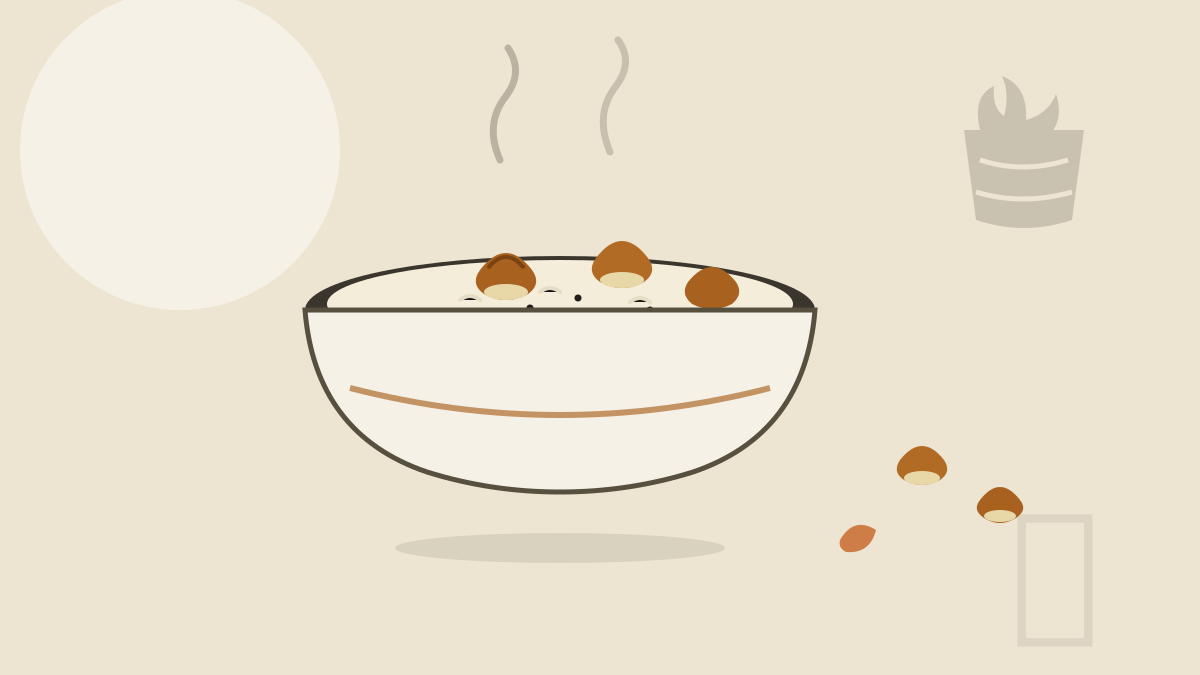 丼
丼- Prep
- 40 min
- Cook
- 50 min
- Serves
- 4
- Level
- Beginner
Ten thousand years before anyone in Japan cooked a grain of rice, someone was roasting chestnuts. The Jōmon people — hunter-gatherer-potters of prodigious skill — didn't merely forage them: at Sannai-Maruyama, the great Jōmon site in Aomori, the evidence says they tended and selected chestnut groves for centuries. The chestnut is, by any honest reckoning, Japan's oldest staple food.
Kuri gohan is what happened after rice arrived and the old staple met the new one. It remains the definitive taste of Japanese autumn — takikomi gohan at its most restrained, just rice, salt, sake, kombu, and chestnuts steamed whole on top of the pot. Nothing else is allowed in, because nothing else is needed: the chestnuts turn golden and fluffy and faintly sweet, and the rice around them tastes like the season changing.
The only tax is the peeling, and we've listed every legitimate way to dodge it. Pay the tax or don't — but cook this in October, when the new crop and the new rice arrive together, and you're eating the two oldest ingredients in the Japanese pantry in a single bowl.
Salt the pot slightly beyond where you think polite — chestnuts are sweet and rice is shy, and it takes real seasoning to introduce them properly.
板前の一言 · A word from the kitchen
Ingredients材料
Serves 4
- 300 gJapanese short-grain rice — 2 rice-cooker cups
- 300 gfresh chestnuts in shell — or 200 g peeled vacuum-packed chestnuts, an honorable shortcut
- 360 mlwater
- 2 tbspsake
- 1 tspfine salt
- 5 cmkombu
- 1 tsptoasted black sesame seeds — to serve
Method作り方
Step 1: Soak and peel the chestnuts
Soak fresh chestnuts in hot water 30 minutes to soften the shells, then peel both the hard shell and the papery inner skin with a sturdy small knife. Halve the big ones. Hold peeled chestnuts in water so they don't oxidize. (This is the whole labor of the dish — enlist help or buy them peeled.)
Step 2: Wash and rest the rice
Wash the rice until the water runs nearly clear, drain, and let it sit 20 minutes. Even hydration matters more than usual when the pot is carrying passengers.
Step 3: Season the pot
Combine rice, water, sake, and salt in the rice cooker or a heavy pot, stir once so the salt dissolves, and lay the kombu and chestnuts on top. Do not stir again — the chestnuts steam on the surface and stay whole.
Step 4: Cook and steam
Cook as normal (or 12 minutes at a simmer plus 10 lidded off the heat, on the stove). Let it steam a further 10 minutes after cooking, then discard the kombu.
Step 5: Fold and serve
Fold gently from the bottom with a cutting motion, breaking as few chestnuts as possible, and serve scattered with black sesame. Autumn is now on the table.
道具 · The tools
Equipment
Rice cooker
炊飯器Consistent short-grain rice with zero attention — the one appliance nearly every page here leans on.
Shop on Amazon →Heavy pot / Dutch oven
厚手鍋Deep, heat-retentive, and stable — for deep-frying without temperature crashes and long simmers without scorching.
Shop on Amazon →Shamoji (rice paddle)
しゃもじThe flat paddle for folding and cooling seasoned rice with a cutting motion — never a mash.
Shop on Amazon →
Equipment links are Amazon affiliate links. As an Amazon Associate we earn from qualifying purchases, at no cost to you. Disclosure.
Questions from the kitchen
What do chestnuts have to do with the Jōmon period?
Before rice reached Japan, chestnuts were dinner. At Sannai-Maruyama in Aomori — the great Jōmon settlement site, inhabited for 1,500 years — archaeologists found evidence the villagers didn't just gather chestnuts but managed and effectively cultivated the groves. This dish is that staple welcoming the newcomer that replaced it.
Peeling chestnuts is miserable. Any way out?
Three honest options — vacuum-packed peeled chestnuts (excellent), frozen peeled (very good), or scoring and roasting fresh ones 5 minutes before peeling, which loosens both skins. There is no fourth option; anyone who claims chestnuts peel easily is selling something.
Can I make this with dashi instead of water?
You can, but taste why the classic doesn't: kuri gohan is deliberately spare — rice, salt, sake, and a strip of kombu — so the chestnut's sweetness stands unaccompanied. A full dashi drowns the guest of honor. The kombu strip is all the umami it wants.
次はこちら · Cook next
Keep the burner on
 丼
丼Rice & Donburi · 50 min · Intermediate
Katsudonカツ丼
Crisp tonkatsu simmered with onions in sweet dashi-soy and set with barely-cooked egg over rice — the Taishō-era donburi that made yōshoku fully Japanese.
 丼
丼Rice & Donburi · 25 min · Beginner
Unadonうな丼
Kabayaki eel lacquered in sweet tare over hot rice — an Edo summer ritual with the best marketing legend in Japanese food history. Store-bought eel welcome.
 丼
丼Rice & Donburi · 45 min · Beginner
Salted Salmon Onigiri鮭お握り
Proper rice balls with salted salmon — how to cook and season the rice, shape with wet hands, and keep the nori crisp until the first bite.