Kitsune Udon
きつねうどん
Osaka's fox noodles — a kombu-forward, usukuchi-pale broth over soft udon, crowned with aburaage simmered sweet. Usamitei Matsubaya claims the invention.
By Japanese Cookbook Kitchen · May 10, 2026
 麺
麺- Prep
- 15 min
- Cook
- 30 min
- Serves
- 2
- Level
- Beginner
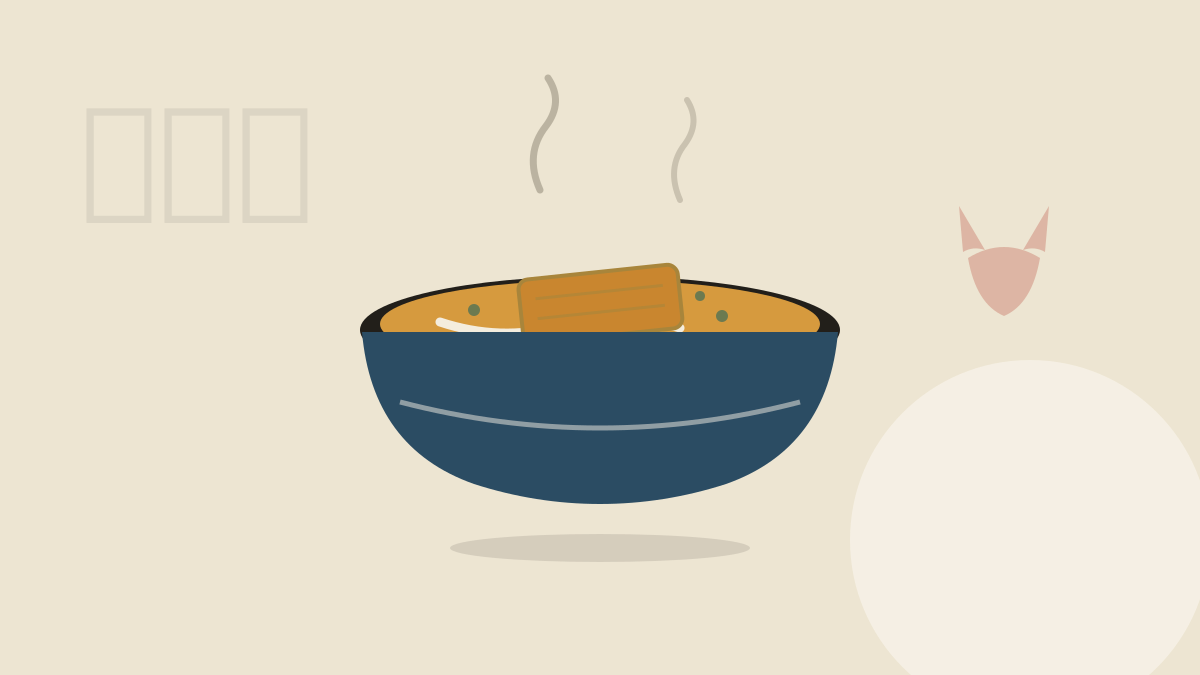
Kitsune udon is Osaka's soft answer to a hard question — how to make a bowl of noodles feel like generosity. The shop Usamitei Matsubaya, founded in 1893 in the Sennichimae district, claims the invention: the story goes that its first owner served seasoned aburaage on the side, inari-sushi fashion, and watched customers drape it over their noodles until he gave in and did it for them. Whatever the truth, the dish is unmistakably a Meiji-era Osaka product — merchant-city food, quick and cheap, built on the kombu that Kitamaebune trading ships had been unloading at Osaka's wharves for two centuries.
Everything depends on contrast. The broth is pale, restrained, kombu-first — seasoned with usukuchi soy so it stays the color of weak tea. The aburaage is its opposite: simmered sweet and dark until it holds a mouthful of seasoned dashi like a sponge. Soft noodles, saline broth, one candied slab of fox food. Osaka udon is often teased for its softness by Kagawa's sanuki partisans, but softness is the design — this is a bowl you drink as much as eat, and the fox is there to make sure you finish it.
Simmer the aburaage until it has drunk all its seasoning, then let it cool in the pan — it absorbs more on the way down than it ever does on the heat. A rushed fox is a bland fox.
板前の一言 · A word from the kitchen
Ingredients材料
Serves 2
Sweet-simmered aburaage
- 2 sheetsaburaage (fried tofu pouches) — pour boiling water over them first to strip the frying oil — skip this and the seasoning slides off
- 200 mlawase dashi
- 2 tbspsugar
- 1½ tbspsoy sauce
- 1 tbspmirin
Broth & noodles
- 900 mlawase dashi — make it kombu-forward — Osaka broth leans on the sea, not the smokehouse
- 2 tbspusukuchi (light) soy sauce — the pale color is the point; dark soy makes Kanto broth, not Kansai
- 1 tbspmirin
- ½ tspsalt
- 2 portionsudon, fresh or frozen — frozen sanuki-style blocks are the best widely available option
- 1scallion, finely sliced
Method作り方
Step 1: Simmer the fox
Blanch the aburaage in boiling water for a minute, drain, and press gently. Simmer with the dashi, sugar, soy, and mirin over low heat until the liquid is nearly gone, about 10 minutes, then leave to cool in the pan. Sweetness first, patience second — that order is the dish.
Step 2: Season the broth
Warm the dashi with the usukuchi soy, mirin, and salt and taste it. It should be pale amber, gently saline, and taste of kombu before anything else. Resist the urge to darken it; in Osaka a broth you can't see the noodles through is a scandal.
Step 3: Cook the udon properly
Boil the udon in plain, unsalted water according to type, then drain and rinse briefly to shed surface starch. Cloudy cooking water in the bowl dulls the broth you just took care over.
Step 4: Assemble hot and eat immediately
Divide the noodles between warmed bowls, ladle the broth over, and lay the aburaage on top like a duvet. Scatter with scallion. Kitsune udon waits for no one — the fox goes soggy in glory, and that is correct.
道具 · The tools
Equipment
Zaru (draining basket)
ざるFor draining and serving cold noodles, and rinsing rice — a bamboo or mesh basket that lets everything breathe.
Shop on Amazon →
Equipment links are Amazon affiliate links. As an Amazon Associate we earn from qualifying purchases, at no cost to you. Disclosure.
Questions from the kitchen
Why is it called fox udon?
Japanese folklore holds that foxes — messengers of the rice deity Inari — love aburaage, which is why fried tofu offerings pile up at Inari shrines. Any dish crowned with sweet-simmered aburaage borrows the animal's name.
Did Usamitei Matsubaya really invent it?
The shop, founded in Osaka in 1893, says its first owner served inari-sushi-style seasoned aburaage alongside udon and noticed customers laying it on top of their noodles. It is a claim rather than a documented fact — but it is the claim, no rival story has stuck, and the shop still serves the dish today.
Can I use regular dark soy sauce in the broth?
You can, and it will taste fine, but it will be a different dish — the darker, katsuobushi-heavy style of Tokyo. Usukuchi soy is saltier and paler, which lets Kansai's kombu-forward dashi stay visible and recognizable. It keeps for a year; buy the bottle.
次はこちら · Cook next
Keep the burner on
 麺
麺Noodles · 70 min · Intermediate
Weeknight Shoyu Ramen醤油ラーメン
A clear, chicken-and-dashi shoyu ramen you can honestly make on a Tuesday — with a proper tare, marinated eggs, and no ten-hour bone boil.
 麺
麺Noodles · 25 min · Beginner
Izumo Soba出雲そば
Shimane's dark whole-grain soba served warigo style — three stacked lacquer rounds, sauce poured over the noodles, an Edo-era ritual from the land of the gods.
 麺
麺Noodles · 65 min · Intermediate
Sanuki Udon, Kake Style讃岐うどん
Kagawa's proudly chewy udon in hot iriko dashi — hand-kneaded, properly rested, and eaten with the speed and reverence Shikoku demands.