Kiritanpo Nabe
きりたんぽ鍋
Akita's signature hot pot — mashed-rice sticks toasted on cedar skewers, then simmered in Hinai chicken broth with gobō, maitake, and seri. Hunters' food made civic pride.
By Japanese Cookbook Kitchen · May 3, 2026
 鍋
鍋- Prep
- 40 min
- Cook
- 40 min
- Serves
- 4
- Level
- Intermediate
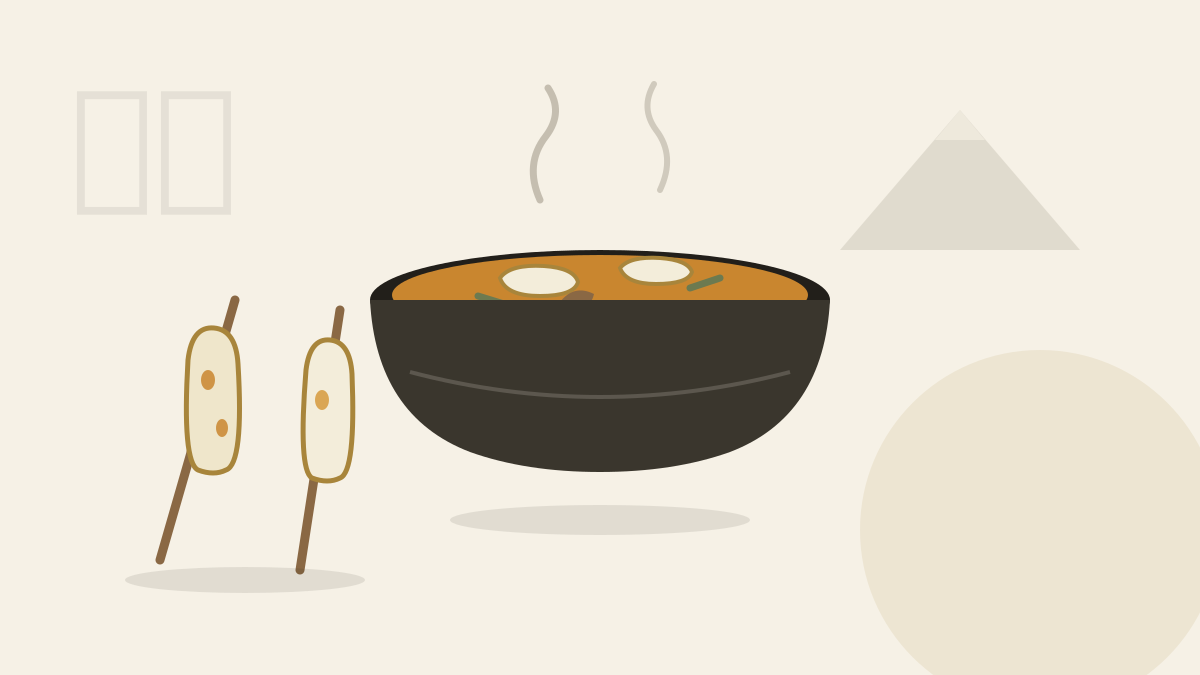
In the beech forests of northern Akita, the matagi — the professional bear hunters of the Ōdate mountains — worked winters far from any kitchen. The story every Akitan tells, and it is a story, is that they mashed their leftover rice onto cedar skewers, roasted it by the fire, and ate it with game or miso. What is documented is more prosaic and just as good: by the late Edo period, tanpo was established woodcutters' and hunters' food around Ōdate, in a domain whose Hinai district raised chickens fine enough to send as tribute to the Satake lords.
The dish is an essay in texture management. Rice is pounded only halfway, toasted until it can defend itself, then simmered briefly in a chicken broth built from bones, gobō, and nothing clever. The tanpo drink the broth from the cut ends inward, so each bite runs a gradient from sodden to crisp. Add the seri last, roots and all — bitter, grassy, completely necessary — and eat it faster than you think polite. This pot does not improve with patience.
Toast the tanpo until genuinely blistered — the crust is structural. An undertoasted stick dissolves into the broth within minutes, and Akita will not forgive you.
板前の一言 · A word from the kitchen
Ingredients材料
Serves 4
Tanpo
- 600 ghot cooked Japanese short-grain rice — freshly cooked and still steaming — cold rice will not mash or hold
- 4cedar skewers or sturdy chopsticks
- bowl of lightly salted water, for your hands
Nabe
- 500 gbone-in chicken thighs, chopped — Hinai jidori if you can find it; the best free-range bird you can afford if not
- 1.2 Lwater
- 1gobō (burdock root), shaved into ribbons
- 150 gmaitake mushrooms, torn
- 2naganegi, cut diagonally in 3 cm lengths
- 200 gshirataki noodles, drained
- 1 bunchseri (Japanese parsley), roots on — Akita eats the roots — they are the point; watercress is the honest substitute
- 4 tbspsoy sauce
- 3 tbspsake
- 2 tbspmirin
Method作り方
Step 1: Half-kill the rice
Pound the hot rice with a wet pestle until roughly half the grains are mashed — the state Akita calls hankoroshi, half-killed. You want paste enough to bind and grain enough to chew; a smooth purée makes dumplings, not tanpo.
Step 2: Form and toast the tanpo
With salt-water hands, squeeze the rice around the skewers into sticks about 2 cm thick. Grill or broil, turning, until the surface is dry, blistered, and browned in patches. That crust is what lets them survive the pot.
Step 3: Start the broth with the chicken
Put the chicken in the water, bring it just to a simmer, and skim thoroughly. Simmer 15 minutes so the bones and skin do the work — this broth is the dish's whole argument.
Step 4: Season, then add the roots
Add soy sauce, sake, and mirin, then the gobō, maitake, and shirataki. Simmer 10 minutes. The gobō should scent the whole pot — it is the countryside answering the chicken.
Step 5: Add the tanpo and negi
Pull the tanpo off their skewers, cut them diagonally into thirds, and slide them in with the negi. Give them only 4 to 5 minutes — long enough to drink broth, short enough to keep a spine.
Step 6: Finish with seri
Scatter the seri, roots included, over the pot and cut the heat after 30 seconds. Serve immediately, making sure every bowl gets a piece of tanpo that is soaked below and still crisp somewhere.
道具 · The tools
Equipment
Donabe
土鍋The clay hot-pot that makes nabemono taste like nabemono — a gentle, even simmer that carries straight to the table.
Shop on Amazon →Cooking chopsticks (saibashi)
菜箸Long chopsticks for turning, plating, and beating eggs streaky — the Japanese kitchen’s default hand.
Shop on Amazon →
Equipment links are Amazon affiliate links. As an Amazon Associate we earn from qualifying purchases, at no cost to you. Disclosure.
Questions from the kitchen
What does kiritanpo actually mean?
A tanpo is the padded cloth sheath on a practice spear, which the toasted rice stick resembles; kiri means cut, because the sticks are cut before they go in the pot. Uncut, straight off the fire with miso, it is just tanpo.
Do I really need Hinai chicken?
No — and pretending otherwise would be useless to you. Hinai jidori is one of Japan's great breed birds, gamey and firm, but any good bone-in thigh makes a broth worth eating. What you should not use is boneless breast, which gives the pot nothing.
Can I make the tanpo ahead?
Yes. Toast them, cool them completely, and freeze them in a bag for up to a month. Drop them into the simmering broth straight from frozen and add two extra minutes.
次はこちら · Cook next
Keep the burner on
 鍋
鍋Nabemono & Soups · 45 min · Beginner
Ishikari Nabe石狩鍋
Hokkaidō's salmon and miso hot pot, born on the Ishikari River in the Meiji fishing boom — sweet corn, potatoes, and a knob of butter at the end.
 鍋
鍋Nabemono & Soups · 55 min · Beginner
Imoni芋煮
Yamagata's taro and beef stew, simmered in soy and sake — the dish an entire prefecture cooks together on riverbanks every autumn since Edo times.
 鍋
鍋Nabemono & Soups · 65 min · Intermediate
Hōtōほうとう
Yamanashi's wide flat noodles simmered straight in miso broth with kabocha — the one-pot field ration that fed Takeda Shingen's armies in the Sengoku era.