Hiroshima Oyster Dotenabe
牡蠣の土手鍋
Hiroshima's winter hot pot with a wall of sweet miso painted around the rim like a river dike — plump farmed oysters simmered inside, four centuries in the making.
By Japanese Cookbook Kitchen · May 9, 2026
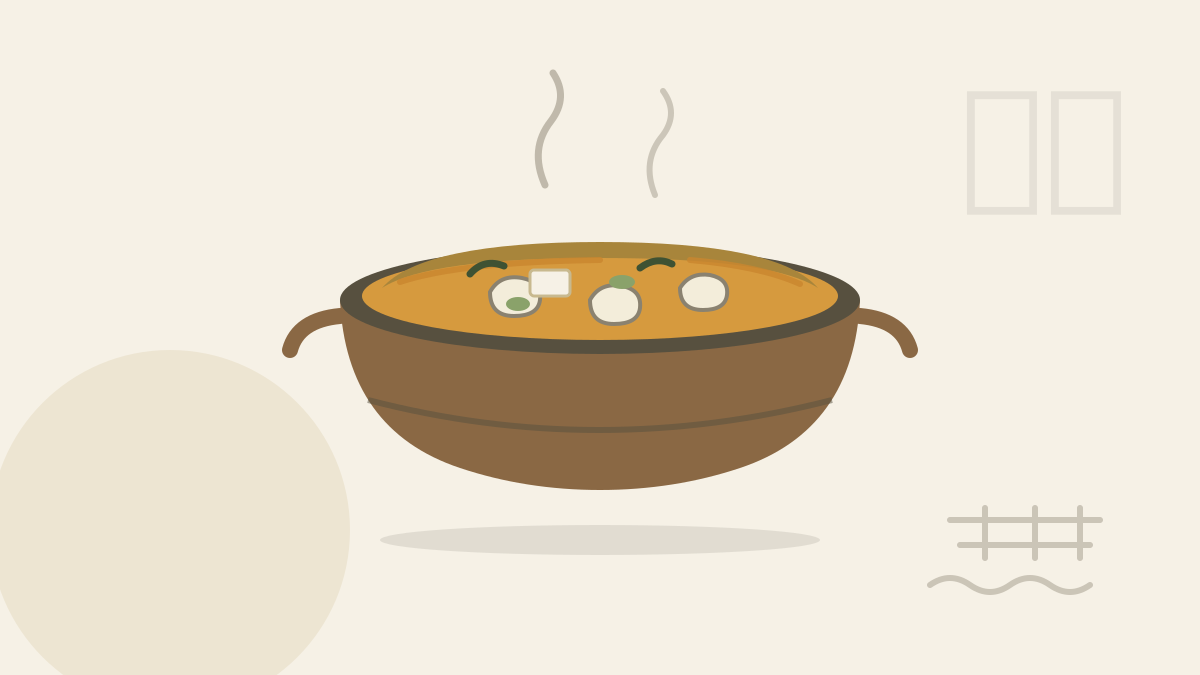 鍋
鍋- Prep
- 25 min
- Cook
- 20 min
- Serves
- 4
- Level
- Beginner
Hiroshima has farmed oysters for roughly four hundred years. By the mid-1600s, Edo-period growers along the calm, nutrient-rich shallows of Hiroshima Bay were raising oysters on bamboo hurdles staked into the tide flats, and the trade grew famous enough that kaki-bune — oyster boats — sailed each winter to Osaka to moor in the rivers and serve oyster cuisine on board. The modern descendants of those hurdles are the raft-and-rope farms that still crowd the bay, producing more oysters than any other prefecture in Japan by a wide margin. Dotenabe is the dish that winter built on top of all that abundance.
The name means "dike pot," and the technique is exactly that: a wall of sweetened miso painted around the pot's rim like a levee on a tidal river. As the dashi simmers, the wall toasts and slumps, seasoning the broth by degrees, so the first bowl is delicate and the last is deep and rich. A famous telling credits a nineteenth-century oyster peddler with inventing it — a good story, and only a story. What's documented is the oysters themselves, and they need just two things from you: a gentle simmer, and the restraint to pull them out plump.
The dike is the dish. Scrape miso into the broth a little at a time as you eat, so the pot starts gentle and ends rich — rushing it all in at the start is like eating the last chapter first.
板前の一言 · A word from the kitchen
Ingredients材料
Serves 4
The miso dike
- 120 gwhite miso
- 60 gred miso — the classic Hiroshima blend leans sweet — adjust toward white if your red miso is aggressive
- 2 tbspmirin
- 1 tbspsugar
The pot
- 400 gshucked oysters — large Hiroshima-style oysters if you can find them; rinse gently in lightly salted water and pat dry
- 600 mlawase dashi
- 300 gnapa cabbage, cut into wide ribbons
- 200 gsoft tofu, in large cubes
- 1naganegi or 2 fat scallions, cut on the bias
- 100 gshungiku or spinach
- 4shiitake, stems removed
- cooked udon or rice, for the finish
Method作り方
Step 1: Build the dike
Beat both misos with the mirin and sugar into a thick paste. With a spatula or the back of a spoon, paint it in a continuous wall around the inner rim of a donabe or heavy casserole, well above the waterline. It should look like a levee, because that's exactly what it's imitating.
Step 2: Arrange the pot
Lay the cabbage in first as a bed, then arrange tofu, shiitake, and negi in neat territories. Pour in the dashi carefully down the middle so the dike stays dry.
Step 3: Bring it up gently
Set over medium heat and bring to a bare simmer. As steam rises, the miso wall toasts and perfumes the broth before a single gram of it has dissolved — this slow seasoning is the whole trick of dotenabe.
Step 4: Add the oysters last
Slip the oysters in once the vegetables have softened, and add the shungiku on top. Oysters need only 2–3 minutes; they're done when the edges ruffle and the bellies plump. Overcooked oysters are erasers, and no dike can save them.
Step 5: Eat by eroding the wall
Serve from the pot, scraping a little miso from the dike into the broth with each round. The soup deepens as the meal goes on. Finish by simmering udon or rice in what remains — by then the broth has collected everything the oysters had to say.
道具 · The tools
Equipment
Donabe
土鍋The clay hot-pot that makes nabemono taste like nabemono — a gentle, even simmer that carries straight to the table.
Shop on Amazon →
Equipment links are Amazon affiliate links. As an Amazon Associate we earn from qualifying purchases, at no cost to you. Disclosure.
Questions from the kitchen
Why is it called dotenabe?
Dote means an embankment or dike, like the levees along Hiroshima's tidal rivers. The miso is painted around the pot in a raised wall, and the broth "erodes" it as the meal progresses. One story credits an Edo-period oyster peddler named Dotenoya; more likely the name is simply the levee the miso resembles. Either way, label it a story.
Can I use pre-shucked jarred or frozen oysters?
Yes, and most Hiroshima home cooks do exactly that in season. Rinse them in salted water, drain well, and add them frozen-solid or thawed at the very end. What you cannot do is simmer them from the start — timing, not pedigree, decides this dish.
What if I don't own a donabe?
Any wide, heavy pot with decent sides works — enameled cast iron is ideal because the miso wall grips it. Avoid thin stainless; it heats unevenly and the dike slides. The ritual matters more than the vessel.
次はこちら · Cook next
Keep the burner on
 鍋
鍋Nabemono & Soups · 45 min · Beginner
Ishikari Nabe石狩鍋
Hokkaidō's salmon and miso hot pot, born on the Ishikari River in the Meiji fishing boom — sweet corn, potatoes, and a knob of butter at the end.
 鍋
鍋Nabemono & Soups · 55 min · Beginner
Imoni芋煮
Yamagata's taro and beef stew, simmered in soy and sake — the dish an entire prefecture cooks together on riverbanks every autumn since Edo times.
 鍋
鍋Nabemono & Soups · 65 min · Intermediate
Hōtōほうとう
Yamanashi's wide flat noodles simmered straight in miso broth with kabocha — the one-pot field ration that fed Takeda Shingen's armies in the Sengoku era.