Hitsumabushi
ひつまぶし
Nagoya's grilled eel over rice, eaten three ways from a wooden ohitsu — plain, with condiments, then drowned in dashi — a Meiji-era restaurant ritual.
By Japanese Cookbook Kitchen · May 8, 2026
 丼
丼- Prep
- 15 min
- Cook
- 20 min
- Serves
- 2
- Level
- Beginner
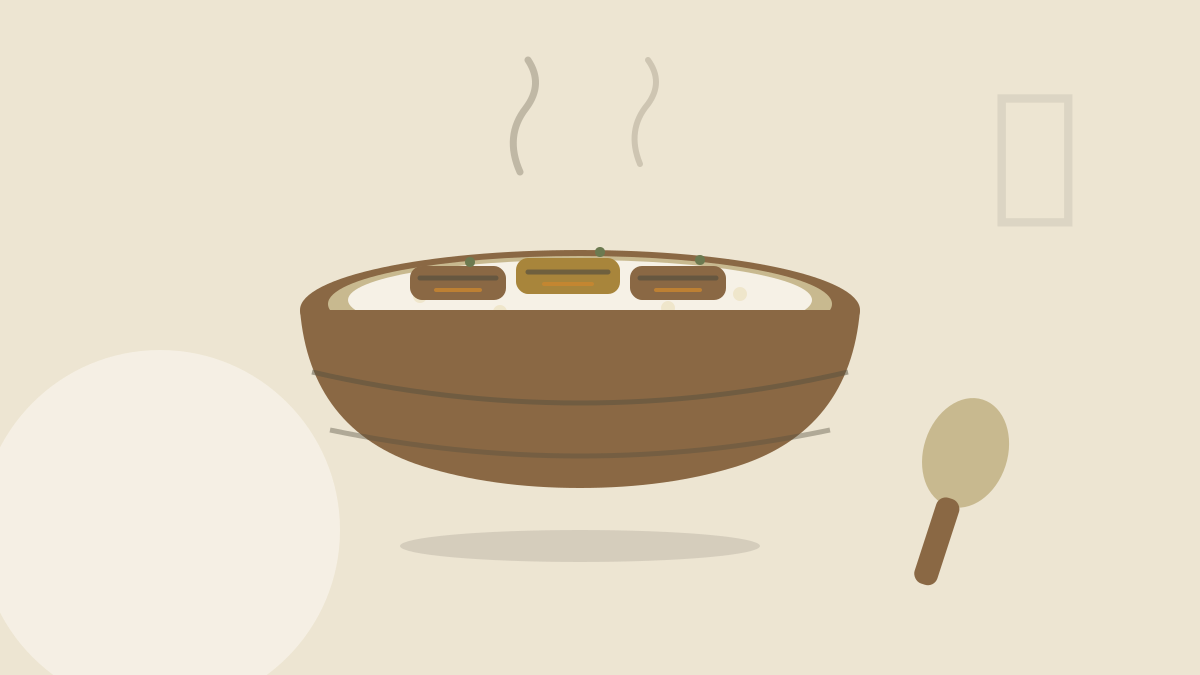
Hitsumabushi belongs to Meiji-era Nagoya, and the restaurant Hōraiken in Atsuta — a few streets from one of Japan's oldest shrines — has claimed the invention since the 1890s. The name is plain description: an ohitsu is the wooden tub rice is served from, and mabusu means to mix through. Chopped grilled eel over tub rice, portioned out in quarters. What began, by most tellings, as a practical fix for banquet deliveries and irregular fillets hardened into one of Japan's most codified eating rituals, complete with a correct order and a house dashi for the finale.
This recipe is honest about the eel: it is store-bought kabayaki, as it is in nearly every Japanese home kitchen, because splitting live unagi is a craft measured in decades. Buy well, re-grill until the edges blister, and spend your care on the rice and the broth. The eel professionals did their part; the three-ways ceremony is yours.
Crisp the kabayaki under a hot grill or in a dry pan before it goes on the rice — vacuum-packed eel steams flabby, and thirty seconds of direct heat gives you back the charred edges the dish depends on.
板前の一言 · A word from the kitchen
Ingredients材料
Serves 2
Eel and rice
- 2fillets store-bought unagi kabayaki, about 160 g each — frozen or vacuum-packed is what nearly every home in Japan uses; buy the best you can find and reheat it with respect
- 3 tbspkabayaki tare — the sachet from the packet, or 2 tbsp soy simmered briefly with 2 tbsp mirin and 1 tsp sugar
- 450 gcooked Japanese short-grain rice, hot
- sanshō pepper, to finish
Condiments and broth
- 3scallions, sliced into fine rings
- 2 tbspnori, snipped into threads
- 1 tbspfresh wasabi, grated — tube wasabi is honest enough here; use a little less
- 500 mlawase dashi — seasoned lightly with 1 tsp light soy and a pinch of salt, kept hot
Method作り方
Step 1: Revive the eel
Rinse any gluey packet sauce off the fillets, pat dry, and grill them skin-side down under high heat for 2 to 3 minutes until the edges blister. Brush with tare and give the flesh side a final minute — you want scorch marks, not warmth.
Step 2: Build the ohitsu
Fold half the tare through the hot rice, then lay the eel on top, cut into 2 cm strips, and brush with what remains. A wooden bowl or ohitsu matters more than it should — the wood pulls steam so the rice stays distinct.
Step 3: First quarter, plain
Divide mentally into quarters. Scoop the first into a small bowl and eat it as-is — this is the tasting course, eel and tare and rice with a dusting of sanshō and nothing else.
Step 4: Second quarter, with condiments
The next portion gets scallions, nori, and a small knuckle of wasabi. The aromatics cut the richness and reset your palate; most people decide this is their favorite, briefly.
Step 5: Third quarter, as chazuke
Add condiments again, then pour the hot seasoned dashi over the bowl until the rice just floats. The tare blooms into the broth and the crisp edges go silken. The fourth quarter you eat however the first three convinced you — that's the rule, and it's a good one.
道具 · The tools
Equipment
Rice cooker
炊飯器Consistent short-grain rice with zero attention — the one appliance nearly every page here leans on.
Shop on Amazon →Grater (oroshigane)
おろし金Fine, wet grating for ginger, daikon oroshi, and fresh wasabi — a Western microplane is close.
Shop on Amazon →
Equipment links are Amazon affiliate links. As an Amazon Associate we earn from qualifying purchases, at no cost to you. Disclosure.
Questions from the kitchen
Do I really have to buy the eel pre-made?
Yes, and you should feel fine about it. Splitting and grilling live unagi is a trade with a ten-year apprenticeship; even in Nagoya, home cooks buy kabayaki. Your job is the reheat, the rice, and the ritual — that is genuinely where the dish lives.
Where does hitsumabushi come from?
Nagoya, in the Meiji era. Atsuta's restaurant Hōraiken claims the invention — one story says chopped eel served from a shared ohitsu survived delivery to banquets better, another that it stretched irregular fillets — and the name joins ohitsu, the rice tub, with mabusu, to mix. Rival claims exist, as they always do; the three-ways ritual is Nagoya's regardless.
Is it just unadon with extra steps?
The extra steps are the point. Unadon is one flavor sustained; hitsumabushi is a structured argument — plain, then sharpened with aromatics, then transformed into chazuke. Same eel, three dishes, and the dashi pour at the end is one of the great second acts in Japanese food.
次はこちら · Cook next
Keep the burner on
 丼
丼Rice & Donburi · 50 min · Intermediate
Katsudonカツ丼
Crisp tonkatsu simmered with onions in sweet dashi-soy and set with barely-cooked egg over rice — the Taishō-era donburi that made yōshoku fully Japanese.
 丼
丼Rice & Donburi · 25 min · Beginner
Unadonうな丼
Kabayaki eel lacquered in sweet tare over hot rice — an Edo summer ritual with the best marketing legend in Japanese food history. Store-bought eel welcome.
 丼
丼Rice & Donburi · 45 min · Beginner
Salted Salmon Onigiri鮭お握り
Proper rice balls with salted salmon — how to cook and season the rice, shape with wet hands, and keep the nori crisp until the first bite.