Gohei Mochi
五平餅
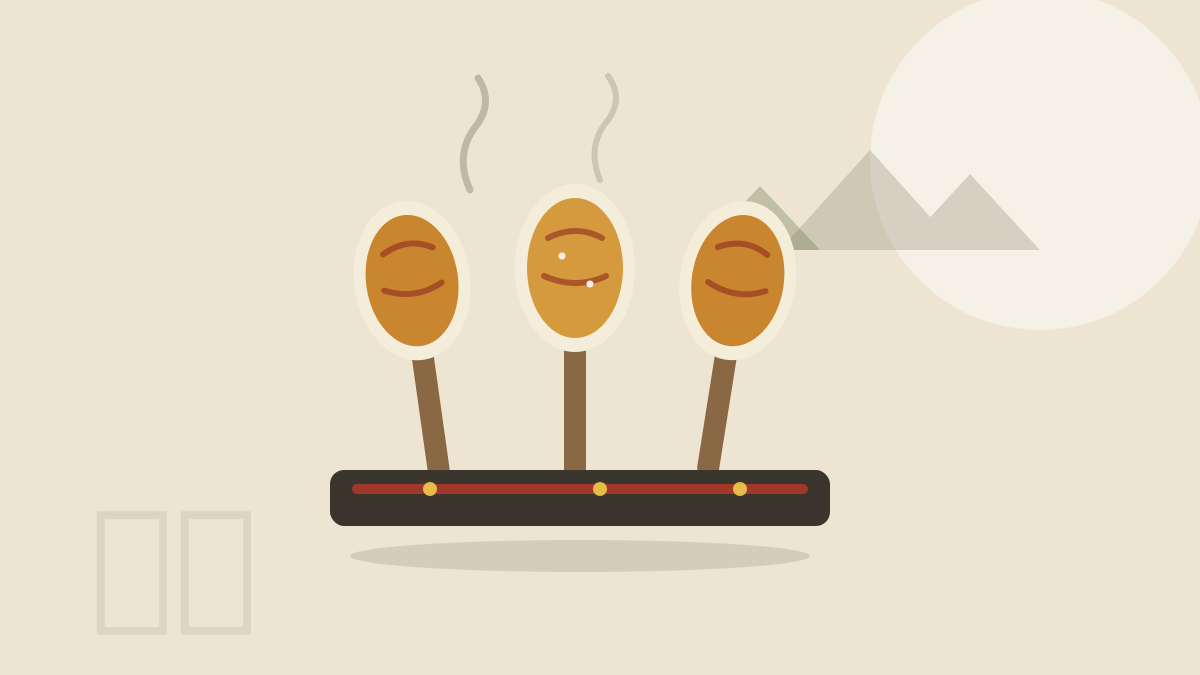
Kiso valley's half-pounded rice paddles, grilled and lacquered with a walnut-sesame miso tare — an Edo-era mountain snack with shrine-offering roots.
By Japanese Cookbook Kitchen · May 24, 2026
 甘味
甘味- Prep
- 30 min
- Cook
- 15 min
- Serves
- 4
- Level
- Beginner
The Kiso valley runs through the mountains of southern Nagano, and in the Edo period its narrow road — the Nakasendō — carried travelers, timber, and very little rice. What grain the valley had, it treated with ceremony. Gohei mochi is everyday rice half-pounded until it clings, pressed into flat paddles on sticks, grilled, and painted with a sweet walnut-sesame miso. The name's origins are pure folk tradition: the paddle resembles the gohei wand of Shintō ritual, woodcutters supposedly offered it to the mountain gods, and a carpenter named Gohei gets credit in at least one telling. Believe whichever story improves your dinner.
The technique rewards restraint. Half-pounded rice keeps its grain and its grip; a dry first grill builds the crust; the tare goes on late and catches at the edges. It's sold from roadside stands the length of the old highway, and the first bite explains why travelers have been stopping for two hundred years.
Half-pounded means half — stop while whole grains still show. Pound it smooth and you have a different (and lesser) thing that will slide off the stick and your good graces at the same time.
板前の一言 · A word from the kitchen
Ingredients材料
Serves 4
Rice paddles
- 450 gcooked Japanese short-grain rice, hot — ordinary uruchi rice, not glutinous mochi rice — this matters
- 8flat wooden sticks or disposable chopsticks
- a small bowl of salted water, for your hands
Walnut-sesame miso tare
- 50 gwalnuts, toasted
- 2 tbsptoasted white sesame
- 3 tbspmiso — a mellow rice miso; the Kiso valley leans sweeter here than Nagoya does
- 3 tbspsugar
- 1 tbspmirin
- 2 tbspwater — plus more to loosen — the tare should spread like soft peanut butter
Method作り方
Step 1: Half-pound the rice
Pound the hot rice in a bowl with a wet pestle or the back of a sturdy spoon until it turns sticky and cohesive but still shows distinct grains — the state called hankotsuki, half-pounded. It should hold a shape without becoming smooth mochi.
Step 2: Shape onto sticks
With salted-water hands, press handfuls of rice around the sticks into flat ovals about 2 cm thick — the classic wataame paddle shape. Pack them firmly at the stick or they will desert you on the grill.
Step 3: Grind the tare
Grind walnuts and sesame in a suribachi until oily and nearly smooth, then work in miso, sugar, mirin, and water. Taste — it should be sweet first, nutty second, salty last.
Step 4: First grill, naked
Grill the paddles dry over medium heat, or under a broiler, until both faces are firm and freckled brown, about 4 minutes a side. This crust is what keeps the tare from soaking through.
Step 5: Sauce and scorch
Spread tare thickly on both faces and return to the heat for a minute or two until it bubbles and catches at the edges. The smell — caramel, walnut, miso smoke — is the whole Kiso valley in one breath. Eat hot.
道具 · The tools
Equipment
Stovetop fish grill
焼き網A yakiami grate for salted fish, mochi, and reviving nori over an open flame.
Shop on Amazon →Suribachi & surikogi
すり鉢The ridged grinding bowl and wooden pestle for sesame, miso dressings, and hiyajiru.
Shop on Amazon →Cooking chopsticks (saibashi)
菜箸Long chopsticks for turning, plating, and beating eggs streaky — the Japanese kitchen’s default hand.
Shop on Amazon →
Equipment links are Amazon affiliate links. As an Amazon Associate we earn from qualifying purchases, at no cost to you. Disclosure.
Questions from the kitchen
Why is it called gohei mochi?
Nobody can prove any of the stories, so pick your favorite. The shape resembles the gohei, the folded paper wand used in Shintō ritual, and mountain woodcutters are said to have shaped rice this way as offerings to the mountain gods before eating the offering themselves. Another tale credits a carpenter named Gohei who packed his lunch rice onto a stick. All of it is folk tradition; the Edo-era roots along the Kiso road are the believable part.
Is this mochi? It doesn't use mochi rice.
Not in the pounded-glutinous-rice sense — gohei mochi is everyday uruchi rice, half-crushed so it grips the stick and grills without collapsing. Mountain villages that couldn't spare glutinous rice made festival food from what the paddies actually gave them, and the name mochi came along out of generosity.
What if I can't get walnuts?
Sesame alone is traditional in plenty of Kiso households, and peanut versions exist along the route without shame. Keep the miso-sugar backbone and the toasted-nut oiliness; the specific nut is regional accent, not doctrine.
次はこちら · Cook next
Keep the burner on
 甘味
甘味Sweets & Wagashi · 45 min · Beginner
Matcha Basque Cheesecake抹茶バスクチーズケーキ
The burnt Basque cheesecake that conquered Reiwa-era Japan, rebuilt with ceremonial matcha — scorched top, molten center, and green-tea bitterness doing the work of coffee.
 甘味
甘味Sweets & Wagashi · 60 min · Beginner
Aomori Baked Apples焼きりんご
Aomori Fuji apples baked with butter and honey until collapsing and caramelized — a Meiji-era orchard sweet from Japan's apple country, warm from the oven.
 甘味
甘味Sweets & Wagashi · 35 min · Beginner
Dorayakiどら焼き
Honey-sweet pancake sandwiches filled with red bean paste — a beloved wagashi you can make in a skillet, plus a quick anko from canned azuki.