Corn Butter Rice
とうもろこしご飯
Hokkaidō sweet corn cooked right into the rice pot, finished with butter and a shot of soy — a summer takikomi that tastes like the island's cornfields in a bowl.
By Japanese Cookbook Kitchen · May 12, 2026
北海道 HokkaidōShōwa era, 1926–1989
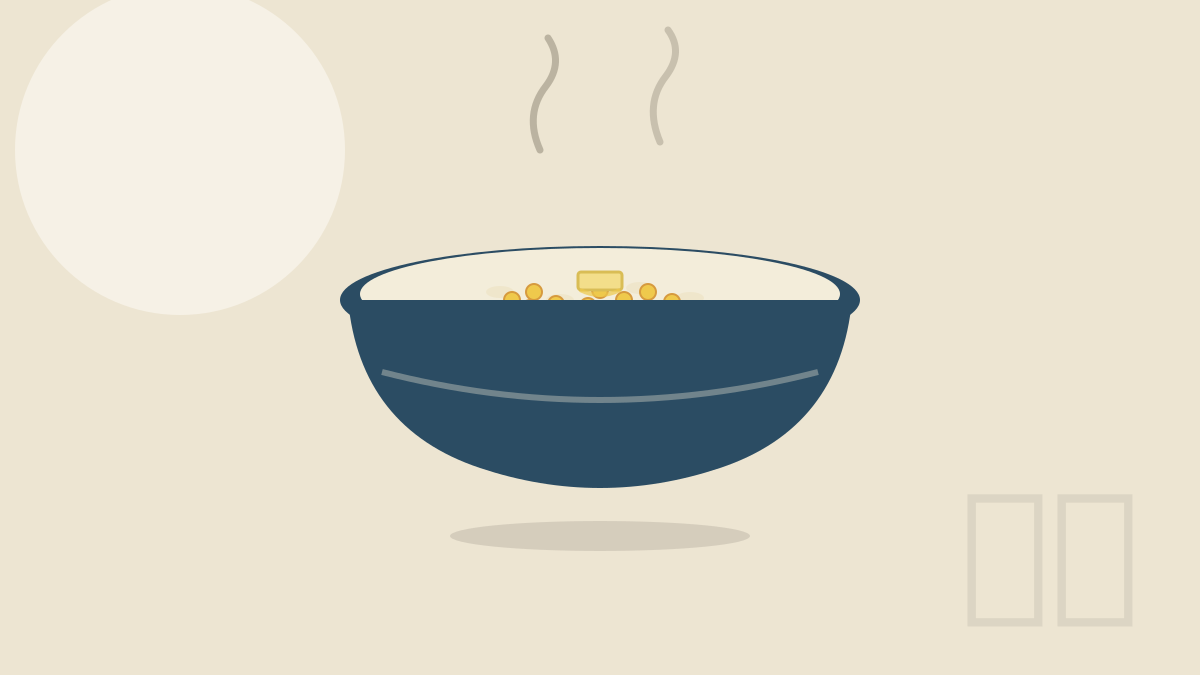 丼
丼- Prep
- 10 min
- Cook
- 45 min
- Serves
- 4
- Level
- Beginner
Corn is Hokkaidō's summer signature, and this rice is the plainest, best way to eat it. The island is Japan's cornfield — vast plantings across the Tokachi and Furano plains, a legacy of the American-style broad-acre farming that Meiji advisors like Horace Capron urged on the young colony in the 1870s. By the Shōwa decades that followed, sweet corn had become an emblem of the place, sold grilled from carts in Sapporo's Ōdōri Park and hauled home by the sackful in August. Cooking it into the rice pot is the household version of that abundance: no cart, no queue, just the season folded into dinner.
Technically this is takikomi gohan, rice cooked in seasoned liquid with its add-ins, and the method is forgiving to a fault. The one move that matters is saving the stripped cobs and cooking them on top of the rice, where they bleed sweetness and body into the pot. Butter and a bare teaspoon of soy at the end are the Hokkaidō handshake — dairy richness against corn's sugar, salted just enough to keep it honest. It is the taste of an island summer, and it takes ten minutes of actual work.
Throw the stripped cobs into the pot with the rice — they leak sweetness and starch into the water and are the difference between good and unforgettable.
板前の一言 · A word from the kitchen
Ingredients材料
Serves 4
The pot
- 2 cupsJapanese short-grain rice — rinsed until the water runs nearly clear
- 2ears sweet corn — kernels stripped, cobs reserved
- 2 tspsake
- 1 tspsalt
- water — to the 2-cup line, minus the sake volume
To finish
- 20 gbutter
- 1 tspsoy sauce
- black pepper — optional, at the table
Method作り方
Step 1: Prep the corn
Stand each ear on its end and run a knife down the sides to shear off the kernels. Keep the naked cobs — they carry most of the sweetness you're after.
Step 2: Season the rice
Put the rinsed rice in the pot, add sake and salt, then water to the two-cup line. Stir once so the salt disperses evenly; it won't after the lid goes on.
Step 3: Add corn and cobs
Scatter the kernels over the rice and lay the bare cobs on top. Don't stir now — you want the rice to cook in clean layers, with the cobs steaming above.
Step 4: Cook and rest
Cook by your usual method — rice cooker, or a lidded pot at a bare simmer for twelve minutes then off the heat, lid on, for ten more. Resting is not optional; it's when the grain finishes.
Step 5: Butter and fluff
Lift out the cobs. Add the butter and soy and fold through with a cutting motion so the grains stay whole. The butter melts into every corner — that's the whole point. Serve steaming.
道具 · The tools
Equipment
Rice cooker
炊飯器Consistent short-grain rice with zero attention — the one appliance nearly every page here leans on.
Shop on Amazon →Portable gas burner
カセットコンロThe tabletop butane burner that turns any nabe into a shared meal — cook and eat from the same pot.
Shop on Amazon →Frying spider & tongs
揚げ網Lift fried food clean out of the oil and drain it fast, before the crust turns soft.
Shop on Amazon →Shamoji (rice paddle)
しゃもじThe flat paddle for folding and cooling seasoned rice with a cutting motion — never a mash.
Shop on Amazon →
Equipment links are Amazon affiliate links. As an Amazon Associate we earn from qualifying purchases, at no cost to you. Disclosure.
Questions from the kitchen
Fresh corn only, or will canned work?
Fresh is the dish — Hokkaidō summer corn is famous for a reason, and the cobs are half the flavour. Canned or frozen kernels will make a decent bowl, but you lose the cob's sweetness, so nudge the salt down and know you're eating the everyday version.
Is this a dessert? It sounds sweet.
No — it's a savoury rice, a side or a light meal. The sweetness is the corn's own, balanced by salt, soy, and butter's richness. Think of it as the rice equivalent of Sapporo's beloved corn-butter ramen topping.
次はこちら · Cook next
Keep the burner on
 丼
丼Rice & Donburi · 50 min · Intermediate
Katsudonカツ丼
Crisp tonkatsu simmered with onions in sweet dashi-soy and set with barely-cooked egg over rice — the Taishō-era donburi that made yōshoku fully Japanese.
 丼
丼Rice & Donburi · 25 min · Beginner
Unadonうな丼
Kabayaki eel lacquered in sweet tare over hot rice — an Edo summer ritual with the best marketing legend in Japanese food history. Store-bought eel welcome.
 丼
丼Rice & Donburi · 45 min · Beginner
Salted Salmon Onigiri鮭お握り
Proper rice balls with salted salmon — how to cook and season the rice, shape with wet hands, and keep the nori crisp until the first bite.