Tokachi Butadon
豚丼
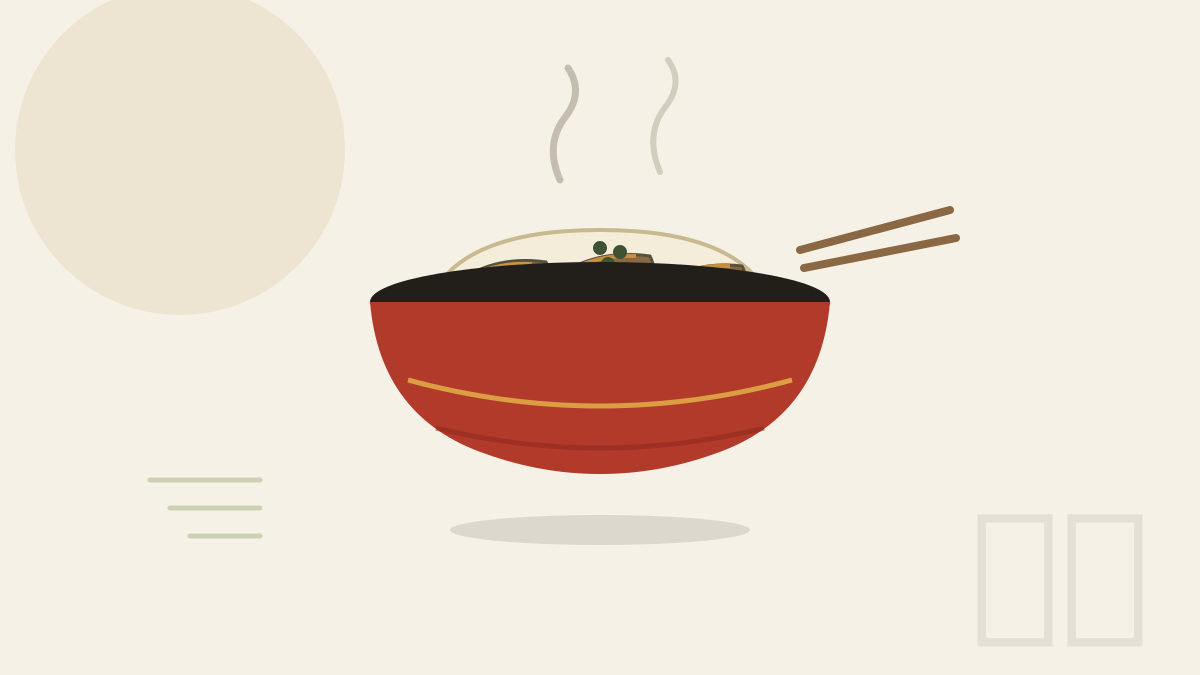
Obihiro's answer to unagi — thick slices of pork lacquered in a sweet soy glaze over hot rice, invented at the diner Panchō in 1933 for Tokachi's farmhands.
By Japanese Cookbook Kitchen · May 17, 2026
北海道 HokkaidōShōwa era, 1926–1989
 丼
丼- Prep
- 10 min
- Cook
- 15 min
- Serves
- 2
- Level
- Beginner
The Tokachi plain was one of Hokkaidō's hardest frontiers — settled from the 1880s by farm collectives who learned that the inland winters killed rice but suited pigs, beans, and potatoes. By the early Shōwa years Obihiro, the plain's market town, had pork to spare and laborers to feed. In 1933 the diner Panchō, still standing near the station, is credited with the fix: pork grilled and lacquered in a sweet soy glaze, laid over rice in open imitation of the unagi bowls of Honshū. Stamina food, frontier priced.
Butadon has stayed stubbornly local and stubbornly simple — no onions, no egg, nothing that would make it gyūdon's cousin. The glaze is just soy, mirin, sake, and sugar reduced to a shine; the pork is cut thick enough to argue back. What you're chasing at home is the moment the caramel edges catch, one shade past golden, so each slice tastes faintly of the grill even from a skillet. The green peas on top are historically inexplicable and completely mandatory.
The glaze wants to burn from the moment the sugar hits the pan — pull the pork out while you reduce the sauce, then reunite them. Patience here reads as charcoal on the plate, in the good way.
板前の一言 · A word from the kitchen
Ingredients材料
Serves 2
Glaze
- 4 tbspsoy sauce
- 3 tbspmirin
- 2 tbspsake
- 1.5 tbspsugar — the glaze should be glossy and unapologetically sweet — this is kabayaki logic applied to pork
The bowl
- 300 gpork loin, in 8 mm slices — thicker than stir-fry meat, thinner than a chop; shoulder works if you like more fat
- 1 tspneutral oil
- 2 bowlshot cooked rice
- green peas — a few per bowl — the classic Obihiro garnish, oddly non-negotiable
- sanshō pepper — at the table, another borrowing from the eel house
Method作り方
Step 1: Mix the glaze
Stir the soy, mirin, sake, and sugar together until the sugar dissolves. No dashi, no garlic — the sauce is deliberately simple because the pork and the caramel do the talking.
Step 2: Sear the pork
Snip the edge fat in a few places so the slices stay flat. Sear them in a barely oiled skillet over medium-high, about two minutes a side, until browned but not cooked into toughness. Set them on a plate.
Step 3: Reduce the sauce
Pour the glaze into the same pan and let it bubble down for two or three minutes, scraping up the pork fond, until it coats a spoon and the bubbles turn lazy.
Step 4: Glaze and lacquer
Return the pork and any juices and turn the slices in the glaze until every surface shines. Thirty seconds more for the edges to catch and darken — that near-burnt fringe is the Obihiro signature.
Step 5: Build the bowl
Rice into deep bowls, pork shingled across the top, remaining glaze spooned over so it bleeds into the rice. Green peas on, sanshō beside, and eat it hot.
道具 · The tools
Equipment
Rice cooker
炊飯器Consistent short-grain rice with zero attention — the one appliance nearly every page here leans on.
Shop on Amazon →Nonstick frying pan
フライパンFor chanpurū, gyoza, pancakes, and anything that needs a clean release and even browning.
Shop on Amazon →Portable gas burner
カセットコンロThe tabletop butane burner that turns any nabe into a shared meal — cook and eat from the same pot.
Shop on Amazon →
Equipment links are Amazon affiliate links. As an Amazon Associate we earn from qualifying purchases, at no cost to you. Disclosure.
Questions from the kitchen
Why does a pork bowl look like an eel bowl?
Because that was the pitch. The dish is credited to the Obihiro diner Panchō in 1933, where the cook wanted to feed Tokachi's farm laborers something as glossy and restorative as unagi kabayaki, at a price a farmhand could pay. Pigs thrived on the Tokachi plain; eel did not.
Loin or belly?
Obihiro's old guard grills loin — substantial, lean, cut thick enough to chew. Belly gives you a richer, faster version at home. Either way, keep the slices wide; butadon is not a stir-fry.
Can I grill the pork instead?
Charcoal is how the famous Obihiro shops do it, basting as they go, and if you have a grill going it's worth the trouble. Brush with glaze in the last minutes only, or the sugar will blacken before the pork cooks.
次はこちら · Cook next
Keep the burner on
 丼
丼Rice & Donburi · 50 min · Intermediate
Katsudonカツ丼
Crisp tonkatsu simmered with onions in sweet dashi-soy and set with barely-cooked egg over rice — the Taishō-era donburi that made yōshoku fully Japanese.
 丼
丼Rice & Donburi · 25 min · Beginner
Unadonうな丼
Kabayaki eel lacquered in sweet tare over hot rice — an Edo summer ritual with the best marketing legend in Japanese food history. Store-bought eel welcome.
 丼
丼Rice & Donburi · 45 min · Beginner
Salted Salmon Onigiri鮭お握り
Proper rice balls with salted salmon — how to cook and season the rice, shape with wet hands, and keep the nori crisp until the first bite.