Uji Warabi Mochi
わらび餅
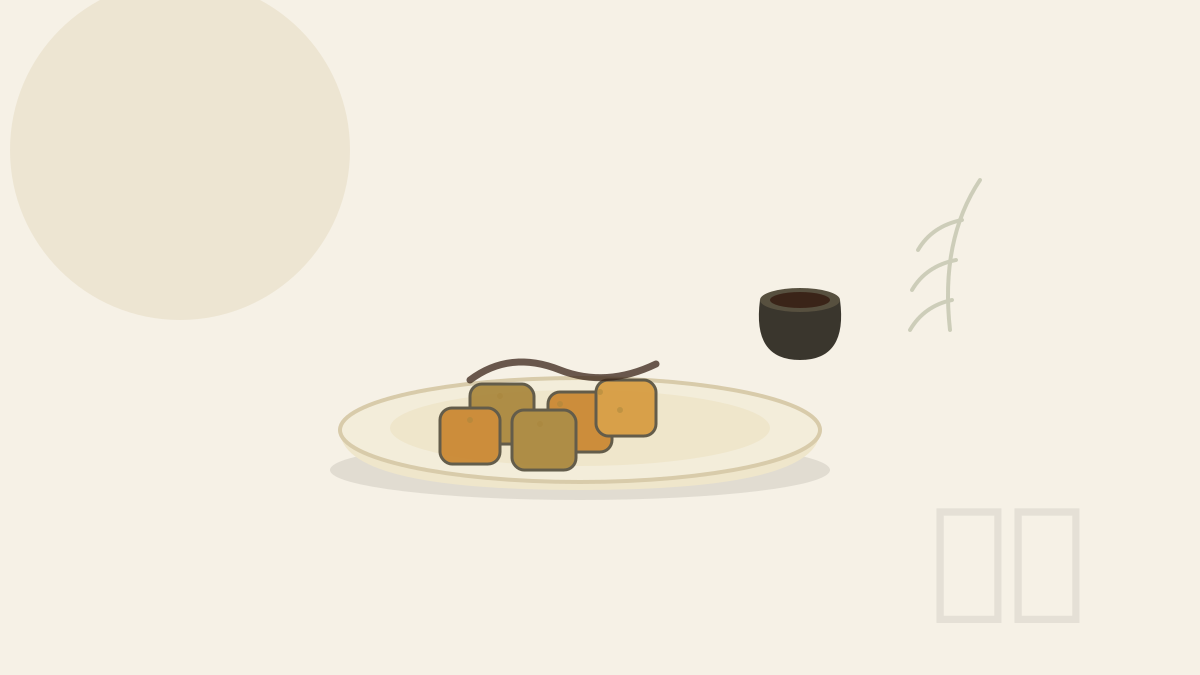
Uji's cool, quivering bracken-starch jelly dusted in roasted soybean flour — a Heian-era Kyoto sweet, and an honest lesson in real warabiko versus the fakes.
By Japanese Cookbook Kitchen · May 16, 2026
 甘味
甘味- Prep
- 15 min
- Cook
- 15 min
- Serves
- 4
- Level
- Intermediate
Warabi mochi belongs to Uji, the tea town just south of Kyoto, and to the refined sweet-making culture that grew up around the Heian court (794–1185). Bracken starch — warabiko, laboriously washed and settled from the roots of the warabi fern — was a genuine luxury in that era, and a jelly made from it was food fit for aristocrats. The story goes that Emperor Daigo, who reigned in the early tenth century, loved it enough to grant it courtly rank; we file that under tradition, but the underlying point is real. This was a rich person's sweet made from a poor plant, transformed by enormous labor.
The modern honesty problem is the starch. True warabiko is expensive and sets to a translucent, smoky grey with a clean fern-root flavor; most of what's sold as "warabi mochi powder" abroad is sweet-potato or tapioca starch, which makes a perfectly pleasant, whiter, springier jelly that is not quite the same thing. Both are worth making. Just know which you're eating, and don't pay Uji prices for tapioca.
The technique is unforgiving in one spot only — the sudden set over heat — and generous everywhere else. Get the coating of nutty kinako and the pour of dark kuromitsu right, eat it cold on a hot afternoon, and you'll understand why a court thought it worth a rank.
The window between raw slurry and set jelly is about ninety seconds of hard stirring over heat — walk away and you get glue on one side and liquid on the other. Stay at the pot.
板前の一言 · A word from the kitchen
Ingredients材料
Serves 4
The jelly
- 70 gwarabiko (true bracken starch) — real warabiko is expensive and sets to a translucent grey; most supermarket "warabi mochi ko" is sweet-potato or tapioca starch — good, but be honest with yourself about which you have
- 200 gwater
- 60 gsugar
To finish
- 4 tbspkinako (roasted soybean flour)
- 1 tbspsugar — mixed into the kinako
- 1 pinchsalt
- kuromitsu (black-sugar syrup), to pour
Method作り方
Step 1: Bloom the starch cold
Whisk the warabiko, sugar, and water in a cold saucepan until no lumps remain. Bracken starch seizes instantly on heat, so it must be fully dissolved before the flame ever touches it — strain the slurry if you're unsure.
Step 2: Stir it to a clear, heavy jelly
Cook over medium heat, stirring constantly with a wooden spoon. It will go cloudy, then suddenly turn translucent and grab into a stiff, glossy mass in under two minutes. Keep stirring ninety seconds past that point so the center sets too.
Step 3: Chill and cut, gently
Scrape the jelly into a tray lined with a wet spatula or into iced water, let it firm for ten minutes, then cut or tear into rough bite pieces. True warabi mochi is meant to be soft enough to barely hold — it should tremble.
Step 4: Dust and drizzle
Toss the pieces in kinako mixed with sugar and a pinch of salt until fully coated, then pour cold kuromitsu over just before serving. Eat the same day; refrigeration turns it hard and cloudy by morning.
道具 · The tools
Equipment
Fine sieve / muslin
こし器For straining dashi clear and dusting flour — line it with muslin or paper for the cleanest stock.
Shop on Amazon →
Equipment links are Amazon affiliate links. As an Amazon Associate we earn from qualifying purchases, at no cost to you. Disclosure.
Questions from the kitchen
Did an emperor really love this?
Tradition holds that Emperor Daigo, who reigned in the early tenth century, was so fond of warabi mochi that he granted it a courtly rank. Treat that as tradition rather than documented fact — but it fits, since bracken starch was a Heian-era Kyoto luxury, laborious to extract and prized at court.
Why does mine turn hard and rubbery the next day?
Because most home versions use potato or tapioca starch, which stales fast once chilled. Even real warabiko is best within hours. Make it the day you serve it, keep it at cool room temperature rather than in the fridge, and accept that this is a sweet built for now, not for keeping.
What exactly is warabiko?
Starch extracted from the roots of the warabi bracken fern — hugely labor-intensive, which is why authentic warabiko costs many times what the substitutes do and sets to a smoky grey rather than clear white. Uji shops that use the real thing say so on the box, and charge for it.
次はこちら · Cook next
Keep the burner on
 甘味
甘味Sweets & Wagashi · 45 min · Beginner
Matcha Basque Cheesecake抹茶バスクチーズケーキ
The burnt Basque cheesecake that conquered Reiwa-era Japan, rebuilt with ceremonial matcha — scorched top, molten center, and green-tea bitterness doing the work of coffee.
 甘味
甘味Sweets & Wagashi · 60 min · Beginner
Aomori Baked Apples焼きりんご
Aomori Fuji apples baked with butter and honey until collapsing and caramelized — a Meiji-era orchard sweet from Japan's apple country, warm from the oven.
 甘味
甘味Sweets & Wagashi · 35 min · Beginner
Dorayakiどら焼き
Honey-sweet pancake sandwiches filled with red bean paste — a beloved wagashi you can make in a skillet, plus a quick anko from canned azuki.