Nagoya Tebasaki
手羽先
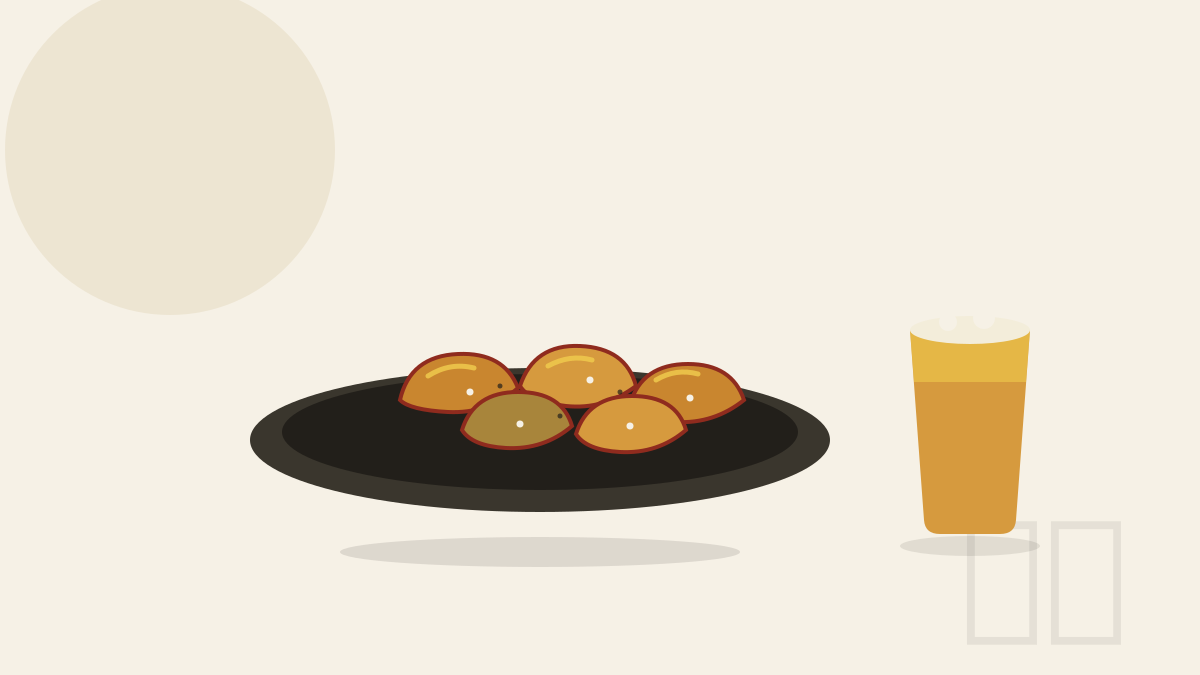
Nagoya's twice-fried chicken wings — unbattered, lacquered with sweet-soy glaze, hit hard with white pepper and sesame — born at the izakaya Furaibō in 1963.
By Japanese Cookbook Kitchen · May 19, 2026
 居酒屋
居酒屋- Prep
- 15 min
- Cook
- 25 min
- Serves
- 4
- Level
- Intermediate
Tebasaki simply means wing tip, but in Nagoya the word carries a founding date: 1963, when the izakaya Furaibō started twice-frying whole wings, painting them with sweet soy tare, and burying them in white pepper and sesame. The shop's own origin story — a delivery that never came, a founder frying the wings he'd reserved for stock — is told as legend and should be enjoyed as one. The dish's rise is fact. By the 1980s, when the rival chain Sekai no Yamachan opened with a sharper, more peppery version, wings had become Nagoya's after-work religion.
Technically, tebasaki is a small argument against everything wings usually are. No batter, no dunk in sauce — just skin rendered crisp over two fries, glaze applied thin as varnish, and a pepper hit that arrives a beat after the sweetness. Eat them with beer and both hands. Nagoya has a codified technique for stripping a wing in two bites; you'll develop your own by the third one.
Glaze with a brush, not a toss. The wings go from fryer to tare to pepper in under a minute, and a wet dunk undoes the second fry — paint the sauce on thin and let the crackle survive.
板前の一言 · A word from the kitchen
Ingredients材料
Serves 4
Wings
- 12whole chicken wings, tip on — the tip is traditional and turns to crackling; leave it
- fine salt
- 2 tbsppotato starch — the barest dusting — Nagoya wings wear no batter
- 1 Lneutral oil, for frying
Glaze and finish
- 4 tbspsoy sauce
- 3 tbspmirin
- 2 tbspsugar
- 1 tbspsake
- 1 clovegarlic, grated
- 1 tspwhite pepper, coarsely ground — more than seems polite; this is the Nagoya signature
- 2 tbsptoasted white sesame
Method作り方
Step 1: Reduce the tare
Simmer soy, mirin, sugar, sake, and garlic in a small pan until it coats a spoon lightly, about 5 minutes. It thickens more as it cools, so pull it early and keep it warm.
Step 2: Dry and dust the wings
Pat the wings aggressively dry, salt them lightly, and dust with the thinnest veil of potato starch. There is no batter here — the skin itself is the crust, and moisture is its enemy.
Step 3: First fry, low
Fry at 160°C for 7 to 8 minutes to render the fat and cook the meat through. The wings will look pale and unpromising. Rest them 5 minutes on a rack while the oil climbs.
Step 4: Second fry, hot
Return them to 190°C oil for 2 to 3 minutes until deep gold and audibly crisp, tips gone to crackling. The double fry is what lets a glazed wing stay crunchy — one pass alone cannot.
Step 5: Glaze, pepper, sesame
Brush each wing with tare on both sides, then hit them immediately with white pepper and sesame while the glaze is tacky. Serve hot, with beer, and with no cutlery pretensions whatsoever.
道具 · The tools
Equipment
Grater (oroshigane)
おろし金Fine, wet grating for ginger, daikon oroshi, and fresh wasabi — a Western microplane is close.
Shop on Amazon →
Equipment links are Amazon affiliate links. As an Amazon Associate we earn from qualifying purchases, at no cost to you. Disclosure.
Questions from the kitchen
Is the Furaibō story true?
The documented part: the izakaya Furaibō opened in Nagoya in 1963 and built its name on these wings. The legend attached to it — that the kitchen ran out of its usual bird one night and founder Kōchi Ōtake fried the wings normally destined for the stockpot — is the shop's own telling, repeated with affection and unverifiable. Either way, the wings won, and Sekai no Yamachan arrived in 1981 to argue about pepper quantities.
Why no batter?
Batter would soften under the glaze within minutes. Nagoya's method — bare skin, a whisper of starch, two fries at rising temperatures — builds crispness into the wing itself, so the tare sits on the surface like lacquer instead of soaking into a coat. It is more technique and less costume.
Can I make these in an air fryer?
You'll get a decent glazed wing and lose the point. The rendered-fat crackle of the double fry, especially at the wing tip, doesn't survive the substitution. If deep-frying is off the table, roast hot on a rack, glaze at the end, and call the result what it is — good, and different.
次はこちら · Cook next
Keep the burner on
 居酒屋
居酒屋Izakaya · 25 min · Beginner
Gōya Chanpurūゴーヤーチャンプルー
Okinawa's bitter melon stir-fry with tofu, pork, and egg — the Ryūkyū Kingdom's everyday masterpiece, and the honest way to make peace with gōya.
 居酒屋
居酒屋Izakaya · 40 min · Beginner
Osaka Okonomiyakiお好み焼き
Osaka's cabbage-and-batter griddle cake with pork belly, sauce, and dancing katsuobushi — postwar street food perfected. Dashi in the batter is the difference.
 居酒屋
居酒屋Izakaya · 35 min · Intermediate
Chicken Karaage鶏の唐揚げ
Japanese fried chicken with a soy-ginger marinade, a potato-starch crust, and the double-fry that keeps it crackling — izakaya standard, home method.