Shizuoka Sencha, Brewed Properly
煎茶
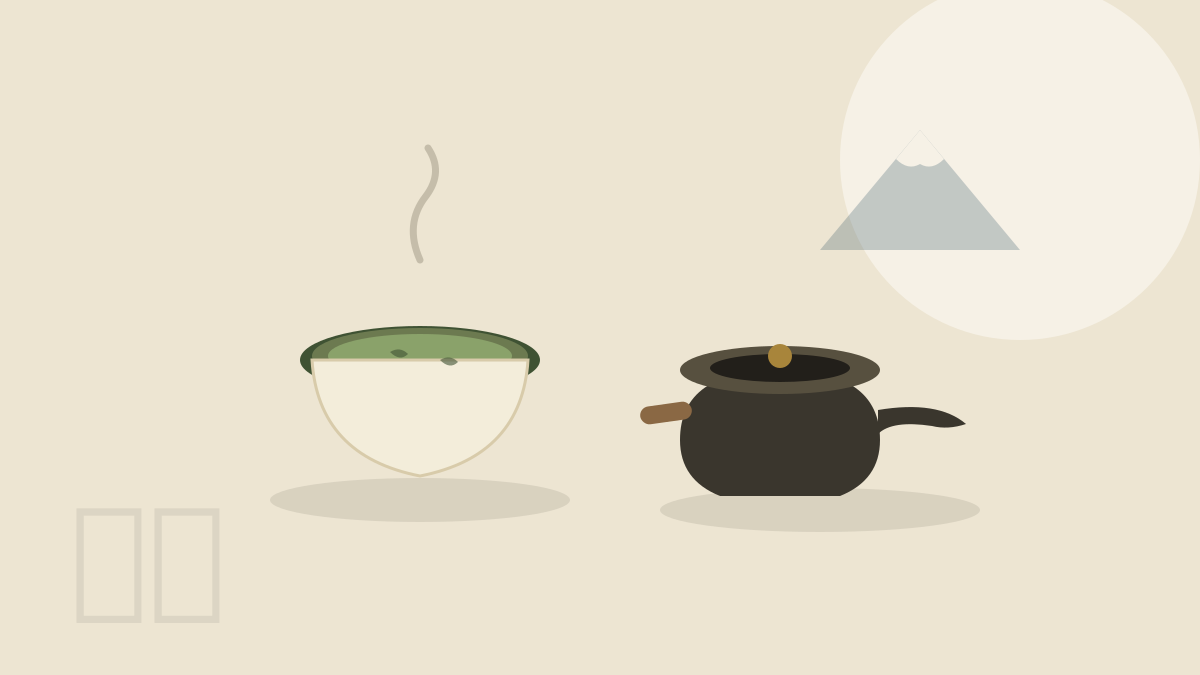
How to brew Shizuoka sencha the way the leaf deserves — the steamed-leaf green tea perfected by Nagatani Sōen in 1738, ruled entirely by water temperature.
By Japanese Cookbook Kitchen · June 18, 2026
 飲
飲- Prep
- 5 min
- Cook
- 0 min
- Serves
- 2
- Level
- Beginner
Sencha — steamed, rolled, whole-leaf green tea — is the everyday tea of Japan, and its method has a real inventor and a real date. In 1738 Nagatani Sōen, a tea maker in Uji, perfected the aosei sencha process: steaming fresh leaves to halt oxidation, then rolling and drying them into the needle shape we still brew. That steamed-leaf technique spread and, over the following centuries, found its greatest home in Shizuoka, whose slopes below Mount Fuji became — and remain — the heart of Japanese tea. Much of the sencha in the country still comes off that prefecture's hills. Shizuoka also favors fukamushi, a deeper steam that yields a cloudier, rounder, more forgiving cup.
Brewing it well is almost entirely about restraint with heat. Green tea's sweet amino acids and its bitter catechins release at different temperatures, so boiling water pulls the harsh notes forward and buries the good ones. The fix is to let the water cool — pouring it between cups sheds heat fast — to roughly 70°C for the first infusion, steep briefly, and pour to the last drop so the leaves don't stew. Then brew again, hotter and quicker, and again; a good Shizuoka sencha has two or three cups in it, each one a slightly different argument for the same leaf.
Temperature is the whole discipline. Boiling water scalds sencha bitter in seconds; cool it to around 70°C first and the same leaf turns sweet, savory, and faintly of the sea. The kettle is not the enemy — impatience is.
板前の一言 · A word from the kitchen
Ingredients材料
Serves 2
- 6 gShizuoka sencha leaves — about 2 rounded teaspoons; a fukamushi deep-steamed sencha is the classic Shizuoka style
- 240 mlfiltered water — soft water flatters green tea; hard water dulls it
- a kyūsu (side-handle teapot) and two small cups — not strictly required, but the small mesh and shape earn their keep
Method作り方
Step 1: Boil, then cool the water
Bring the water to a boil to freshen it, then let it drop to around 70°C. The classic trick is to pour it into the empty cups first — each vessel it touches sheds a few degrees and warms in the bargain.
Step 2: Measure the leaf
Put the sencha into the kyūsu — roughly 3 g per cup. Deep-steamed fukamushi leaves are small and broken, so don't be alarmed that they look like less than a leafy sencha.
Step 3: First infusion, low and slow
Pour the cooled water over the leaves and steep just 45 to 60 seconds. This first cup should taste sweet and savory — umami forward — with barely any astringency.
Step 4: Pour to the last drop
Decant fully, alternating between the cups so each gets the same strength, and never leave water sitting on the leaves. The final drops hold the most concentrated flavor.
Step 5: Re-steep hotter and faster
For the second cup use slightly hotter water and a much shorter steep — ten seconds may be enough. A good Shizuoka sencha gives two or three infusions, each distinct.
道具 · The tools
Equipment
Kyūsu (teapot)
急須A side-handled pot with a fine built-in mesh for sencha, genmaicha, and barley tea — pours without a stray leaf.
Shop on Amazon →
Equipment links are Amazon affiliate links. As an Amazon Associate we earn from qualifying purchases, at no cost to you. Disclosure.
Questions from the kitchen
Why not just use boiling water?
Because heat decides which compounds you extract. Near-boiling water rushes out the bitter catechins and caffeine and scorches the delicate amino acids that make sencha sweet. Around 70°C for the first steep is the single most important thing you can do for the cup.
What is fukamushi sencha?
Fukamushicha is a deep-steamed sencha, a Shizuoka specialty. The longer steam breaks the leaf down more, giving a cloudier, greener, rounder brew that is more forgiving of small temperature and timing errors — a great place to start.
How many times can I re-steep?
Two or three infusions from a good leaf, occasionally more. Raise the water temperature a little and shorten the steep each time. When the cup turns thin and grassy with no sweetness left, the leaf is done.
次はこちら · Cook next
Keep the burner on
 飲
飲Drinks · 15 min · Beginner
Amazake甘酒
Naturally sweet rice-koji ferment with roots in the Nara chronicles — a non-alcoholic, no-sugar drink Edo peddlers sold as a summer energy tonic.
 飲
飲Drinks · 5 min · Beginner
Matcha, Whisked Properly抹茶
How to whisk usucha — thin matcha — at home the Uji way: right water temperature, a proper chasen, and the wrist. Non-alcoholic, ready in a minute.
 飲
飲Drinks · 15 min · Beginner
Mugicha麦茶
Roasted barley tea — caffeine-free, faintly sweet, the sound of a Japanese summer. Roast your own grain or cold-brew a jug; from warlord's mugiyu to the fridge.