Sāta Andāgī
サーターアンダギー
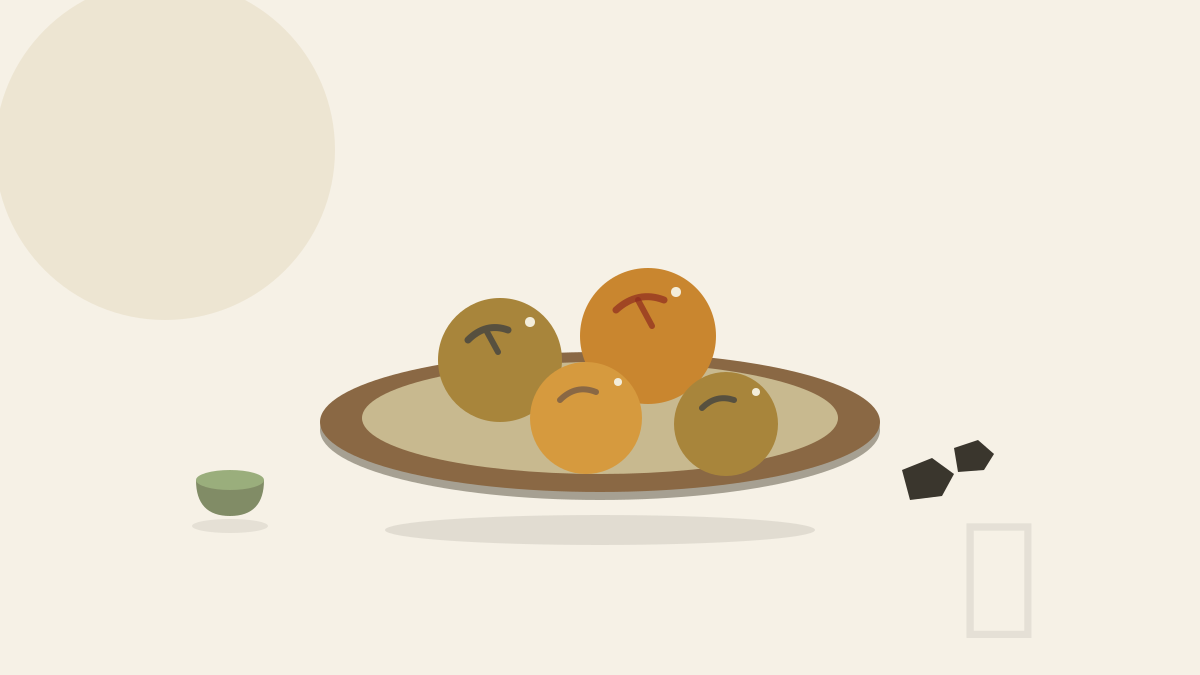
Okinawa's brown-sugar drop doughnuts, fried slow until they crack into a "smile" — court sweets once made for Chinese envoys, now sold at every festival.
By Japanese Cookbook Kitchen · May 24, 2026
沖縄 OkinawaRyūkyū Kingdom era, 1429–1879
 甘味
甘味- Prep
- 15 min
- Cook
- 20 min
- Serves
- 6
- Level
- Beginner
Sugar is the quiet hero of Okinawan history. After sugarcane cultivation took hold in the early 1600s — Gima Shinjō is credited with establishing the techniques — kokutō, the island's dark brown sugar, became both export economy and pantry staple. The Ryūkyū court at Shuri kept confectioners whose job was serious statecraft: sweets for the banquet tables of the sappōshi, the Chinese investiture envoys whose visits could last months. Among the deep-fried, southern-Chinese-style sweets in that lineage sits the ancestor of sāta andāgī — sugar, oil, fried, the name being the recipe.
The modern doughnut is dense, unglazed, and unapologetic, with a crust that splits during frying into the three-lobed crack everyone calls the smile — a lucky omen, which is why trays of them turn up at engagements and festivals. The craft is all in the oil temperature: low and patient, so the ball rolls itself over, puffs, and grins. Fry them hot like an American doughnut and they come out sulking. Nobody wants a sulking doughnut.
The oil wants to be lazier than instinct allows — around 150°C, low enough that a ball can sink, roll itself over, and cook through before the crust seizes. Hot-and-fast gives you a handsome crust around raw regret.
板前の一言 · A word from the kitchen
Ingredients材料
Serves 6
- 250 gplain flour
- 2 tspbaking powder
- 100 gkokutō (Okinawan brown sugar), finely crushed — dark muscovado works; white sugar makes the plain-faced mainland version, respectable but less interesting
- 2eggs
- 20 glard, melted — or neutral oil, at a small cost in depth
- 1 pinchsalt
- neutral oil, for deep-frying
Method作り方
Step 1: Make a firm dough
Whisk the eggs with the kokutō and salt until dissolved, then stir in the melted lard. Add the flour and baking powder and fold to a soft, sticky dough — thicker than cake batter, softer than bread dough. Rest it 15 minutes so the flour drinks.
Step 2: Heat the oil gently
Bring 5 cm of oil to about 150°C — a pinch of dough should sink, sit a moment, and rise unhurried. This is a slower, cooler fry than most doughnuts want, and it is not negotiable.
Step 3: Roll and drop
With oiled hands, roll golf-ball rounds and slip them into the oil a few at a time. Leave them alone; they will roll themselves over as they puff, which is one of the small free entertainments of Okinawan cooking.
Step 4: Wait for the smile
Fry 8 to 10 minutes, until deep brown and split open on one side — the crack Okinawans call the smile. A ball that hasn't cracked is either undercooked or grumpy; give it another minute.
Step 5: Drain and rest
Drain on a rack, not paper, and let them cool 10 minutes — straight from the oil the centers are still finishing. They keep two days and, like certain people, are arguably better slightly stale, with tea.
道具 · The tools
Equipment
Heavy pot / Dutch oven
厚手鍋Deep, heat-retentive, and stable — for deep-frying without temperature crashes and long simmers without scorching.
Shop on Amazon →Frying thermometer
温度計The difference between crisp karaage and greasy karaage is holding the oil at temperature — stop guessing.
Shop on Amazon →Frying spider & tongs
揚げ網Lift fried food clean out of the oil and drain it fast, before the crust turns soft.
Shop on Amazon →
Equipment links are Amazon affiliate links. As an Amazon Associate we earn from qualifying purchases, at no cost to you. Disclosure.
Questions from the kitchen
What does the name mean?
Sugar, oil, fried — in that order. In Okinawan, sātā is sugar, andā is oil, and agī is fried, so the name is simply the recipe read aloud. Okinawan food names tend toward this honesty; nothing here is hiding behind French.
Why is the crack called a smile, and why is it lucky?
As the ball puffs, the crust splits into a wide, three-lobed grin, and the resemblance to a laughing face made the doughnut an omen of good fortune. They appear at engagement ceremonies and celebrations for exactly this reason — you are literally serving smiles. A batch that cracks well is taken, only half-jokingly, as a good sign for the household.
How did a fried doughnut end up in the royal court?
Through the kitchen door of diplomacy. The Ryūkyū court at Shuri maintained confectioners to banquet the Chinese investiture envoys, and deep-fried flour sweets in the southern Chinese style were part of that repertoire — sāta andāgī is generally counted among their descendants. When the kingdom ended in 1879, the court's sweets went out into the island's festivals and kitchens, where they've been frying ever since.
次はこちら · Cook next
Keep the burner on
 甘味
甘味Sweets & Wagashi · 45 min · Beginner
Matcha Basque Cheesecake抹茶バスクチーズケーキ
The burnt Basque cheesecake that conquered Reiwa-era Japan, rebuilt with ceremonial matcha — scorched top, molten center, and green-tea bitterness doing the work of coffee.
 甘味
甘味Sweets & Wagashi · 60 min · Beginner
Aomori Baked Apples焼きりんご
Aomori Fuji apples baked with butter and honey until collapsing and caramelized — a Meiji-era orchard sweet from Japan's apple country, warm from the oven.
 甘味
甘味Sweets & Wagashi · 35 min · Beginner
Dorayakiどら焼き
Honey-sweet pancake sandwiches filled with red bean paste — a beloved wagashi you can make in a skillet, plus a quick anko from canned azuki.