Sakura Ebi Kakiage
桜えびのかき揚げ
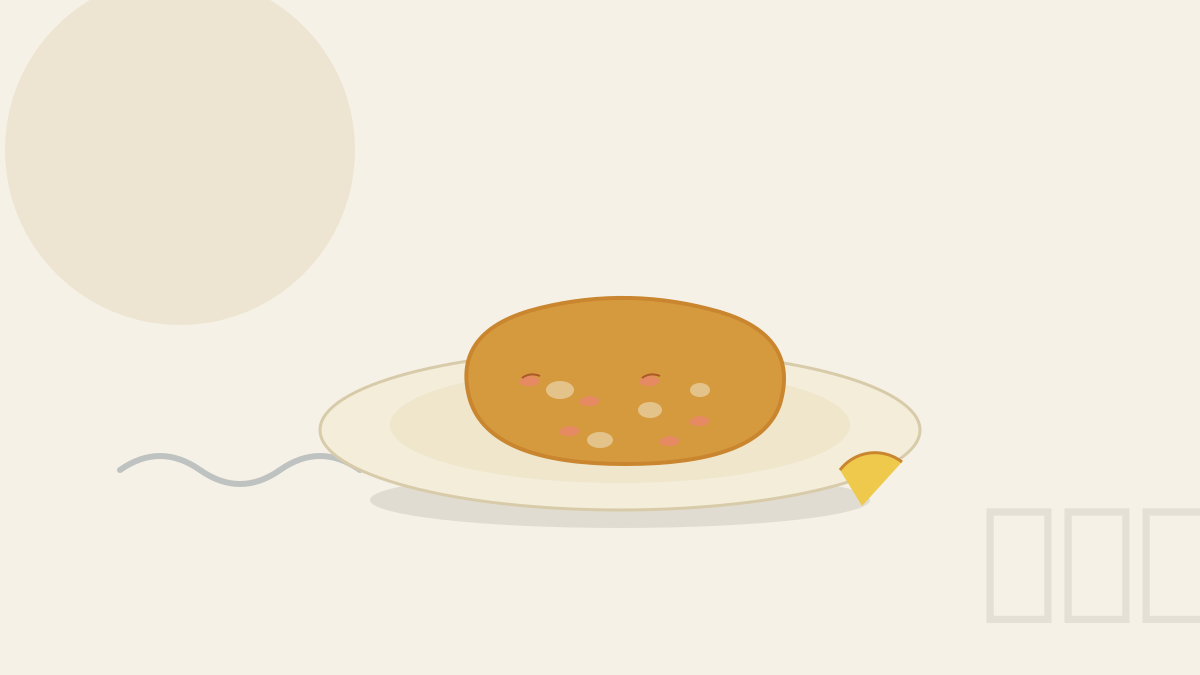
A lacy tempura fritter of Suruga Bay's tiny pink shrimp — the sakura ebi fishery discovered by accident in 1894 and found almost nowhere else on earth.
By Japanese Cookbook Kitchen · May 20, 2026
 居酒屋
居酒屋- Prep
- 15 min
- Cook
- 10 min
- Serves
- 4
- Level
- Intermediate
Sakura ebi are a Suruga Bay near-monopoly. The tiny translucent shrimp, pink as their cherry-blossom namesake, are commercially fished in almost no other water on the planet — a narrow strip off Shizuoka is effectively the whole harvest. The fishery itself has a date and an accident behind it: the story local records tell is of an aji fisherman off Yui in 1894 whose net sank deeper than intended and came up glowing with these creatures nobody had been landing. An accident, then a livelihood, then an emblem of Meiji-era Shizuoka's coast.
Kakiage is the dish that shows them off. Unlike the neat single pieces of standard tempura, kakiage binds a loose tangle of small ingredients into one craggy fritter with the barest film of batter — here, hundreds of whole shrimp suspended in a lacework that shatters when you bite it. The trick is restraint: ice-cold batter mixed until barely combined, a low ladle-slide into 170°C oil, and no fussing. Done well it fries up the color of the shrimp themselves, tastes of clean sweet shellfish and toasted flour, and needs nothing but a pinch of salt and a squeeze of Shizuoka lemon.
Cold batter, hot oil, and a barely-mixed lump — overwork the batter chasing a smooth coating and you get a dense pancake instead of the airy lattice that lets each shrimp stay crisp and separate.
板前の一言 · A word from the kitchen
Ingredients材料
Serves 4
Fritter
- 80 gdried or fresh sakura ebi — fresh is a Suruga Bay privilege; the dried ones rehydrate beautifully and are what most of us can actually buy
- 3 tbspmitsuba or thin-sliced onion
- 60 gcake flour
- 90 mlice-cold water
- 1egg yolk
- neutral oil for deep-frying — enough for 4 cm depth, held at 170°C
To serve
- sea salt or matcha salt
- lemon
Method作り方
Step 1: Prep the shrimp
If using dried sakura ebi, soak them in a little sake or water for 5 minutes and drain well; fresh need only a quick rinse and a thorough pat. Wet shrimp spit in the oil and slack the batter.
Step 2: Mix the batter cold
Whisk the egg yolk into the ice water, then dump in the flour and stir just a few strokes with chopsticks. Lumps are correct. A smooth batter means a heavy fritter.
Step 3: Fold and portion
Fold the shrimp and mitsuba through the batter so every piece is barely coated, then scoop loose mounds onto a slotted ladle or a square of parchment ready to slide.
Step 4: Fry at 170°C
Slide each mound gently into the oil, holding its shape for a few seconds before letting go. Fry 3 to 4 minutes, turning once, until pale gold and crackling; poke a few holes with a chopstick early so it fries through and lacy.
Step 5: Drain and salt
Lift onto a rack, not paper, so the underside stays crisp. Salt while hot and serve at once with lemon — kakiage waits for no one.
道具 · The tools
Equipment
Heavy pot / Dutch oven
厚手鍋Deep, heat-retentive, and stable — for deep-frying without temperature crashes and long simmers without scorching.
Shop on Amazon →Frying thermometer
温度計The difference between crisp karaage and greasy karaage is holding the oil at temperature — stop guessing.
Shop on Amazon →Cooking chopsticks (saibashi)
菜箸Long chopsticks for turning, plating, and beating eggs streaky — the Japanese kitchen’s default hand.
Shop on Amazon →
Equipment links are Amazon affiliate links. As an Amazon Associate we earn from qualifying purchases, at no cost to you. Disclosure.
Questions from the kitchen
Fresh or dried sakura ebi — does it matter?
Fresh is sweeter and more delicate, but it is essentially a Suruga Bay luxury and briefly seasonal. Dried sakura ebi are concentrated, keep forever, and make a genuinely excellent kakiage — most cooks outside Shizuoka will and should use them.
How do I get the lacy, open texture?
Three things: batter barely mixed and ice-cold, oil steady at 170°C, and a loose mound rather than a packed one. Drizzling a few extra drops of batter over the fritter in the oil throws off those signature crisp threads.
What do I serve it with?
Salt and lemon is the purist's answer and the best one. A small bowl of tentsuyu — dashi, soy, and mirin with grated daikon — is the other classic. Over hot rice it becomes a kakiage-don and a full meal.
次はこちら · Cook next
Keep the burner on
 居酒屋
居酒屋Izakaya · 25 min · Beginner
Gōya Chanpurūゴーヤーチャンプルー
Okinawa's bitter melon stir-fry with tofu, pork, and egg — the Ryūkyū Kingdom's everyday masterpiece, and the honest way to make peace with gōya.
 居酒屋
居酒屋Izakaya · 40 min · Beginner
Osaka Okonomiyakiお好み焼き
Osaka's cabbage-and-batter griddle cake with pork belly, sauce, and dancing katsuobushi — postwar street food perfected. Dashi in the batter is the difference.
 居酒屋
居酒屋Izakaya · 35 min · Intermediate
Chicken Karaage鶏の唐揚げ
Japanese fried chicken with a soy-ginger marinade, a potato-starch crust, and the double-fry that keeps it crackling — izakaya standard, home method.