Rafute
ラフテー
Pork belly braised to collapse in awamori, brown sugar, and soy — the Ryūkyū court dish served to Chinese envoys, and Okinawa's answer to dongpo pork.
By Japanese Cookbook Kitchen · May 6, 2026
沖縄 OkinawaRyūkyū Kingdom era, 1429–1879
 居酒屋
居酒屋- Prep
- 20 min
- Cook
- 150 min
- Serves
- 4
- Level
- Intermediate
When a Ryūkyūan king took the throne, China sent sappōshi — investiture envoys who sailed from Fujian, stayed at Shuri for half a year, and expected to be fed like the emperors they represented. The court kitchen rose to the occasion by mastering Chinese pork cookery and making it Ryūkyūan: belly braised in awamori, the island's own distilled spirit, sweetened with kokutō from the sugar culture that Gima Shinjō helped establish in the early 1600s. Rafute is dongpo pork after four centuries of island weather — softer-spoken, a little smokier with black sugar, and loyal to the pig from skin to bone.
After the kingdom fell in 1879 the dish walked out of the palace and into the home, where it settled in as the crown of celebration cooking. The method survives intact because it cannot be improved, only rushed: a patient pre-boil, a lazier braise, sugar before soy, and a night's rest in the pot. The result eats less like meat than like the memory of a banquet — which, strictly speaking, it is.
Rafute punishes impatience twice — once if you skip the pre-boil, again if you rush the braise. The skin should yield to a chopstick held sideways. If you need a knife, it needed another forty minutes.
板前の一言 · A word from the kitchen
Ingredients材料
Serves 4
- 800 gskin-on pork belly, in one slab — the skin is the point — it braises to a trembling, glassy softness. Skinless belly still works, but you'll know what you're missing
- 200 mlawamori — Okinawa's rice spirit; sake plus a spoonful of shōchū is a fair stand-in
- 60 gkokutō (Okinawan brown sugar), roughly crushed — dark muscovado is the closest substitute
- 80 mlsoy sauce
- 400 mlawase dashi
- 20 gfresh ginger, sliced
- 2scallions, green parts only
- karashi (hot mustard), to serve
Method作り方
Step 1: Pre-boil the belly
Cover the whole slab with cold water and simmer gently for 40 minutes, skimming. This renders the harshest fat and sets the meat so it slices cleanly. Keep 400 ml of the cooking liquid if you're short on dashi — the old cooks used it and so can you.
Step 2: Cut with intention
Cool slightly and cut into generous 5 cm squares, each with its cap of skin. Small cubes dry out; rafute is served in pieces that require both chopsticks and a decision.
Step 3: Build the braise
Lay the pieces skin-up in a single layer in a heavy pot. Add the awamori, dashi, ginger, and scallion greens, bring to a bare simmer, and cook 30 minutes with a drop-lid — a circle of parchment does the job.
Step 4: Sweet first, salt second
Add the kokutō and simmer 20 minutes before adding the soy sauce, then continue another 60 to 90 minutes at the laziest possible bubble. Sugar first lets sweetness penetrate before salt tightens the meat; reverse the order and the center stays stubborn.
Step 5: Rest and glaze
Let the pork cool in its liquid — overnight is ideal and the fat lifts off in a sheet. Reheat gently, reducing the sauce until it just coats a spoon, and serve glossy with a dab of karashi.
道具 · The tools
Equipment
Heavy pot / Dutch oven
厚手鍋Deep, heat-retentive, and stable — for deep-frying without temperature crashes and long simmers without scorching.
Shop on Amazon →Cooking chopsticks (saibashi)
菜箸Long chopsticks for turning, plating, and beating eggs streaky — the Japanese kitchen’s default hand.
Shop on Amazon →
Equipment links are Amazon affiliate links. As an Amazon Associate we earn from qualifying purchases, at no cost to you. Disclosure.
Questions from the kitchen
What's the connection to Chinese cuisine?
Direct and documented. The Ryūkyū Kingdom (1429–1879) was a tributary of China, and each new king's investiture brought sappōshi — imperial envoys from Fujian who stayed for months and had to be banqueted in style. The court kitchen at Shuri absorbed Fujian pork cookery wholesale, and rafute is the island cousin of dongpo pork, right down to the wine-and-sugar braise. Awamori simply took the place of Shaoxing.
Can I make it without awamori?
Yes — use sake, ideally stiffened with a spoonful of mugi shōchū for the spirit's warmth. The dish loses a certain island accent but keeps its soul. What you cannot skip is the alcohol altogether; it's doing real work tenderizing the skin and carrying the sugar into the meat.
Why did pork become Okinawa's meat when mainland Japan barely ate any?
Buddhist meat prohibitions that shaped the mainland's diet never took hold in the Ryūkyūs, and the China trade kept pigs, and pork technique, flowing in. By the kingdom's later centuries the saying was that Okinawan cuisine "begins with pork and ends with pork" — every part used, nothing wasted, rafute at the top of the table.
次はこちら · Cook next
Keep the burner on
 居酒屋
居酒屋Izakaya · 25 min · Beginner
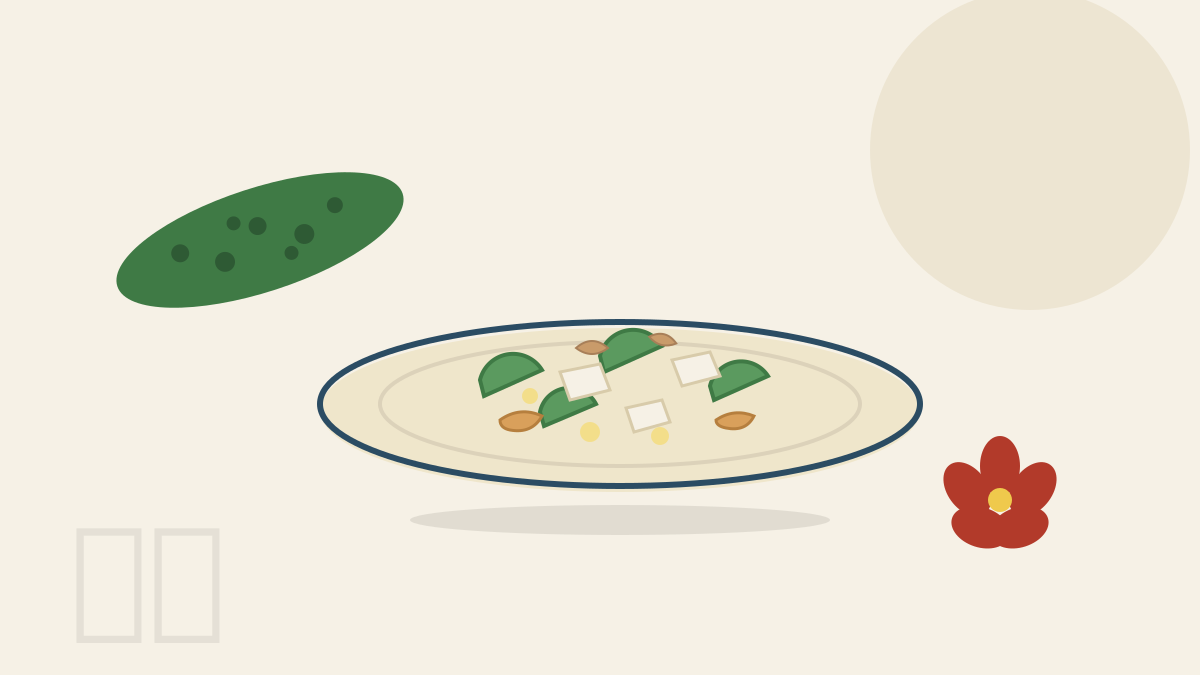
Gōya Chanpurūゴーヤーチャンプルー
Okinawa's bitter melon stir-fry with tofu, pork, and egg — the Ryūkyū Kingdom's everyday masterpiece, and the honest way to make peace with gōya.
 居酒屋
居酒屋Izakaya · 40 min · Beginner
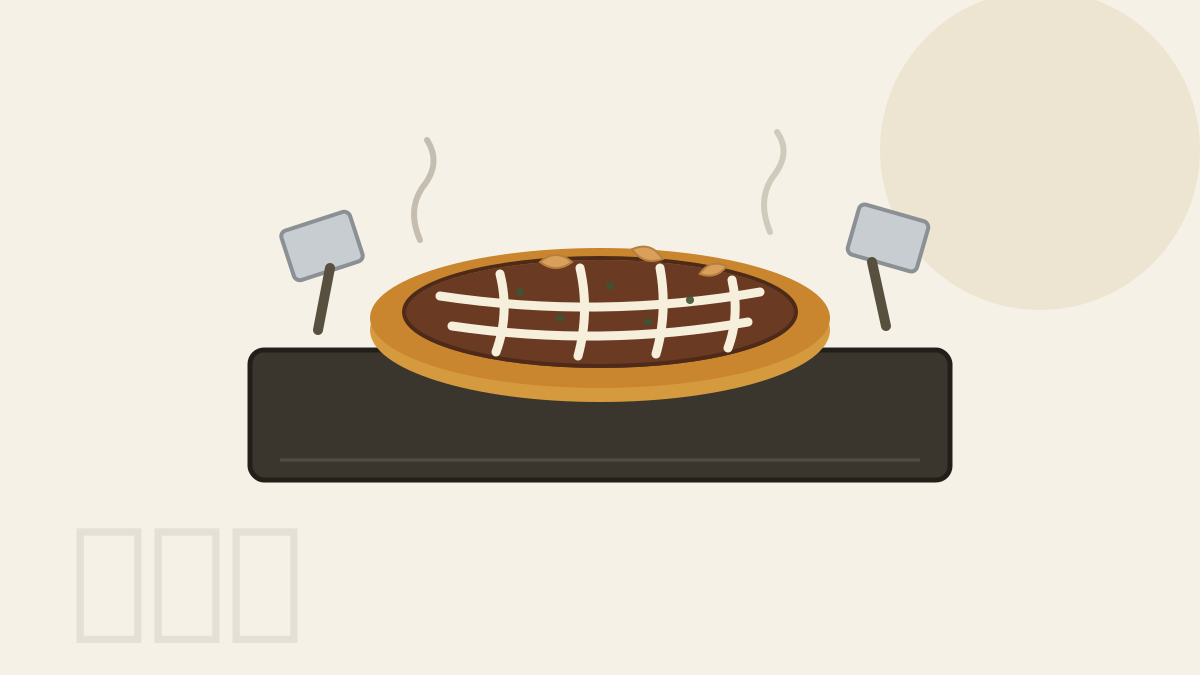
Osaka Okonomiyakiお好み焼き
Osaka's cabbage-and-batter griddle cake with pork belly, sauce, and dancing katsuobushi — postwar street food perfected. Dashi in the batter is the difference.
 居酒屋
居酒屋Izakaya · 35 min · Intermediate
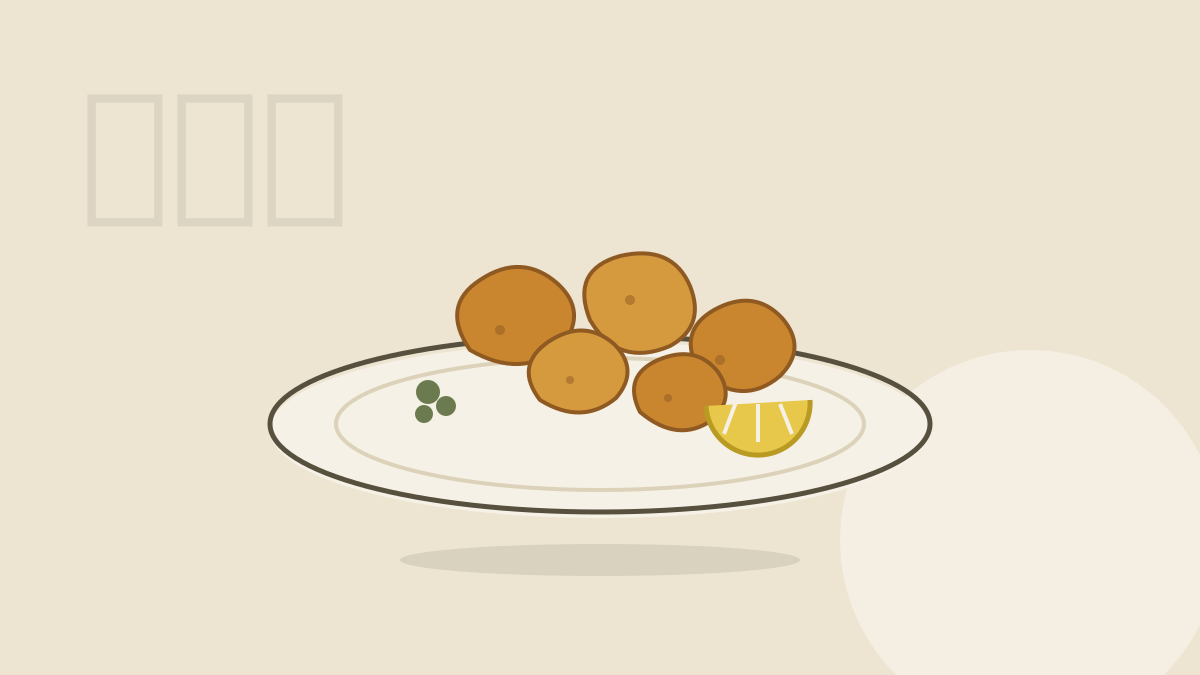
Chicken Karaage鶏の唐揚げ
Japanese fried chicken with a soy-ginger marinade, a potato-starch crust, and the double-fry that keeps it crackling — izakaya standard, home method.