Monjayaki
もんじゃ焼き
Tsukishima's runny griddle batter, scraped up with tiny steel spatulas — a Shōwa-era penny-candy-shop snack that grew into Tokyo's messiest and most sociable dinner.
By Japanese Cookbook Kitchen · June 2, 2026
 居酒屋
居酒屋- Prep
- 15 min
- Cook
- 15 min
- Serves
- 2
- Level
- Beginner
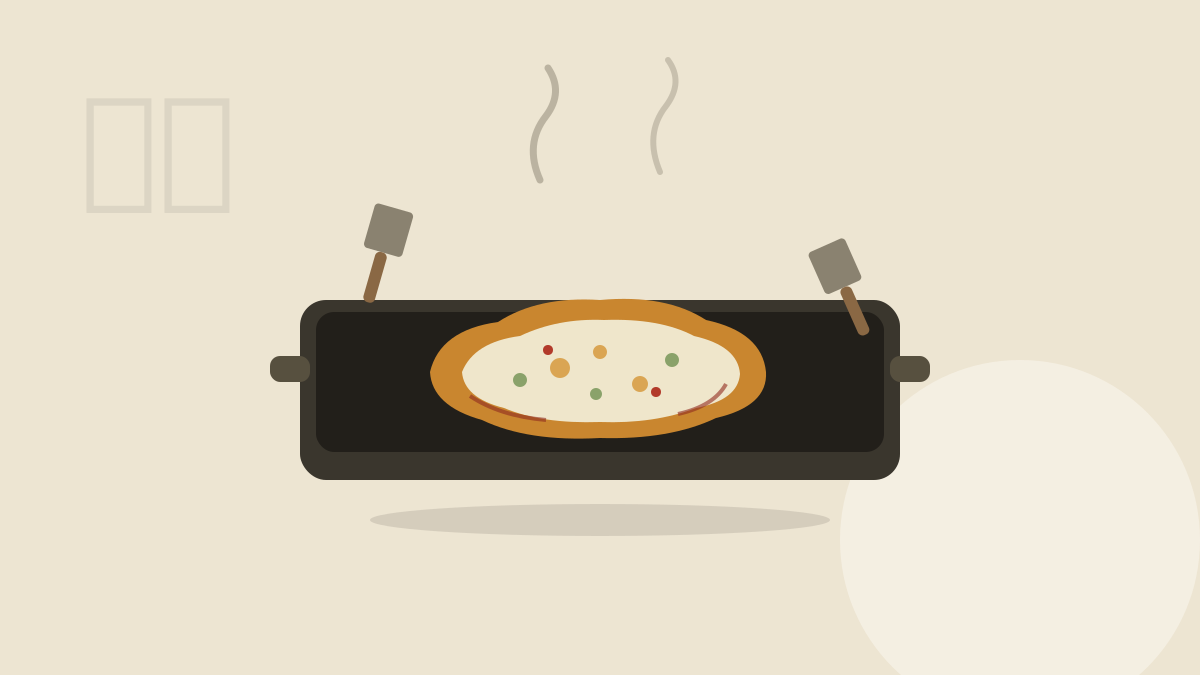
Tsukishima is landfill — a river-mouth island raised in 1892 from Sumida dredgings — and monjayaki is what its children made of cheap flour. Through the Shōwa decades, the island's dagashi-ya sold penny candy up front and griddle time in back, where kids thinned flour with water and sauce, drew characters on the hot steel, and scraped them up as they browned. The snack grew up with the neighborhood: cabbage first, then pork, mochi, cheese, mentaiko, until Nishinaka-dōri had rebranded itself Monja Street, seventy-odd shops deep.
Cooking it is gloriously counterintuitive. The batter is thinner than crêpe batter, the "dam" of fried cabbage exists to be breached, and success looks like well-managed lava. What you're chasing is the okoge — the lacy, sauce-dark crust that forms wherever the batter sits — lifted one small spatula-press at a time. A lemon sour on the side is the local pairing, for reasons Tsukishima considers self-evident.
Monja is eaten straight off the griddle, crisp edge by crisp edge, over twenty minutes of talking. If you plate it like a pancake you have made a mistake, and also a soup.
板前の一言 · A word from the kitchen
Ingredients材料
Serves 2
Batter
- 50 gplain flour
- 400 mlwater
- 3 tbspWorcestershire-style sauce — Japanese usutā sauce if you can get it; it carries the seasoning
- 1 tspinstant dashi granules — or replace half the water with strong awase dashi
Solids
- 300 gcabbage, chopped small
- 80 gthin pork belly slices, cut into ribbons — or sakura shrimp for the classic dagashi-ya flavor
- 4 tbsptenkasu — tempura crumbs; the fat and crunch are structural, don't skip
- 2 tbspbenishōga, chopped
- 1 handfulshredded cheese or 1 small mochi, diced — optional but beloved additions, mochi-mentai-cheese being the modern Tsukishima flagship
- aonori and katsuobushi, to finish
Method作り方
Step 1: Mix a batter that worries you
Whisk the flour, water, sauce, and dashi granules until smooth. It will look like thin gravy — far too liquid to become food. That is correct; monja never sets, it reduces.
Step 2: Fry the solids first
Oil a hot griddle or wide flat pan over medium-high heat. Fry the pork until it starts to crisp, then add the cabbage, tenkasu, and benishōga and cook 2 minutes until the cabbage slumps.
Step 3: Build the dam
Push the solids into a ring — a doughnut with a griddle-bare center. This is the dote, the levee. Its job is to hold the flood you are about to release.
Step 4: Pour and breach
Pour the batter into the center in two additions, letting the first bubble and thicken a minute before the second. When it goes from watery to lava-thick, break the walls and chop everything together into a loose, bubbling sludge. Add cheese or mochi now.
Step 5: Spread thin and graze
Spread the mixture out and let it sit until the bottom crisps at the edges. Shower with aonori and katsuobushi and eat directly from the griddle, pressing small spatulafuls flat to catch a lacy crust on each bite.
道具 · The tools
Equipment
Flat griddle / teppan
鉄板A wide flat surface for okonomiyaki, monjayaki, and yakisoba — cast iron or an electric hot plate.
Shop on Amazon →
Equipment links are Amazon affiliate links. As an Amazon Associate we earn from qualifying purchases, at no cost to you. Disclosure.
Questions from the kitchen
Where does the name come from?
From monji, "written characters." At Shōwa-era dagashi-ya — penny-candy shops with a griddle in the corner — children drew letters on the hot plate with the runny batter and ate their homework. Monji-yaki softened into monja.
How is monja different from okonomiyaki?
Okonomiyaki is a proper pancake that flips and plates; monja is a deliberately loose batter that never sets and is eaten off the griddle with tiny spatulas. Kansai perfected the former, Tokyo's shitamachi claims the latter, and both sides enjoy pretending the other doesn't exist.
I don't have a teppan. Can this work?
A large flat skillet or electric griddle at the table works, cast iron ideally. What you cannot do is cook it in the kitchen and carry it out — half the dish is the crust that forms while you eat, and the other half is the arguing over it.
次はこちら · Cook next
Keep the burner on
 居酒屋
居酒屋Izakaya · 25 min · Beginner
Gōya Chanpurūゴーヤーチャンプルー
Okinawa's bitter melon stir-fry with tofu, pork, and egg — the Ryūkyū Kingdom's everyday masterpiece, and the honest way to make peace with gōya.
 居酒屋
居酒屋Izakaya · 40 min · Beginner
Osaka Okonomiyakiお好み焼き
Osaka's cabbage-and-batter griddle cake with pork belly, sauce, and dancing katsuobushi — postwar street food perfected. Dashi in the batter is the difference.
 居酒屋
居酒屋Izakaya · 35 min · Intermediate
Chicken Karaage鶏の唐揚げ
Japanese fried chicken with a soy-ginger marinade, a potato-starch crust, and the double-fry that keeps it crackling — izakaya standard, home method.