Momiji Manjū
もみじ饅頭
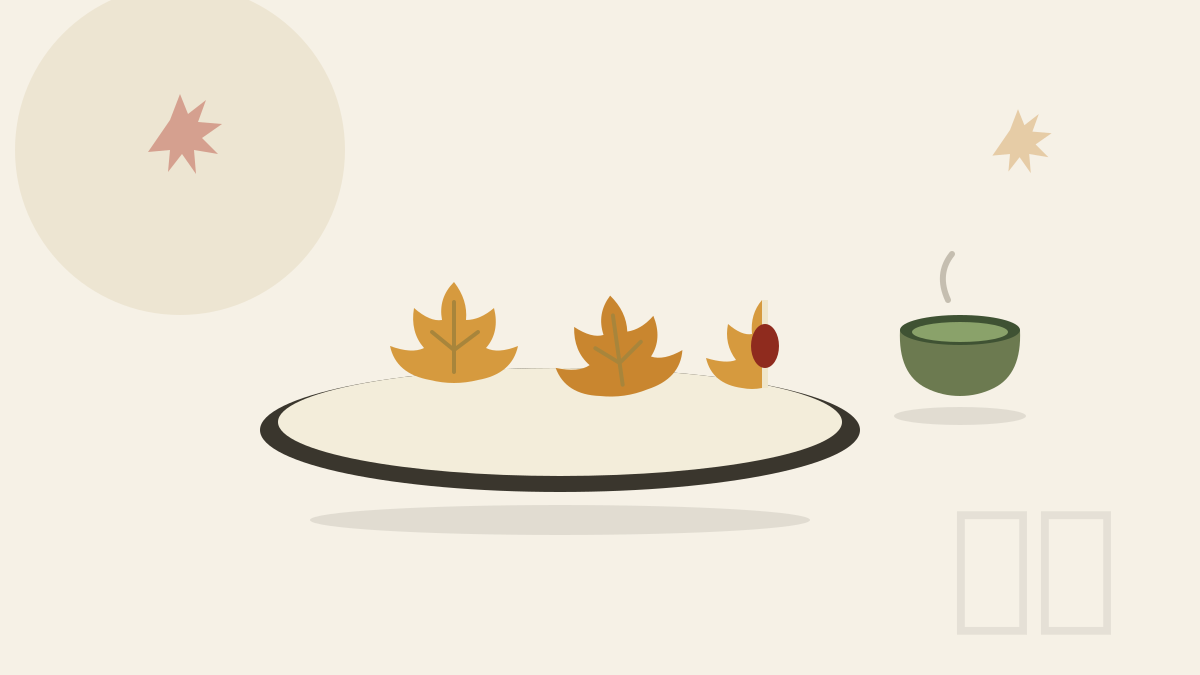
Miyajima's maple-leaf cakes — castella batter molded into momiji leaves around a heart of anko, a Meiji-era souvenir that became Hiroshima's sweetest export.
By Japanese Cookbook Kitchen · May 21, 2026
中国 ChūgokuMeiji era, 1868–1912
 甘味
甘味- Prep
- 20 min
- Cook
- 25 min
- Serves
- 4
- Level
- Intermediate
Miyajima's maple valley, Momijidani, turns incandescent every November, and by the Meiji era the island — shrine, deer, and leaves — was one of Japan's most photographed destinations. Around 1906, a confectioner named Takatsu Tsunesuke, who baked for the island's tea houses and inns, pressed a castella-style batter into a mold carved like a momiji leaf and tucked red bean paste inside. The cake was cheap to make, sturdy enough to survive the ferry, and shaped like the very reason people came. It may be the most perfectly engineered souvenir in Japanese confectionery.
The famous origin tale is better than the truth, so islanders keep it: the story goes that Itō Hirobumi, Japan's first prime minister and a frequent Miyajima visitor, teased a tea-house girl that her lovely hands would be delicious baked like maple leaves — and a listening confectioner took notes. Label that one legend and enjoy it anyway. The cake itself is honest: a thin, honeyed sponge from the castella lineage, a heart of smooth anko, and a shape that does half the flavor's work before you take a bite.
Without the hinged leaf mold, a madeleine pan is your friend — the shell shape is wrong but the scallops are right. What matters is a thin, tender crumb hugging the anko, not a leaf-shaped brick.
板前の一言 · A word from the kitchen
Ingredients材料
Serves 4
Castella batter
- 2eggs
- 80 gsugar
- 2 tbsphoney
- 100 gcake flour
- 1 tspbaking powder
- 2 tbspmilk
- 20 gbutter, melted — the Meiji original used none, but nearly every modern Miyajima shop adds a little fat for keeping quality
Filling
- 200 gkoshian (smooth red bean paste) — tsubuan works if you prefer texture; chill it firm so it portions cleanly
Method作り方
Step 1: Portion the anko first
Roll the bean paste into 25 g balls, flatten slightly, and chill. Cold anko holds its shape while the batter flows around it — soft anko smears and breaks through the crumb.
Step 2: Make a honest sponge batter
Whisk eggs and sugar until pale and ribboned, then whisk in honey and milk. Fold in the sifted flour and baking powder, then the melted butter, and rest 15 minutes. This is castella lineage — the Portuguese sponge Japan adopted in Nagasaki — so keep the mixing light.
Step 3: Heat and grease the mold
Heat a maple mold, madeleine pan, or small round waffle iron over medium and brush with neutral oil. The batter should sizzle faintly on contact; silent batter means pale, gummy cakes.
Step 4: Fill, seat, and cap
Spoon batter to fill each cavity a third, seat a disc of anko in the center, and cover with more batter just to the rim. In a stovetop mold, close and flip every 90 seconds; in the oven, bake at 180°C for 11–13 minutes until golden at the edges.
Step 5: Cool before judging
Turn out onto a rack and wait ten minutes. The crumb sets and the honey aroma comes forward as it cools — a momiji manjū straight from the iron always tastes underdone, and it's lying to you.
Questions from the kitchen
Where does the maple-leaf shape come from?
Momijidani, the maple valley behind Itsukushima Shrine, has been a leaf-viewing destination for centuries. Around 1906, Takatsu Tsunesuke, a confectioner supplying Miyajima's inns, molded a castella-anko cake in the shape of the valley's famous leaves, and the island had its souvenir.
Is the Itō Hirobumi story true?
Almost certainly a legend, and a cheerfully repeated one. The story goes that the elder statesman, taking tea on Miyajima, joked that a tea-house girl's pretty hands looked like maple leaves and would be delicious baked — inspiring the cake's shape. There's no documentation, but no shop on the island will let the tale die, either.
What fillings are traditional?
Smooth koshian is the original and still the benchmark. Everything else — chocolate, cheese, custard, matcha, and the deep-fried age-momiji — arrived in the postwar tourist boom. They're fun, but taste the plain anko one first; the cake was engineered around it.
次はこちら · Cook next
Keep the burner on
 甘味
甘味Sweets & Wagashi · 45 min · Beginner
Matcha Basque Cheesecake抹茶バスクチーズケーキ
The burnt Basque cheesecake that conquered Reiwa-era Japan, rebuilt with ceremonial matcha — scorched top, molten center, and green-tea bitterness doing the work of coffee.
 甘味
甘味Sweets & Wagashi · 60 min · Beginner
Aomori Baked Apples焼きりんご
Aomori Fuji apples baked with butter and honey until collapsing and caramelized — a Meiji-era orchard sweet from Japan's apple country, warm from the oven.
 甘味
甘味Sweets & Wagashi · 35 min · Beginner
Dorayakiどら焼き
Honey-sweet pancake sandwiches filled with red bean paste — a beloved wagashi you can make in a skillet, plus a quick anko from canned azuki.