Miso Nikomi Udon
味噌煮込みうどん
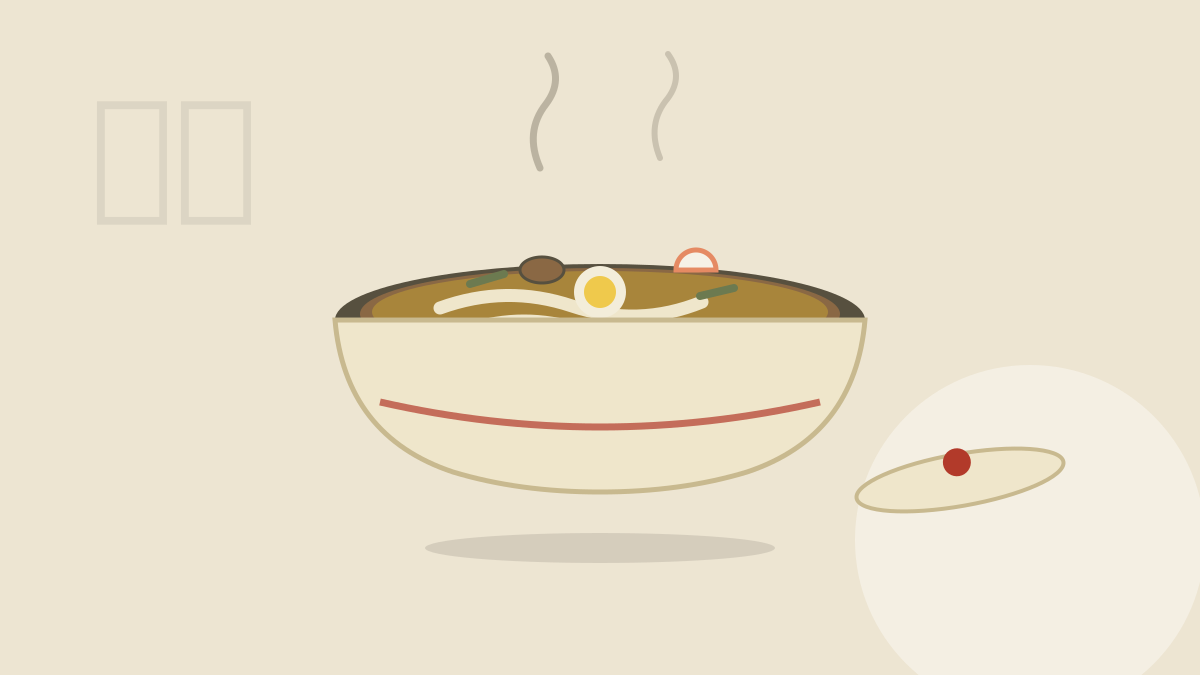
Nagoya's donabe udon simmered raw in hatchō miso broth — salt-free noodles, deliberately firm, cooked and served in the same clay pot with its lid as a plate.
By Japanese Cookbook Kitchen · May 14, 2026
 鍋
鍋- Prep
- 45 min
- Cook
- 20 min
- Serves
- 2
- Level
- Intermediate
One theory traces miso nikomi udon back to hōtō, carried into the Owari plain from Takeda country after the Sengoku wars — a good story with thin paperwork. What is certain is that the dish as Nagoya knows it took shape in the Meiji era, when noodle shops around the city began simmering salt-free udon directly in broth built on hatchō miso, the soybean-only miso aged under river stones in Okazaki since the Edo period. Yamamoto-ya Honten, founded in 1907, still serves it the canonical way: one donabe per person, arriving at a violent simmer.
Everything about the dish is deliberate. No salt in the dough, so the noodles can cook in the soup; raw flour on their surface, so the broth thickens to a gloss; a clay pot, so nothing cools before you finish. The noodles keep a firm core that surprises outsiders and delights locals. Nagoya does not soften things for company.
The noodles are supposed to be firm — shin ga aru, with a core. First-timers send them back in Nagoya thinking they're undercooked. They are not. Trust the pot.
板前の一言 · A word from the kitchen
Ingredients材料
Serves 2
Noodles
- 200 gall-purpose flour — no salt whatsoever — this is the whole point, and why the noodles can simmer in the broth without wrecking it
- 95 mlwater
Broth and toppings
- 900 mlawase dashi — made a shade stronger than usual; the miso will lean on it
- 70 ghatchō miso
- 1 tbspmirin
- 1 tspsugar
- 150 gchicken thigh, in bite-size pieces
- 2fresh shiitake, halved
- 1/2negi, cut on the diagonal
- 2 sliceskamaboko — optional, but traditional
- 2eggs
- 2aburaage, halved and blanched
Method作り方
Step 1: Make a hard dough
Mix flour and water — no salt — into a stiff, reluctant dough, knead it as far as your patience allows, and rest it 30 minutes under a bowl. It will fight you more than any salted udon dough; that stiffness becomes the famous chew.
Step 2: Roll and cut thick
Roll to 4 mm, a little thicker than looks right, and cut into 5 mm ribbons. Dust generously. These noodles go into the pot raw, so keep them well separated.
Step 3: Build the broth in the donabe
Bring the dashi to a simmer in a donabe, dissolve the hatchō miso through a strainer, and season with mirin and sugar. It should taste strong on its own — deep, sweet-edged, almost too much. The noodles will dilute and thicken it simultaneously.
Step 4: Simmer everything together
Add chicken and shiitake, then lower in the raw noodles and simmer uncovered for 8 minutes, loosening them once. The raw flour clouds the broth and turns it glossy — in Nagoya that body is the signature, not a flaw.
Step 5: Crack the egg, lid on
Add negi, aburaage, and kamaboko, crack an egg into the center of each pot, lid on, and give it 90 seconds — the white should just set, the yolk still liquid. Serve in the donabe, using the lid as your plate, the way every nikomi restaurant in Nagoya does.
道具 · The tools
Equipment
Donabe
土鍋The clay hot-pot that makes nabemono taste like nabemono — a gentle, even simmer that carries straight to the table.
Shop on Amazon →
Equipment links are Amazon affiliate links. As an Amazon Associate we earn from qualifying purchases, at no cost to you. Disclosure.
Questions from the kitchen
Why is there no salt in the noodle dough?
Ordinary udon dough is heavily salted and must be boiled separately to shed it. Salt-free dough can cook directly in the miso broth without turning it briny — the noodle seasons in the soup while its surface starch thickens it. One decision, three consequences; it's tidy engineering.
Are the noodles supposed to be this firm?
Yes. Miso nikomi udon is famous — locally, proudly — for noodles with a distinct core. The salt-free, low-hydration dough never develops the slippery bounce of Sanuki udon, and it isn't trying to. Yamamoto-ya Honten, the Nagoya institution founded in 1907, has spent over a century telling startled visitors the noodles are not undercooked.
Can I use a regular saucepan instead of a donabe?
It will taste close and feel wrong. The donabe holds ferocious heat, keeps the broth at a rolling burble to the last bite, and comes to the table as the serving vessel — lid inverted as a small plate for cooling each mouthful. A heavy enameled pot is the nearest honest substitute.
次はこちら · Cook next
Keep the burner on
 鍋
鍋Nabemono & Soups · 45 min · Beginner
Ishikari Nabe石狩鍋
Hokkaidō's salmon and miso hot pot, born on the Ishikari River in the Meiji fishing boom — sweet corn, potatoes, and a knob of butter at the end.
 鍋
鍋Nabemono & Soups · 55 min · Beginner
Imoni芋煮
Yamagata's taro and beef stew, simmered in soy and sake — the dish an entire prefecture cooks together on riverbanks every autumn since Edo times.
 鍋
鍋Nabemono & Soups · 65 min · Intermediate
Hōtōほうとう
Yamanashi's wide flat noodles simmered straight in miso broth with kabocha — the one-pot field ration that fed Takeda Shingen's armies in the Sengoku era.