Miso Katsu
味噌カツ
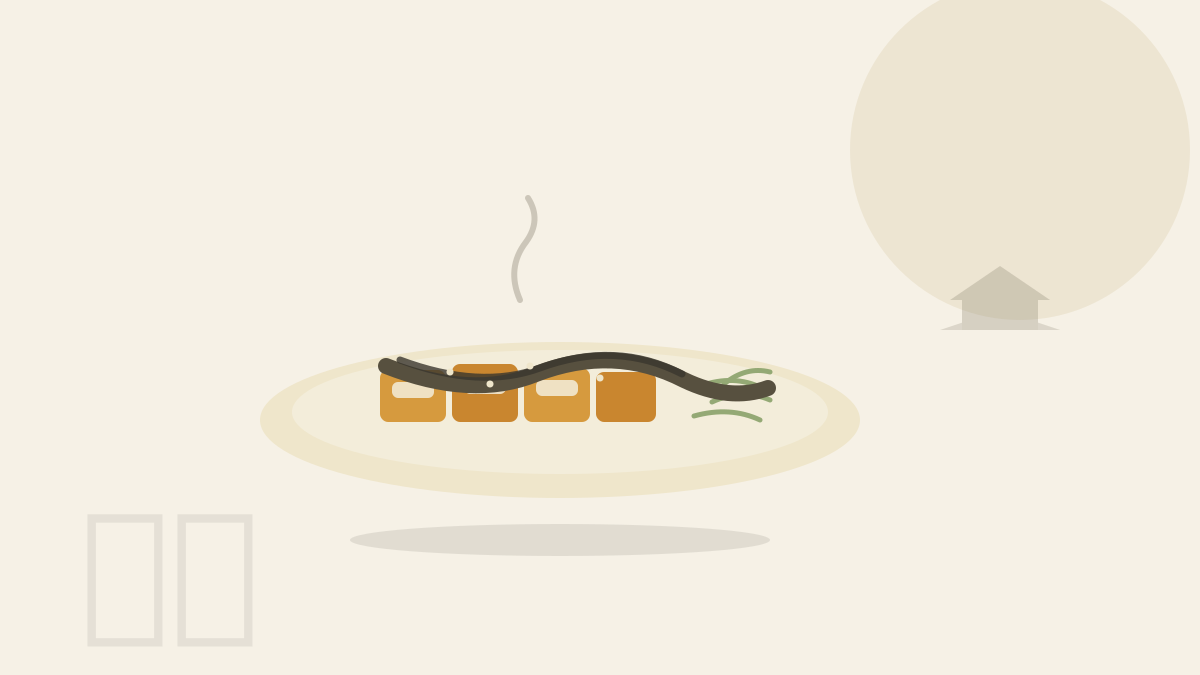
Nagoya's tonkatsu under a glossy hatchō miso sauce — Okazaki's centuries-old soybean miso turned into the Shōwa era's definitive breaded pork cutlet.
By Japanese Cookbook Kitchen · May 3, 2026
 居酒屋
居酒屋- Prep
- 20 min
- Cook
- 25 min
- Serves
- 4
- Level
- Intermediate
Nagoya cooks from a different pantry than the rest of Japan, and the reason sits eight chō — about 870 meters — from the gate of Okazaki Castle. There, in the neighborhood called Hatchō, two breweries have made soybean-only miso since the Edo period, aging it in vast cedar vats under pyramids of river stones for two summers and more. The result is dark, dense, faintly bitter, built for the humid Mikawa climate. When the breaded pork cutlet arrived in the twentieth century, Nagoya looked at Worcestershire-style tonkatsu sauce and politely declined.
The origin legend — a stall customer dunking a kushikatsu skewer into a pot of simmering miso stew sometime after the war — is exactly that, a legend. The technique, though, is real and learnable: a sauce of hatchō miso, sugar, mirin, and dashi cooked to a slow-falling gloss, poured over a properly fried cutlet on cold shredded cabbage. Sweet, deep, a little defiant. Like the city, honestly.
The sauce should coat a spoon and fall off it slowly. If it tightens into fudge, loosen it with dashi a tablespoon at a time — hatchō miso seizes fast once the sugar goes in.
板前の一言 · A word from the kitchen
Ingredients材料
Serves 4
Miso sauce
- 100 ghatchō miso — the aged, soybean-only miso of Okazaki; a dark red miso works but tastes brighter and less bass-heavy
- 60 gsugar
- 3 tbspmirin
- 150 mlawase dashi
- 1 tbsptoasted white sesame, half-ground
Cutlets
- 4pork loin cutlets, about 150 g each — rōsu, with the fat cap left on and scored so it doesn't curl
- fine salt and white pepper
- 50 gflour
- 2eggs, beaten
- 120 gpanko
- 1 Lneutral oil, for frying
- 1/4 headcabbage, shredded very fine
Method作り方
Step 1: Make the sauce first
Whisk the miso, sugar, mirin, and dashi in a small pan over low heat until glossy and just thick enough to coat a spoon, about 5 minutes. Hatchō miso is stubborn — keep whisking until every dark fleck dissolves, then stir in the sesame and hold it warm.
Step 2: Prepare the pork
Snip through the silverskin between fat and lean at 2 cm intervals so the cutlets fry flat, then season both sides with salt and white pepper. Let them lose their fridge chill while the oil heats.
Step 3: Bread the cutlets
Flour, egg, panko, in that order, pressing the panko on with an open palm rather than a grip. A ragged coat fries lacier than a compacted one.
Step 4: Fry at 170°C
Fry two cutlets at a time for 5 to 6 minutes, turning once, until deep gold and the bubbles around them quiet down. Drain them standing on edge — flat on paper steams the crust you just built.
Step 5: Rest, slice, sauce
Rest 3 minutes, slice into 2 cm bars, and reassemble on a bed of shredded cabbage. Spoon the warm miso sauce generously across the middle, leaving the ends bare so the crunch has somewhere to live.
Questions from the kitchen
What exactly is hatchō miso?
A miso made from soybeans and salt alone — no rice, no barley — aged two summers and more in cedar vats weighted with river stones. It has been made in Hatchō, the "eighth block" from Okazaki Castle in Aichi, since the Edo period, and its dark, almost cocoa-like depth is the spine of all Nagoya cooking.
Can I just use the miso in my fridge?
If it's a red miso, yes, with adjustments — use a little less sugar and expect a sharper, saltier sauce. A pale sweet miso will give you something pleasant but unrecognizable as miso katsu. The dish is the miso; the pork is the delivery system.
Where did miso katsu come from?
The favorite story has a customer at a post-war Nagoya street stall dipping a fried kushikatsu skewer into a bubbling pot of miso dote-ni — and a genre being born on the spot. It's a legend, unverifiable and beloved. What's documented is that by the high Shōwa years the dish was on menus across the city, and Nagoya had stopped apologizing for it.
次はこちら · Cook next
Keep the burner on
 居酒屋
居酒屋Izakaya · 25 min · Beginner
Gōya Chanpurūゴーヤーチャンプルー
Okinawa's bitter melon stir-fry with tofu, pork, and egg — the Ryūkyū Kingdom's everyday masterpiece, and the honest way to make peace with gōya.
 居酒屋
居酒屋Izakaya · 40 min · Beginner
Osaka Okonomiyakiお好み焼き
Osaka's cabbage-and-batter griddle cake with pork belly, sauce, and dancing katsuobushi — postwar street food perfected. Dashi in the batter is the difference.
 居酒屋
居酒屋Izakaya · 35 min · Intermediate
Chicken Karaage鶏の唐揚げ
Japanese fried chicken with a soy-ginger marinade, a potato-starch crust, and the double-fry that keeps it crackling — izakaya standard, home method.