Kushikatsu
串カツ
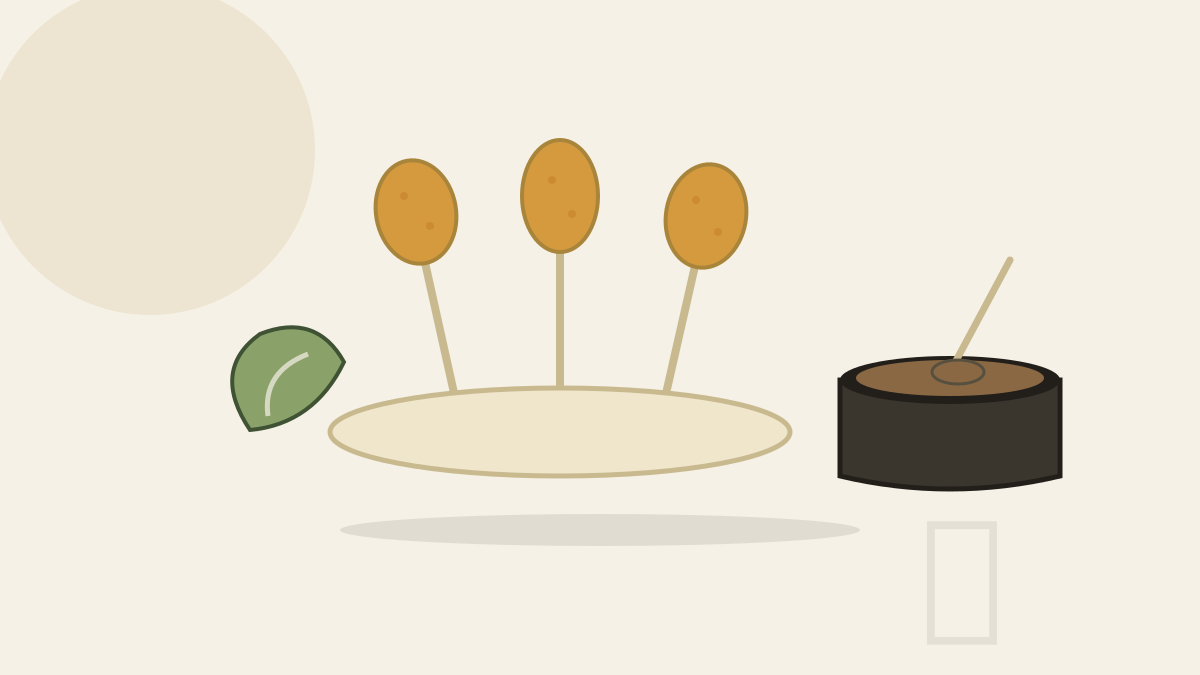
Shinsekai's breaded skewers, born feeding Osaka's day laborers — fine panko, a thin Worcestershire-style sauce for dunking, and one iron law of the vat.
By Japanese Cookbook Kitchen · May 28, 2026
 居酒屋
居酒屋- Prep
- 30 min
- Cook
- 20 min
- Serves
- 4
- Level
- Intermediate
Kushikatsu belongs to Shinsekai, the "New World" — the amusement district that grew up around Osaka's Tsūtenkaku tower and then grew poorer with it through the early Shōwa years. The dish's usual origin claim sits at Daruma, a stall founded there in 1929, which says its founder started threading cheap beef scraps on skewers, breading them fine, and frying them fast for the day laborers of the Janjan Yokochō alley — men who needed something hot, filling, and eatable with one hand between shifts. Whoever fried first, the format is pure worker economics: one coin, one stick, a communal vat of thin sauce, and free cabbage to stretch the meal.
The technique is all restraint. Thin batter, the finest panko, a quick fry to pale gold — the crust is a veil over the beef or prawn or lotus root, not armor around it. And then the famous law: nido-zuke kinshi, no double dipping, born of shared-vat hygiene and enforced with signage, side-eye, and civic pride. Fry a full procession of skewers, put the sauce in the deepest vessel you own, and observe the rule at home purely for the pleasure of having rules. Cold beer is not optional in any meaningful sense.
The batter should be thin enough to see the food through, and the panko should be the finest you can find — pulse regular panko in a blender if you must. Kushikatsu wears a veil, not a winter coat.
板前の一言 · A word from the kitchen
Ingredients材料
Serves 4
To skewer
- 300 gbeef chuck, in 2.5 cm cubes — beef is the original and the benchmark — gyū-katsu is what the word kushikatsu meant first
- 8raw prawns, peeled
- 1onion, in thick wedges
- 8 sliceslotus root, 1 cm thick
- 8quail eggs, boiled and peeled
- 16bamboo skewers, 15 cm
Batter & crumb
- 100 gplain flour
- 1egg
- 180 mlcold water
- 150 gfine panko
- 1 Lneutral oil, for frying
The sauce & the table
- 150 mlWorcestershire-style sauce — Japanese usutā sōsu if you can get it; dilute English Worcestershire with a splash of dashi and a pinch of sugar if not
- 2 tbspketchup
- 1 tbspmirin
- ¼ headpointed or white cabbage, cut in wide petals
Method作り方
Step 1: Skewer everything
Thread each item onto its own skewer — one ingredient per stick, pushed down so it sits snug near the point. Uniform, modest pieces are the goal; kushikatsu is a procession of small fried things, not a kebab.
Step 2: Mix the sauce and chill it
Stir the Worcestershire-style sauce, ketchup, and mirin together and refrigerate. It should be thin, dark, fruity-sharp — closer to a dip than a glaze. In Shinsekai it lives in a communal stainless vat on every table, and thinness is what lets it coat in one pass.
Step 3: Batter thin, crumb fine
Whisk the flour, egg, and cold water into a thin batter. Dip each skewer, let the excess run off, then roll in fine panko, pressing nothing. A thick crust is the mark of a tourist trap in Osaka — the crumb should shatter, not crunch.
Step 4: Fry in relays
Heat the oil to 175°C. Fry the skewers a few at a time — vegetables and quail eggs about 2 minutes, prawns 2 minutes, beef 2 to 3 — until pale gold, not mahogany. Drain standing upright in a jar or rack if you can; flat draining softens the underside.
Step 5: Serve with the law observed
Pour the sauce into a deep vessel and announce the rule — each skewer gets dipped once, before the first bite, and never again. Between rounds, scoop sauce with a petal of raw cabbage instead. That is not a workaround; it is the system working as designed.
道具 · The tools
Equipment
Frying thermometer
温度計The difference between crisp karaage and greasy karaage is holding the oil at temperature — stop guessing.
Shop on Amazon →
Equipment links are Amazon affiliate links. As an Amazon Associate we earn from qualifying purchases, at no cost to you. Disclosure.
Questions from the kitchen
What is the no-double-dipping rule actually about?
Hygiene, from the days when every table shared one sauce vat that was topped up, not replaced. Dipping a bitten skewer put your dinner in the next customer's. The rule — nido-zuke kinshi — became Shinsekai scripture, posted on walls in several languages. At home with your own sauce you may of course dip freely, but where's the theater in that.
Why is there raw cabbage on the table?
Three jobs: it cools the palate between fried things, it is free and bottomless in most shops, and — crucially — its wide leaves are the only sanctioned way to get more sauce onto a bitten skewer. Spoon sauce with cabbage, drizzle, continue.
Is this the same as kushiage?
Functionally yes — kushiage is the more common word in Tokyo and in upscale restaurants, kushikatsu the word in Osaka, where the dish is cheap, loud, and eaten standing up or close to it. Some shops draw fine distinctions about batter and breading; the deep-fryer does not.
次はこちら · Cook next
Keep the burner on
 居酒屋
居酒屋Izakaya · 25 min · Beginner
Gōya Chanpurūゴーヤーチャンプルー
Okinawa's bitter melon stir-fry with tofu, pork, and egg — the Ryūkyū Kingdom's everyday masterpiece, and the honest way to make peace with gōya.
 居酒屋
居酒屋Izakaya · 40 min · Beginner
Osaka Okonomiyakiお好み焼き
Osaka's cabbage-and-batter griddle cake with pork belly, sauce, and dancing katsuobushi — postwar street food perfected. Dashi in the batter is the difference.
 居酒屋
居酒屋Izakaya · 35 min · Intermediate
Chicken Karaage鶏の唐揚げ
Japanese fried chicken with a soy-ginger marinade, a potato-starch crust, and the double-fry that keeps it crackling — izakaya standard, home method.