Ika Sōmen
イカソーメン
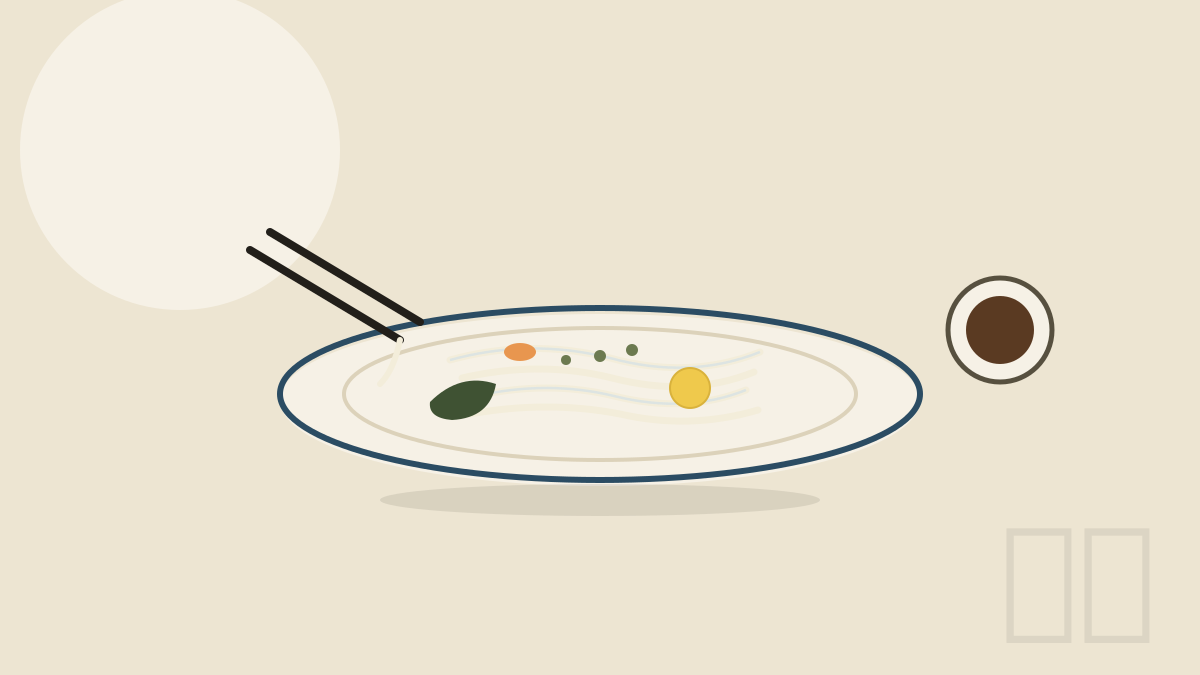
Hakodate's morning-market ritual — spanking-fresh squid sliced into translucent noodles and eaten like sōmen with ginger soy. A knife-work lesson on one plate.
By Japanese Cookbook Kitchen · June 5, 2026
北海道 HokkaidōShōwa era, 1926–1989
 居酒屋
居酒屋- Prep
- 20 min
- Cook
- 0 min
- Serves
- 2
- Level
- Intermediate
Hakodate opened to foreign trade in 1859, but its real fortune swims past the city every summer: surume-ika, the Japanese flying squid, in shoals that made the port Japan's squid capital. The fleet fishes at night under banks of lights you can see from the mountaintop, and the morning market sells squid so fresh they're still changing color. Ika sōmen as a named dish — squid cut into strands and slurped like the wheat noodles it puns on — spread from Hakodate's market stalls and restaurants in the Shōwa years, and eating it over ice remains the city's standard summer breakfast.
This is the rare recipe where nothing is cooked and everything is technique. The strands must be cut along the body's length in single pulling strokes, cold and dry, on a board you've wiped twice. Done right, the squid turns from opaque to glass, sweet and faintly crisp, needing only ginger soy and maybe an egg yolk. It's knife practice disguised as breakfast, and Hakodate has been doing its morning drills for a century.
A long, sharp blade and one pulling stroke per cut — never a saw. Squid cut in a single motion stays glassy and snaps pleasantly; squid sawed through goes ragged and dull before it reaches the plate.
板前の一言 · A word from the kitchen
Ingredients材料
Serves 2
- 2very fresh squid, sashimi grade — surume-ika is the Hakodate species; ask your fishmonger for sashimi-grade, or buy cleaned sashimi squid and skip the butchery
- 4 tbspsoy sauce
- 1 tbspgrated ginger
- 1egg yolk or quail egg — optional, for the dipping sauce, Hakodate-style
- finely sliced negi
- shiso leaves — to line the plate
- crushed ice — to serve over, in summer
Method作り方
Step 1: Clean the squid
Pull the head and innards from the body in one slow motion, remove the quill, and slip your fingers under the skin to peel it away. Rinse the tube quickly in cold water and dry it completely — water is the enemy of clean cuts.
Step 2: Open the tube
Slit the tube along one side and open it flat, inner side up. Trim the edges square. Chill it in the fridge for 15 minutes; cold, firm squid cuts far more precisely than room-temperature squid.
Step 3: Cut the noodles
With your longest, sharpest knife, slice the squid lengthwise — along the fibers, the length of the body — into strands 2 to 3 mm wide, each in a single pulling stroke. Take your time; this is the entire dish.
Step 4: Plate cold
Pile the strands loosely on shiso over crushed ice, like a nest of glass noodles. Height and looseness matter — a flattened pile eats like sashimi, not sōmen.
Step 5: Mix the sauce and eat
Stir the ginger into the soy, add the egg yolk if using, and scatter the negi. Lift the strands with chopsticks, dip like noodles, and eat immediately — the texture is at its best for about twenty minutes.
道具 · The tools
Equipment
Grater (oroshigane)
おろし金Fine, wet grating for ginger, daikon oroshi, and fresh wasabi — a Western microplane is close.
Shop on Amazon →Cooking chopsticks (saibashi)
菜箸Long chopsticks for turning, plating, and beating eggs streaky — the Japanese kitchen’s default hand.
Shop on Amazon →
Equipment links are Amazon affiliate links. As an Amazon Associate we earn from qualifying purchases, at no cost to you. Disclosure.
Questions from the kitchen
Why cut squid like noodles at all?
Texture, mostly. Thin strands turn squid's density into something slippery and cool that you slurp rather than chew, and every strand carries more sauce than a thick sashimi slice ever could. It also makes half a squid look like a feast, which no fishing port ever objected to.
Is it safe to eat raw squid at home?
Only with sashimi-grade squid from a fishmonger you trust. Anisakis is a real concern in raw squid; commercial freezing kills it, which is why previously frozen sashimi-grade squid is the sensible home choice — the texture loss is smaller than the peace of mind gained.
What if my knife skills aren't there yet?
Cut wider strands — 5 mm ribbons still eat beautifully — and don't apologize. The single-stroke pull matters more than the width; practice the motion slowly and the thinness arrives on its own.
次はこちら · Cook next
Keep the burner on
 居酒屋
居酒屋Izakaya · 25 min · Beginner
Gōya Chanpurūゴーヤーチャンプルー
Okinawa's bitter melon stir-fry with tofu, pork, and egg — the Ryūkyū Kingdom's everyday masterpiece, and the honest way to make peace with gōya.
 居酒屋
居酒屋Izakaya · 40 min · Beginner
Osaka Okonomiyakiお好み焼き
Osaka's cabbage-and-batter griddle cake with pork belly, sauce, and dancing katsuobushi — postwar street food perfected. Dashi in the batter is the difference.
 居酒屋
居酒屋Izakaya · 35 min · Intermediate
Chicken Karaage鶏の唐揚げ
Japanese fried chicken with a soy-ginger marinade, a potato-starch crust, and the double-fry that keeps it crackling — izakaya standard, home method.